Why Does My Car Turn Off While Driving Your 2026 Guide 2026
Last Updated on September 1, 2026 by Albert Duke
When your car turns off while driving, it is a serious issue often caused by a handful of critical failures, including problems with the fuel system, electrical components, ignition system, or various engine sensors.
You must prioritize safety by steering to the shoulder immediately, then systematically troubleshoot common issues or seek professional diagnosis for a lasting fix.
The unsettling experience of having your car turn off while driving can be alarming, but understanding the potential reasons is your first step towards a solution. This sudden loss of power can range from a minor inconvenience to a serious safety hazard, demanding immediate attention.
Problems often stem from key areas like the fuel system, electrical components, or ignition system. We will guide you through immediate safety procedures, common diagnostic insights, and essential preventative measures to help you resolve this stressful issue. Our immediate priority should always be your safety and the safety of those around you.
Key Takeaways
Recommended Best Deal Products


- Safety first: pull over immediately.
- Common causes involve fuel, electrical, ignition.
- Observe symptoms for better diagnosis.
- Attempt simple checks before professional help.
- Regular maintenance prevents future stalls.
What to Do Immediately If Your Car Stalls 3 Critical Actions
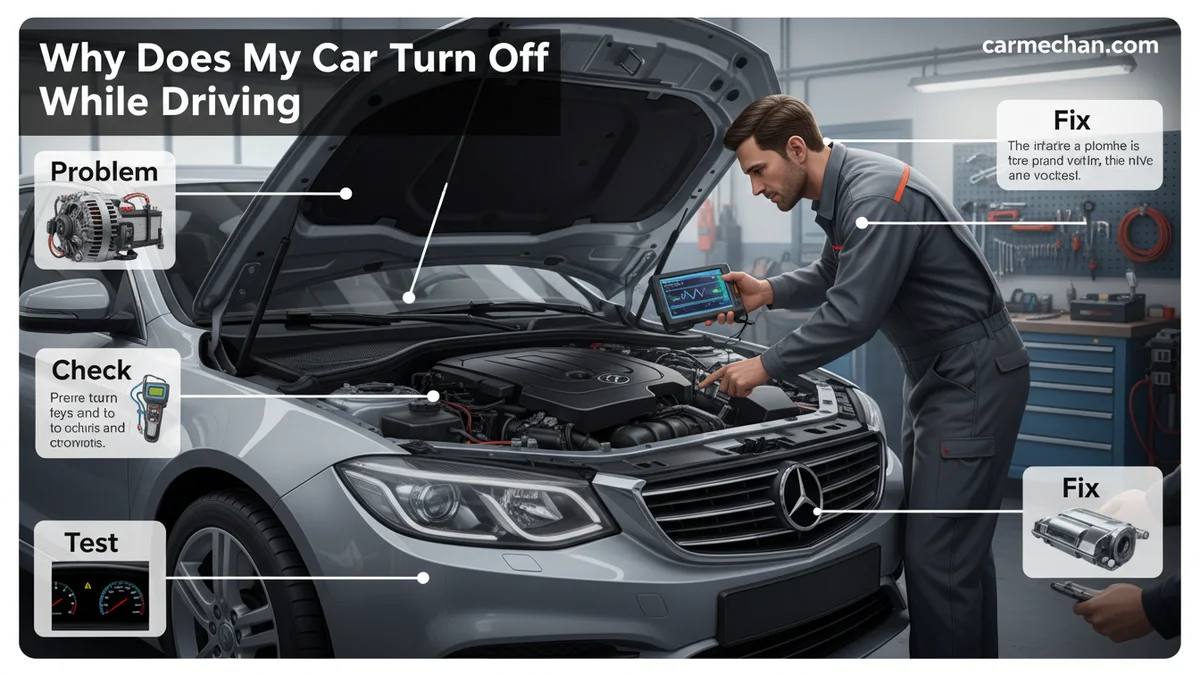
If your vehicle unexpectedly shuts down, your first reaction must be to ensure safety for yourself and other drivers. Panicking can exacerbate an already dangerous situation. Maintain a calm demeanor and follow these critical steps to protect yourself and others.

Prioritize Your Safety
Immediately activate your hazard lights to warn other motorists that your vehicle is disabled. If possible, steer your car to the side of the road or an emergency lane. Modern vehicles often retain some power steering and braking capability for a short time after the engine dies, so use this to your advantage.
If steering becomes impossible, gently apply the brakes to slow down safely.
Once stopped, try to position your vehicle as far off the road as you can. If you are on a busy highway or in a precarious spot, remaining inside the vehicle might be safer than exiting immediately. Assess your surroundings before attempting to leave your car.
Attempt a Restart
With your vehicle safely pulled over, you might attempt a restart. Shift your transmission into Park (for automatics) or Neutral (for manuals). Turn the ignition key off, wait a few seconds, then try to restart the engine. If it restarts, proceed cautiously to the nearest safe location or service center. Do not assume the problem is gone permanently.
Should the car fail to restart, do not repeatedly crank the engine, as this can drain your battery or cause further damage. A single, short attempt is usually sufficient to determine if it will catch. Observe any dashboard lights or sounds that occur during the restart attempt.
Call for Assistance
If your car does not restart or if you feel unsafe, contact roadside assistance or a towing service. Provide them with your exact location and a brief description of what happened. While waiting, stay in your vehicle if it is safe, or move to a secure location away from traffic if the environment permits.
Understanding when to seek professional help is crucial for both safety and effective repair.
Once you have secured your safety, understanding the potential culprits behind your car turning off while driving becomes the next crucial step.
7 Most Common Reasons Your Vehicle Shuts Off Unexpectedly
Several critical issues can cause your vehicle to suddenly lose power, with problems often stemming from one of these seven common areas. Identifying which category your issue falls into can significantly aid in diagnosis and repair.
Fuel Delivery Problems
Your engine requires a steady supply of fuel to run. If the fuel pump fails, the fuel filter becomes clogged, or you simply run out of gas, your engine will starve and shut off. A faulty fuel pump often gives symptoms like whining noises from the rear of the car or engine sputtering before dying.
A severely clogged fuel filter restricts flow, leading to similar symptoms. Running very low on fuel frequently can also damage the fuel pump over time, as it relies on fuel for cooling. The average lifespan for a modern fuel pump is typically around 100,000 miles or 10-15 years, but this can vary significantly.
Electrical System Failures
A failing alternator is a primary culprit. The alternator recharges your car’s battery and powers its electrical components while the engine runs. If it malfunctions, the battery will eventually drain, cutting off power to the ignition system and engine control unit, causing the car to die.
Symptoms often include dimming headlights, a battery warning light on the dashboard, or issues with other electrical accessories. Battery terminal corrosion or a weak battery can also interrupt power flow to critical systems. Alternator failure is a common reason for roadside assistance calls .
Ignition System Issues
The ignition system is responsible for igniting the air-fuel mixture in the engine cylinders. Components like spark plugs, ignition coils, or the ignition switch itself can fail. A faulty ignition switch, which can wear out over time, might intermittently cut power to the engine while driving.
Bad spark plugs or coils might cause misfires and rough idling before the engine eventually stalls completely, especially under load. These issues are often accompanied by a “Check Engine” light.
Sensor Malfunctions
Modern engines rely on numerous sensors to operate efficiently. Key sensors like the crankshaft position sensor, camshaft position sensor, or mass airflow (MAF) sensor provide crucial data to the engine control unit (ECU). If any of these sensors fail, the ECU might receive incorrect information, leading it to shut down the engine to prevent potential damage.
A faulty crankshaft position sensor is particularly notorious for causing sudden, unexplained shutdowns, as it directly impacts ignition timing.
Vacuum Leak Concerns
A vacuum leak occurs when unmetered air enters the engine, bypassing the MAF sensor. This disrupts the air-fuel mixture, making it too lean. While minor leaks might only cause rough idling or a check engine light, a significant vacuum leak can cause the engine to stall, particularly at idle or low speeds.
Hoses and gaskets can degrade over time, leading to these leaks. You might hear a hissing sound under the hood.
Engine Overheating Risks
An engine that overheats severely can shut down as a protective measure to prevent catastrophic damage. This usually indicates a problem with the cooling system, such as a faulty thermostat, a leaky radiator, a failing water pump, or low coolant levels. The temperature warning light on your dashboard will almost certainly illuminate before the engine dies from overheating.
Continued driving with an overheating engine can cause irreparable harm.
Catalytic Converter Blockage
Your catalytic converter reduces harmful emissions. Over time, it can become clogged, restricting exhaust flow. This back pressure makes it difficult for the engine to “breathe,” leading to a loss of power, reduced acceleration, and eventually, the engine stalling. This is particularly noticeable at higher speeds or under load.
A rotten egg smell from the exhaust or an illuminated “Check Engine” light can be indicators of a blocked converter.
Recognizing these potential causes is crucial, but knowing how to narrow down the specific issue requires some targeted investigation and observation.
How to Diagnose Your Engine Dying Randomly in 5 Steps
When your engine randomly dies, a systematic approach to diagnosis can help pinpoint the problem, even without specialized tools. These steps focus on observations you can make as a driver.

Observe Dashboard Warnings
Pay close attention to any warning lights that appear on your dashboard before, during, or after the stall. The “Check Engine” light, battery light, oil pressure light, or temperature light can provide vital clues. Note whether these lights came on simultaneously with the stall or before it. A consistent pattern can point toward electrical, oil, or cooling system issues.
Even if the light briefly flashed and then disappeared, its appearance is a significant indicator. Modern vehicles store trouble codes, so a mechanic can retrieve this information even if the light is no longer on. This is often the first and most accessible piece of diagnostic information.
Check Fuel Levels
While seemingly obvious, sometimes the simplest explanation is the correct one. Confirm your fuel gauge is working accurately and that you have sufficient fuel. A faulty fuel gauge could indicate you have fuel when you do not. Listen carefully for a faint humming sound from the rear of your car when you turn the key to the “on” position; this indicates the fuel pump is priming.
Absence of this sound might signal a fuel pump issue.
Listen for Clues
Your car often communicates problems through sound. Did you hear any strange noises before the stall, such as a whining from the rear (fuel pump), clicking (relay issues), or sputtering (fuel or ignition)? Were there any unusual smells, like burnt plastic (electrical), rotten eggs (catalytic converter), or sweet syrup (coolant)? These auditory and olfactory cues can provide invaluable diagnostic information.
Examine Battery Connections
A loose or corroded battery connection can interrupt the electrical flow, causing your car to shut off. Safely pop your hood and visually inspect the battery terminals. Look for any white, green, or blue powdery buildup (corrosion) or any loose cables. Even if the battery isn’t dead, poor connections can mimic a dead battery or alternator issue by preventing proper power delivery.
If they appear loose, carefully try to wiggle them to see if they move.
Note Prior Behavior
Think back to any recent changes in your car’s performance. Was it idling rougher? Did it hesitate during acceleration? Were there any recent repairs or maintenance performed? Sometimes, a car dying unexpectedly is the culmination of smaller, ongoing issues. Recalling these prior symptoms can help you or a mechanic narrow down the potential root cause much faster.
Armed with these diagnostic observations, you can better decide whether you need professional intervention or what steps you can take to prevent this frustrating issue from recurring.
When to Seek Professional Help or Prevent Future Stalls 4 Prevention Strategies
Deciding when to call a mechanic versus attempting a simple fix or focusing on prevention is key to managing your vehicle’s health and avoiding future incidents. Our advice aims to empower you with responsible decision-making.
Recognize Serious Symptoms
Certain symptoms strongly indicate the need for professional mechanic intervention. If your engine dies repeatedly, if multiple warning lights illuminate, or if you notice significant fluid leaks, smoke, or unusual burning smells, it is time to seek expert help. Trying to force a restart or continuing to drive with these serious issues can lead to more extensive and costly damage.
A professional diagnosis with specialized tools is often the safest path forward.
Understand Repair Options
The cost and complexity of repairs vary widely depending on the underlying cause. A new fuel pump, for instance, can cost between $400 and $800, including parts and labor, as of 2026. An alternator replacement typically falls in the range of $300 to $700. Sensor replacements are generally less expensive, often between $100 and $300.
Always get a detailed estimate before authorizing any work. Sometimes, a smaller, preventative repair can save you from a much larger expense later on.
Practice Regular Maintenance
Preventative maintenance is your best defense against unexpected stalls. Adhere to your vehicle’s recommended service schedule for oil changes, fluid checks, spark plug replacement, and filter changes. Regularly inspect battery terminals for corrosion and have your battery tested, especially if it is over three years old.
A well-maintained vehicle is significantly less likely to experience sudden mechanical failures. Proactive care ensures critical components are functioning optimally.
Address Minor Issues Promptly
Do not ignore early warning signs, such as a flickering check engine light, a faint unusual noise, or a slight change in driving performance. These seemingly minor issues can escalate into major problems that cause your car to turn off while driving. Addressing them quickly, before they worsen, often results in simpler, less costly repairs and prevents potentially dangerous roadside breakdowns.
Early intervention saves time, money, and stress in the long run.
Understanding these critical steps for diagnosis and prevention also leads to common questions many drivers have about their car’s unexpected shutdowns.
5 Common Questions About Cars Turning Off
Many drivers wonder about specific aspects when their car dies unexpectedly, and we address some of the most common inquiries here.
What Is the Most Common Car Shutdown Reason?
The most common reasons a car shuts off while driving often involve the fuel system (like a failing fuel pump or low fuel), electrical issues (a dying alternator or battery), or ignition components. Sensor malfunctions, such as a faulty crankshaft position sensor, are also frequent culprits for abrupt shutdowns.
Can Low Fuel Stall a Car?
Yes, extremely low fuel can absolutely cause your car to stall unexpectedly. When the fuel level is too low, the fuel pump can struggle to pick up enough fuel, leading to engine starvation and shutdown. This can also damage the fuel pump over time due to overheating and lack of lubrication.
What Dashboard Warnings Precede Stalling?
If your car is about to stall, you might see several dashboard warning lights. Common indicators include the battery light (signaling alternator trouble), the check engine light (for various engine or sensor issues), or the temperature light (indicating overheating) before the engine shuts down.
Is a Car Engine Dying a Major Issue?
Yes, a car engine dying while driving is a serious issue that demands immediate attention. It poses a safety risk due to loss of power and control, and it almost always points to a significant underlying mechanical or electrical problem that requires professional diagnosis and repair.
How Often Should I Maintain My Car?
We recommend following your vehicle manufacturer’s maintenance schedule, typically found in your owner’s manual. This usually involves routine services every 5,000 to 10,000 miles, including oil changes, fluid checks, and inspections. Consistent maintenance prevents major issues like unexpected stalling.