Chevy Trailblazer Years to AVOID: Reliability & Costly Problems
Last Updated on September 1, 2026 by Ryan


The first-generation Chevy Trailblazer (2002-2009) has several model years notorious for significant reliability issues, particularly regarding transmission failures and engine electrical problems. Buyers should exercise extreme caution, especially with the 2002-2007 models, to avoid expensive and recurring repairs.
🎯 Key Takeaways
- Avoid 2002-2007 Trailblazer models due to known issues.
- Watch for 4L60E transmission failures and HVAC actuator woes.
- Engine electrical glitches are common, especially early models.
- Later first-gen models (2008-2009) show improved reliability.
- Inspect rust, suspension, and wiring thoroughly before buying.
If you’re in the market for a used Chevy Trailblazer, knowing which model years to steer clear of is crucial for your peace of mind and your wallet. Specifically, you should exercise extreme caution, or outright avoid, the first-generation models spanning from 2002 through 2007. These particular years are notorious for a high incidence of major mechanical and electrical failures that can quickly turn an affordable used SUV into a significant financial burden.
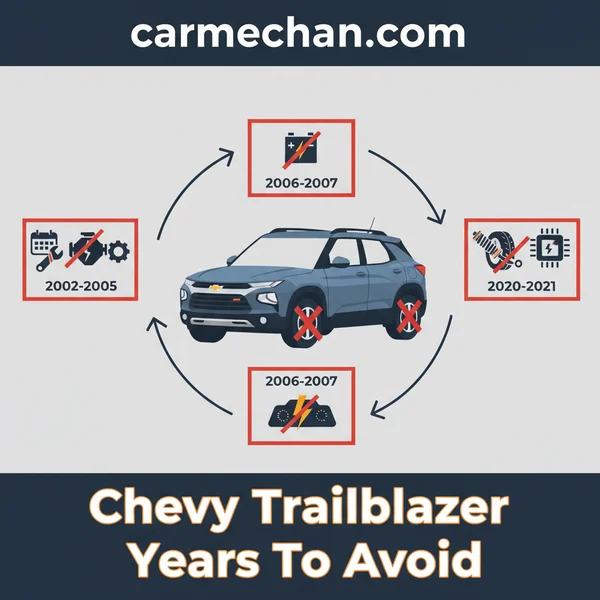
Ignoring these problematic years isn’t just about saving a few dollars on repairs; it’s about avoiding consistent frustration, unexpected breakdowns, and potentially compromising your safety. Understanding the prevalent issues and their associated costs will empower you to make an informed decision, ensuring you don’t end up with a vehicle that demands more in repairs than it’s worth or leaves you stranded on the roadside.
Understanding the Most Problematic Chevy Trailblazer Years (2002-2007)
The Troubled First Generation (GMT360 Platform)
If you’re in the market for a used Chevy Trailblazer, mark the years 2002 through 2007 as a significant red flag. These model years represent the first generation of the Trailblazer, built on General Motors’ GMT360 platform. This era consistently generated the highest volume of owner complaints regarding substantial mechanical and electrical failures, making them the primary years to approach with extreme caution, or preferably, to avoid entirely. You’re not just looking at minor inconveniences with these models; you’re stepping into a potential minefield of system-critical failures and design weaknesses.

The GMT360 platform, which also underpinned siblings like the GMC Envoy, Oldsmobile Bravada, and Saab 9-7X, unfortunately developed a pervasive reputation for a range of design and manufacturing flaws that surfaced consistently over time. This includes all variants: the standard wheelbase, the extended wheelbase LT, and even the higher-performance SS models from these specific years. The sheer volume of identical problems reported by owners across various consumer advocacy sites, repair forums, and reliability surveys paints a clear picture: these vehicles, despite their initial appeal, often become money pits.
For a prospective buyer, choosing a Trailblazer from this 2002-2007 window means inheriting a significantly elevated risk of encountering unexpected and substantial repair bills shortly after purchase. Many of these common issues, detailed further below, are expensive to fix and can lead to recurring frustration, significant downtime, and even potential safety implications. Your best defense against these costly pitfalls is simply to bypass these particularly problematic years in your search for a reliable used SUV.
Common Reliability Issues and Costly Repairs to Expect
The Notorious 4L60E Transmission and Drivetrain Woes
- 4L60E Automatic Transmission Failures: This is arguably the most infamous Achilles’ heel of the 2002-2007 Trailblazer. The 4L60E transmission is notoriously prone to premature failure, often stemming from weak 3-4 clutch packs, worn solenoids, or torque converter issues. Symptoms include harsh shifting, slipping gears, delayed engagement, or complete loss of drive. This isn’t a matter of if, but often when, with many owners reporting issues between 80,000 and 150,000 miles. A professional rebuild or complete replacement typically costs anywhere from $2,000 to $3,500 or more, a significant expense that can easily exceed the vehicle’s market value, making it an impractical repair for many.
- 4WD/AWD System Malfunctions: Many owners report issues with the transfer case, front axle actuator, or front differential, leading to grinding noises, loss of four-wheel drive capability, or the dreaded “Service 4WD” light illuminating on the dashboard. These problems often stem from electrical failures within the actuator or mechanical wear within the transfer case itself. Repairs can range from several hundred dollars for a faulty actuator to over $1,500 for a transfer case replacement, depending on the specific component that fails.
Persistent Electrical Gremlins and Mechanical Headaches
- HVAC Blend Door Actuator Failures: A very common, annoying, and often costly problem that plagues these Trailblazers. These small electric motors control airflow and temperature within the cabin. When they fail, you’ll hear a persistent clicking or thumping noise emanating from behind the dashboard, or experience a lack of heating/cooling control for specific zones. Replacing them requires significant dashboard disassembly, often costing $500 to $1,000 per actuator at a shop, as there are usually multiple in the system.
- Engine Control Module (ECM/PCM) Issues: While the 4.2L Atlas I6 engine itself is generally robust, its electronic brain can be temperamental. Faulty ECMs (Engine Control Modules, also known as PCMs) can lead to intermittent stalling, misfires, persistent check engine lights without clear mechanical faults, and generally poor performance. A replacement and reprogramming can cost a hefty $600 to $1,200, and is critical for the vehicle’s operation.
- Fan Clutch Problems: A frequent culprit for engine overheating at low speeds or producing excessive, roaring engine noise, particularly during acceleration. The electronically controlled fan clutch can fail, leading to inadequate cooling, which puts stress on other engine components, or an unnecessarily loud fan. Replacing this part, especially with labor, typically runs between $300 and $600.
- Gauge Cluster Malfunctions: The instrument cluster stepper motors are known to fail prematurely, causing gauges (speedometer, fuel, temperature, tachometer) to stick, read inaccurately, or stop working entirely. This isn’t just an annoyance; inaccurate speed or fuel readings are significant safety concerns. Repairing the cluster by replacing individual stepper motors or opting for a full cluster replacement can cost $300 to $700.
- Power Window Regulator/Switch Failures: Another frequent electrical complaint involves power windows that won’t go up or down. This is often due to faulty master power window switches, individual door switches, or the window regulator assemblies themselves. While not as individually expensive as a transmission, recurring issues across multiple windows can quickly add up, typically costing $200-$400 per window repair.
<h2>Identifying Specific Problems During a Pre-Purchase Inspection</h2>
<p>Even if you’re looking at a Trailblazer outside the most notoriously problematic years, a thorough pre-purchase inspection is non-negotiable. Knowing what to look for can save you from inheriting someone else’s headache and costly repairs down the line. Focus your scrutiny on areas commonly plagued by issues in earlier models.</p>
<h3>Key Areas to Scrutinize for Common Flaws</h3>
<p>When evaluating a used Chevy Trailblazer, a keen eye (and ear!) for specific warning signs can be invaluable. These points are critical, especially for models from the first generation (2002-2009) that might have carried over some design weaknesses:</p>
<ul>
<li><strong>Transmission Performance:</strong> During a test drive, pay close attention to the transmission. Does it shift smoothly, or do you feel jerking, hesitation, or hear clunking noises? Any unusual behavior could signal expensive transmission issues.</li>
<li><strong>Engine Health:</strong> Listen for unusual engine noises like ticking, knocking, or a persistent rough idle. Check for visible oil leaks under the hood or on the ground. A illuminated “Check Engine” light is an immediate red flag that needs investigation.</li>
<li><strong>Electrical System:</strong> Test all electrical components: power windows, door locks, radio, air conditioning, and dashboard lights. Intermittent failures or non-working accessories can point to the tricky and often expensive electrical gremlins some Trailblazer years experienced.</li>
<li><strong>Suspension and Steering:</strong> Drive over bumps and rough patches. Listen for squeaks, rattles, or clunks from the suspension. Test the steering for excessive play or difficulty turning, which might indicate worn ball joints, tie rods, or other steering components.</li>
</ul>
<h3>The Importance of a Professional Inspection</h3>
<p>While a personal check can reveal a lot, nothing beats the expertise of a certified mechanic. They possess specialized tools and knowledge to uncover hidden problems that even a savvy buyer might miss. A Pre-Purchase Inspection (PPI) by an independent shop is an investment that can save you thousands. They can put the vehicle on a lift, perform diagnostic scans, and thoroughly inspect components like the frame, exhaust, brakes, and undercarriage for rust or damage. This neutral third-party assessment gives you an unbiased picture of the vehicle’s true condition, helping you make an informed decision or negotiate a better price.</p>
<h2>Recommended Trailblazer Years and Reliable Alternatives</h2>
<p>So, if certain years of the Chevy Trailblazer come with a reliability warning, what are your best bets? And if you decide against a Trailblazer altogether, what other SUVs offer better peace of mind?</p>
<h3>Seeking Out the Safer Trailblazer Bets</h3>
<p>For those set on the Trailblazer nameplate, the landscape changed significantly. The original GMT360 platform Trailblazer ended production in 2009. While later models within that generation (2007-2009) generally saw some improvements over their early 2000s counterparts, they still shared many fundamental design aspects that contributed to the earlier issues. <strong>Your safest bet for a "Trailblazer" would be the entirely redesigned, smaller, and more modern second-generation Chevy Trailblazer, introduced for the 2021 model year.</strong> This new model, distinct from its rugged predecessor, aims for a different market segment and boasts contemporary engineering and technology, drastically improving on past reliability concerns. It’s a different vehicle entirely, but carries the familiar name.</p>
<h3>Considering Other Dependable SUV Options</h3>
<p>If the older Trailblazers don’t inspire confidence and the new generation doesn’t fit your needs, plenty of other SUVs consistently rank high in reliability and owner satisfaction. Expanding your search could lead you to a vehicle that offers greater peace of mind and lower long-term ownership costs. Consider these well-regarded alternatives:</p>
<ul>
<li><strong>Toyota 4Runner:</strong> Renowned for its legendary durability, off-road capability, and strong resale value, though it might be a pricier option.</li>
<li><strong>Honda CR-V:</strong> An excellent choice for families seeking a comfortable ride, great fuel economy, and a sterling reputation for reliability.</li>
<li><strong>Subaru Forester/Outback:</strong> Known for standard all-wheel drive, excellent safety ratings, and dependable performance in various conditions.</li>
<li><strong>Mazda CX-5:</strong> Offers a more premium feel, engaging driving dynamics, and good reliability scores without breaking the bank.</li>
</ul>
<p>These vehicles typically offer a more consistent record of reliability across their model years, reducing the risk of unexpected and costly repairs.</p>
<h2>Conclusion: Drive Smart, Drive Confident</h2>
<p>Navigating the used car market, especially for models with a mixed reliability history like the Chevy Trailblazer, demands diligence. While the early 2000s Trailblazer models faced significant mechanical and electrical challenges, a detailed understanding of these pitfalls empowers you to make a smarter decision. Always prioritize a thorough professional inspection, whether you’re eyeing a specific Trailblazer year or exploring alternatives. By doing your homework, asking the right questions, and considering all your options, you can confidently choose an SUV that serves your needs reliably for years to come. Drive smart, and enjoy the journey!</p>
❓ Frequently Asked Questions
Which specific Chevy Trailblazer years should I actively avoid, and why?
You should actively avoid the 2002, 2003, 2004, 2005, 2006, and 2007 model years of the original Trailblazer. These years are frequently cited for issues like premature 4L60E transmission failure, engine control module (ECM) glitches, and HVAC blend door actuator problems, leading to expensive and recurring repairs.

What are the most common and costly issues associated with problematic Trailblazer years?
The most common and costly issues include the infamous 4L60E automatic transmission failing prematurely, often requiring a rebuild costing $2,000-$3,000+. Engine electrical issues, particularly with the ECM or wiring harnesses, can cause misfires or stalling, while HVAC blend door actuators frequently fail, leading to no heat or AC on one side, costing several hundred dollars per repair.
Are there any specific engine problems to look out for in the avoided years?
For the 4.2L LL8 inline-six engine found in many avoided years, common issues include failed fan clutches leading to overheating, ignition coil failures causing misfires, and occasional oil pressure sensor malfunctions. While generally robust, electrical gremlins tied to the ECM or wiring can manifest as performance problems.
How do the 2008-2009 Trailblazer models compare in terms of reliability?
The 2008-2009 model years of the first-generation Trailblazer generally saw some improvements in reliability compared to earlier years, with fewer reported widespread transmission and electrical issues. While not perfect, they are often considered a safer bet if you must purchase a first-gen model, but still warrant a thorough inspection.
What are crucial inspection points for a used Chevy Trailblazer from any year?
Crucial inspection points include checking for smooth transmission shifts (no slipping or hard jerks), listening for unusual engine noises, verifying all HVAC settings work, checking for active warning lights (check engine, ABS), inspecting for excessive rust on the frame and body mounts, and examining suspension components for wear.
Should I consider alternative SUVs instead of a problematic Trailblazer?
Absolutely, if reliability is a top concern. Alternatives like the Toyota 4Runner (especially 4th gen), Honda Pilot, or even later model Ford Explorers (after 2006) from the same era often offer better long-term reliability records and fewer major systemic issues than the early first-generation Trailblazer.