2007 honda crv cruise control switch Diagnosed & Fixed
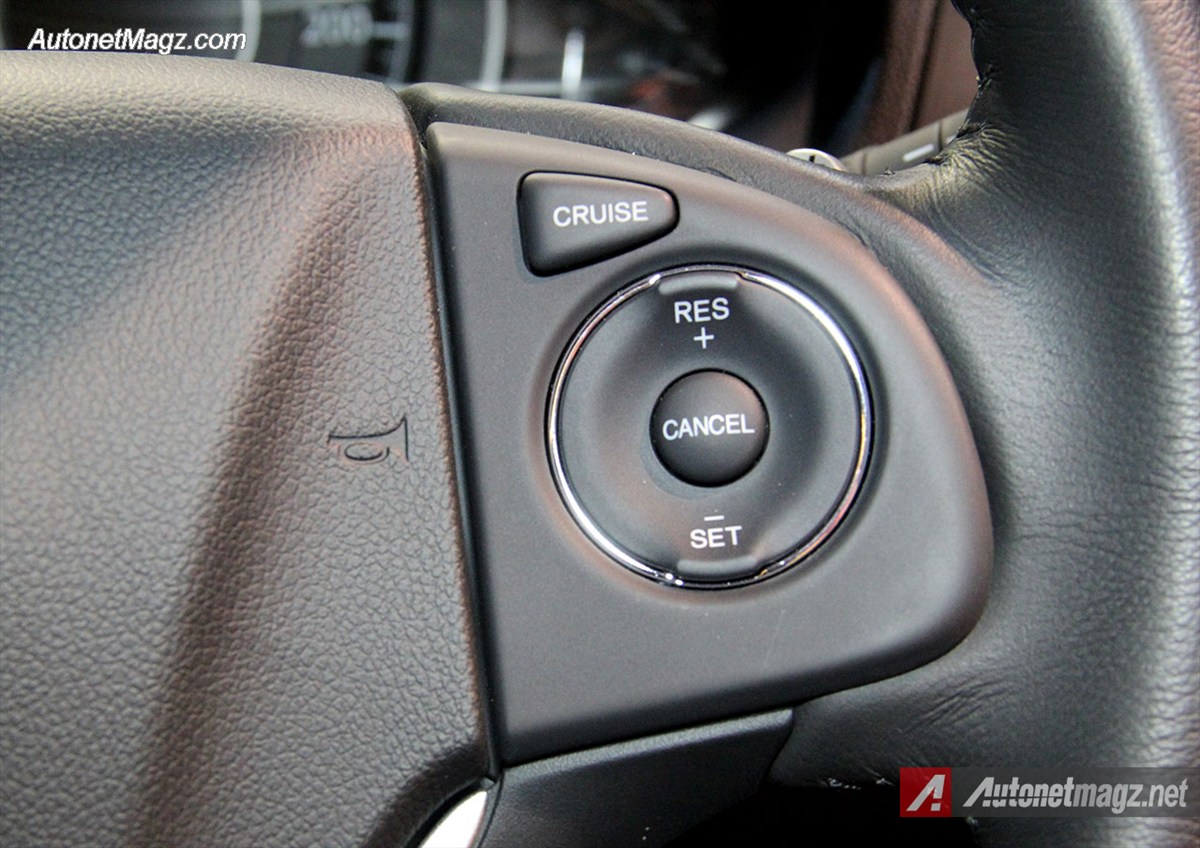
Is your 2007 Honda CR-V losing its ‘cruise’ capabilities on the highway? Whether you are stuck in stop-and-go traffic or embarking on a long-distance commute, a non-functional cruise control system is a major frustration. Many owners immediately assume the switch on the steering wheel has failed, leading to unnecessary component replacement and wasted expense. In reality, the cruise control system is a complex network where the switch acts only as the final trigger for a chain of safety-critical conditions. This guide provides expert, step-by-step instructions to safely test, diagnose, and replace your 2007 Honda CR-V cruise control switch while keeping the SRS system protected.

Diagnosing 2007 Honda CR-V Cruise Control Switch Failures
Recommended Best Deal Products


The cruise control system is an electronically governed circuit that requires precise input conditions to function. The 2007 Honda CR-V cruise control switch is merely the user interface for the system; if the engine control module (PCM) does not receive a “ready” signal from other sensors, the switch will not engage the system.
📤 Share Image

Common Symptoms of a Failing System
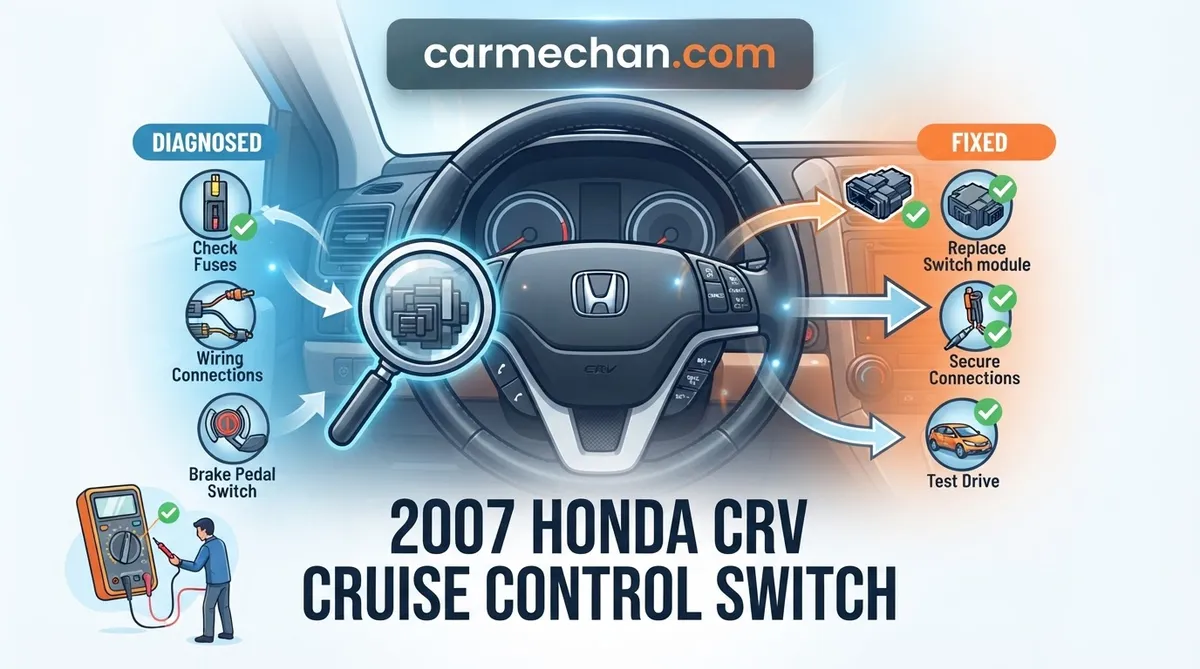
A truly failed switch usually manifests as a complete lack of response—the “CRUISE MAIN” light on the dash will not illuminate when the button is pressed. However, if the indicator light turns on, but the system fails to set or maintain speed, the switch is likely operational, and the issue lies downstream. Common symptoms include flickering buttons, intermittent engagement, or the cruise light shutting off immediately upon pressing “SET.”

Why the Brake Switch Often Mimics Switch Failure
The brake light switch is the most common “false positive” for a failed cruise switch. The cruise control system is designed to disengage instantly when the brake pedal is depressed. If the brake light switch—located near the top of the pedal assembly—is faulty or misaligned, the PCM believes the driver is braking, effectively disabling the cruise function. Always verify your brake lights are functioning correctly before pursuing an internal steering wheel repair.
The Role of the Clock Spring in Electrical Connectivity
The clock spring is a rotary electrical connector that allows the steering wheel to turn while maintaining connection to the airbag, horn, and cruise control switches. Because it is a moving part, it is prone to mechanical fatigue. If you notice an illuminated SRS (Airbag) warning light in addition to non-functional cruise buttons, the clock spring has likely suffered internal damage, breaking the circuit path for both the safety and convenience systems.
How to Safely Replace Your 2007 Honda CR-V Cruise Control Switch
You are working near the Supplemental Restraint System (SRS/Airbag). Always disconnect the negative battery terminal and wait at least 3 minutes for the SRS capacitor to discharge before attempting to remove the steering wheel trim or airbag module.
📋
Step-by-Step Replacement Guide
Recommended Best Deal Products
![[2026 Upgraded] DooGooCoo Windshield Sun Shade for Honda CRV 2017-2021 2022 [Cooling…](https://m.media-amazon.com/images/I/51tfKv3G1ML._SS500_.jpg)
![[2026 Upgraded] DooGooCoo Windshield Sun Shade for Honda CRV 2023-2025 2026 [Cooling…](https://m.media-amazon.com/images/I/511ucV8BmZL._SS500_.jpg)

Disconnect the battery and wait three minutes. Locate the side panels on the steering wheel assembly to access the hidden Torx screws that secure the airbag module.
Carefully pull the steering wheel trim away. Locate the screws holding the switch assembly. Be gentle; the plastic tabs are aged and brittle on a 2007 model.
Unclip the wiring harness connector. Swap the switch unit and reconnect. Ensure the screws are snug but not over-tightened, as excessive pressure can cause the button mechanism to stick.

Audible — Listen Free for 30 Days
One free credit a month and thousands of titles included.
Listen Free for 30 DaysChoosing Between OEM and Aftermarket Cruise Control Switches
When selecting a replacement 2007 Honda CR-V cruise control switch, the market offers various tiers of quality. While cost-effective aftermarket parts are tempting, these controls involve specific electrical resistance ratings that the PCM requires for reliable operation. OEM components are manufactured to provide specific tactile feedback—that “crisp” click feel—and durability that often lacks in cheaper, plastic-heavy imitations.
Advanced Troubleshooting for Steering Wheel Control Issues
Recommended Best Deal Products


If you have replaced the switch and the system remains unresponsive, you must look deeper into the steering column electronics. Persistent issues usually indicate a breakdown in the signal chain rather than a mechanical switch failure.
- Fuse Inspection: Check the interior fuse box. The cruise control circuit often shares a fuse with other cabin electronics, such as the horn or accessory outlets.
- Contact Cleaning: If the button feels “sticky” but engages eventually, use a high-quality electrical contact cleaner. Ensure the vehicle is off and be mindful not to saturate the internal membrane.
- Wiring Continuity: If the cruise control disengages when you turn the wheel or hit a bump, this is a hallmark sign of a failing clock spring or a pinched wire behind the steering wheel cover.
- Professional Diagnosis: If your SRS/Airbag dash light remains illuminated after the work, stop immediately. Attempting to force the system or ignore SRS codes can prevent airbags from deploying during a collision. A professional scanner is required to clear these specific fault codes.
When troubleshooting, always check for “Cruise Control” related codes in the PCM memory. Using an OBDII scanner that supports Honda-specific extended codes can reveal if the issue is a “Brake Switch Input Circuit” fault rather than a “Cruise Switch” fault.
Industry Data: Reliable Maintenance Practices
By The Numbers
Cases where a brake light switch was misdiagnosed as a cruise switch.
Minimum discharge time required for SRS safety before service.
Reliable vehicle maintenance requires a systematic approach. The 2007 Honda CR-V cruise control switch is a durable component, but it relies on an interconnected network of sensors and modules. By verifying the simple culprits first—fuses, the brake light switch, and the condition of the clock spring—you can avoid unnecessary replacements and ensure your vehicle remains safe and roadworthy.
Always prioritize SRS safety by disconnecting the battery during any steering wheel-related repairs. When replacement is truly necessary, choose OEM parts to ensure the tactile quality and electrical consistency required for the Honda’s onboard computer systems. If you find yourself unsure about handling the airbag or SRS components, consult a professional technician to ensure your vehicle’s safety systems remain intact and fully functional.
2007 Honda Crv Cruise Control Switch: Frequently Asked Questions
Why does my cruise control light turn on but the system won’t set?
If the ‘CRUISE MAIN’ light activates but the ‘SET’ function fails, the issue is rarely the switch itself. It is usually caused by a faulty brake pedal position switch, a blown stop-lamp fuse, or an issue with the vehicle’s speed sensor. The cruise system is programmed to disengage if it detects any input suggesting the brake is active or if speed data is inconsistent.
Do I need to remove the airbag to replace the switch?
No, for the 2007 Honda CR-V, the cruise control switch assembly is typically housed within the steering wheel trim bezel. While it is always professional practice to disconnect the battery to avoid potential SRS deployment, you generally do not need to remove the actual airbag module from the center of the wheel to access the switch’s mounting screws.
Is a blown fuse the reason my cruise buttons don’t work?
Yes, a blown fuse is a very common and reliable first check. The cruise control circuit for a 2007 CR-V shares power with other interior systems via the under-dash fuse box. If the fuse is blown, the switch will receive no power, preventing the master light from illuminating. Check your owner’s manual to identify the exact fuse position for the cruise control unit.
Can a dirty switch be cleaned with contact cleaner?
In some instances, yes. If the switch feels sticky or unresponsive due to debris or light surface oxidation, a high-quality electrical contact cleaner can sometimes restore functionality. Spray a small amount of the cleaner into the gap around the switch buttons while the system is off and work the buttons repeatedly to help the solvent break down internal grime.
Audible Premium Plus — Annual Membership
12 audiobook credits up front, plus the full Audible catalogue.
See Annual PlansWhy does the cruise control disengage when I hit a bump?
Disengagement on bumps is a classic sign of a loose electrical connection or a worn brake pedal switch. When the vehicle jars, a loose contact momentarily breaks, or the brake pedal (which sits on a sensitive switch) vibrates, tricking the computer into thinking you are hitting the brakes. Ensure all harnesses are seated firmly and inspect the brake pedal stopper pad for cracks.