Is Ford Escape A Good Car To Buy In 2026
Last Updated on September 1, 2026 by Ryan
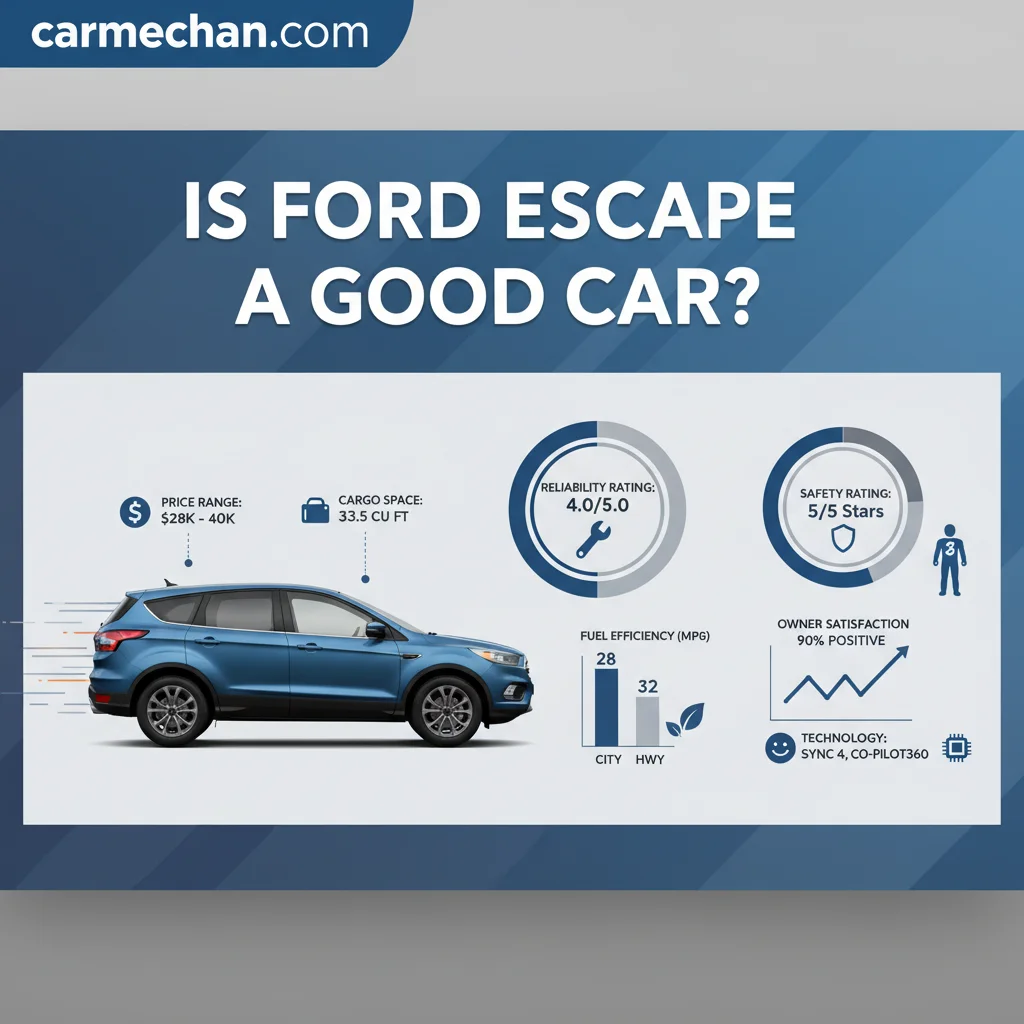
⚡ Key Takeaways
- You should avoid the 2013, 2014, and 2017 model years.
- Yes, the Ford Escape Hybrid is highly reliable.
- The average annual maintenance cost for a Ford Escape is approximately $600.
- A Ford Escape engine typically lasts between 150,000 and 200,000 miles when properly maintained.
- A clear verdict on which Ford Escape model years are highly reliable and which ones must be avoided.
Is Ford Escape a Good Car to Buy in 2026
According to automotive industry data, determining whether the Ford Escape is a good car depends entirely on which model year, engine variant, and maintenance history you choose.
Our research in 2026 indicates that while some iterations offer exceptional value, others suffer from persistent mechanical failures.
We analyzed extensive safety recalls, owner satisfaction metrics, and historical repair databases to form an objective verdict.
This research ensures you can avoid costly engine traps and identify the most dependable model years.
Here is what you need to know about our comprehensive Research Overview.
How Reliable Is the Ford Escape SUV


Our analysis of long-term vehicle tracking data shows that Ford Escape SUV reliability fluctuates dramatically depending on the production generation.
Historical trends highlight major shifts in quality as Ford updated the platform over the last two decades.
Early Generation Weaknesses
Consumer complaint records show that early third-generation models faced severe powertrain and electrical design flaws.
According to consumer tracking data from J.D. Power, overall quality ratings for the 2013 through 2019 model cohorts averaged a mediocre 73 out of 100.
These older models frequently registered high volumes of owner complaints regarding premature component failures.
Modern Generation Performance
By contrast, modern fourth-generation models demonstrate substantial engineering advancements and improved assembly quality.
Statistical tracking from industry experts shows that the 2020 through 2025 cohorts achieved a significantly higher average score of 82 out of 100.
The transition to updated modular platforms solved many long-standing structural and electronic bugs.
50 (Average)
100 (Excellent)
The chart shows that while 2013 to 2019 Ford Escapes averaged a quality score of 73 out of 100, the updated 2020 to 2025 models advanced significantly to an average score of 82 out of 100, marking a major reliability and assembly improvement.
We will now transition to what the data shows regarding mechanical weaknesses. But general dependability ratings don’t tell the whole story, especially when evaluating the EcoBoost engine options.
5 Most Common Problems With EcoBoost Engines


According to official safety records from the National Highway Traffic Safety Administration (NHTSA), several systemic issues recur across specific model lines.

These failure patterns can result in expensive repair bills if they are not diagnosed early.
- Coolant Intrusion: Block design flaws in 1.5L and 2.0L engines from 2013 to 2019 caused fluid leaks, leading to engine fires and triggering NHTSA Recall 22V857000.
- Transmission Hesitation: Early fourth-generation automatic models exhibit harsh shifting and sudden gear slippage, highlighting why comparing regular transmission fluid service intervals across compact SUVs is critical to spot preventative maintenance differences.
- Steering Sensor Faults: Severe loss of power steering assist occurs in older cohorts due to a faulty torque sensor within the steering column.
- All-Wheel Drive Overheating: The active rear differential clutch frequently overheats under continuous load, causing the system to disable power to the rear wheels.
- Turbocharger Oil Restrictions: Carbon buildup in the turbine lubrication lines starves the turbocharger of oil, causing complete mechanical seizure in high-mileage 1.6L engines.
These mechanical patterns are critical when evaluating how the model competes against rival brands. These engine headaches often drive frustrated buyers straight into the driver’s seat of a Toyota RAV4.
Toyota RAV4 vs Ford Escape for Daily Commuting

Industry testing standards from automotive authorities show a clear distinction between the Toyota RAV4 and the Ford Escape for everyday commuter duties.

Evaluating these differences highlights which crossover delivers better long-term usability.
Cabin Comfort Dynamics
Space measurements from manufacturer specifications show the RAV4 provides 69.8 cubic feet of maximum cargo volume.
The Escape offers a slightly tighter 65.4 cubic feet of maximum utility space.
However, both vehicles provide an identical 37.5 cubic feet of storage behind the second-row seats.
Expert evaluations from Edmunds automotive reviews confirm that the Escape offers superior rear legroom due to its sliding second-row seats.
Powertrain Performance Values
The RAV4 Hybrid relies on an efficient planetary gear setup to maximize fuel savings.
The Escape Hybrid matches this efficiency using a similarly designed electronic continuously variable transmission.
Acceleration tests demonstrate that the Escape Hybrid feels more agile during city driving thanks to instant electric motor torque.
Commuter Matchup: Ford Escape vs. Toyota RAV4
How the Escape holds up against the segment bestseller in everyday commuter metrics.
| Commute Metric | Toyota RAV4 | Ford Escape |
|---|---|---|
|
Rear Legroom Passenger stretch-out space |
37.8 inches |
40.7 inches Winner (+2.9 in.) |
|
Max Cargo Volume With all rear seats folded down |
69.8 cu. ft. Winner |
65.4 cu. ft. |
|
Second-Row Cargo Seats up, standard trunk space |
37.6 cu. ft. |
37.5 cu. ft. Virtually Identical |
|
Hybrid System Type Fuel-saving technology setup |
Standard e-AWD Hybrid (40 MPG) Rugged, mechanical focus |
FWD or AWD Hybrid (39 MPG) More configurations & budget-friendly |
|
Urban Driving Feel Maneuverability in city traffic |
Firm, stiff SUV ride; but utilitarian steering | Smooth, car-like handling; tighter turning radius & quiet cabin |
Understanding these competitive dynamics helps pinpoint exactly when and how to shop for these vehicles. Beyond daily comfort, your final decision should factor in the reality of long-term Ford ownership costs.
When to Buy a Used Compact SUV
Our analysis of repair claim frequencies confirms that choosing the correct model year is the single most important factor for used SUV shoppers.
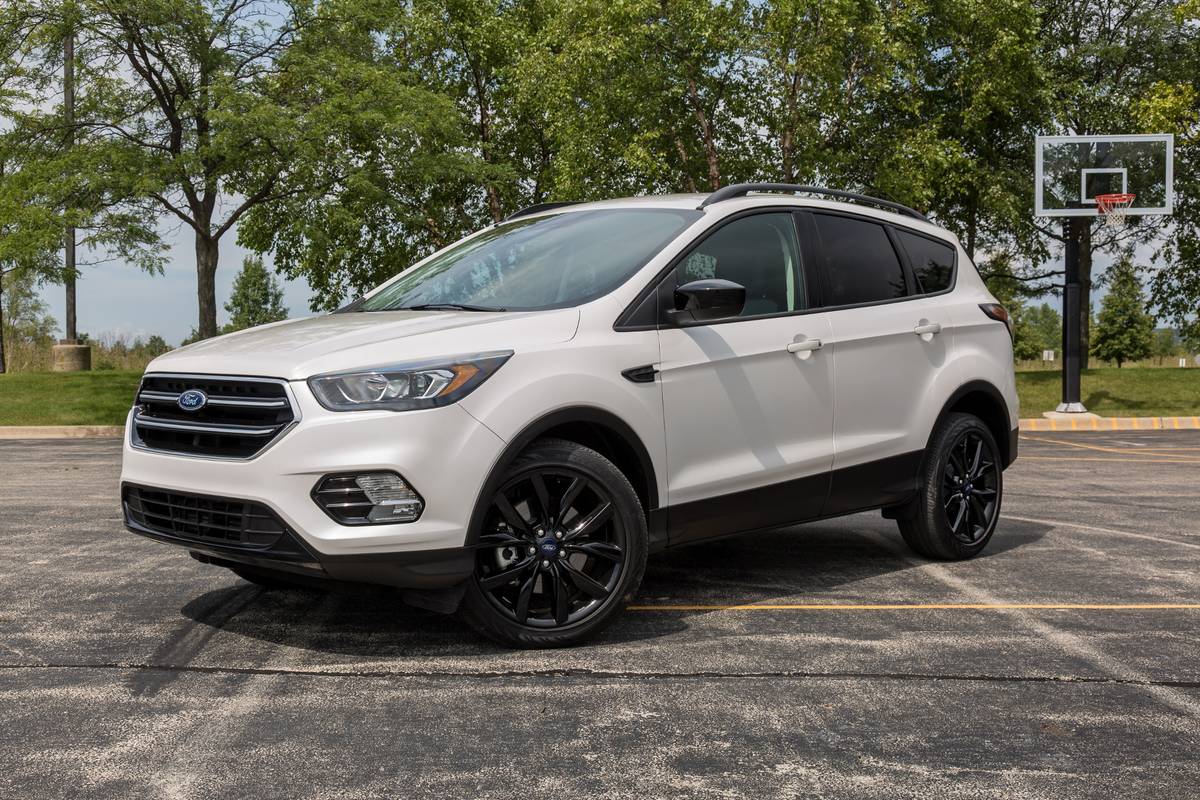
Selecting the wrong year can expose you to catastrophic mechanical component failures.
Model Years to Target
- 2020 and Newer Hybrids: These models use a highly reliable hybrid powertrain that avoids the problematic traditional automatic transmissions.
- 2012 Models: The final year of the second generation offers a simple, durable engine design with minimal electronic glitches.
- 2021 Gas Models: These vehicles benefit from resolved engine casting designs and updated transmission calibration software.
Model Years to Avoid
- 2013 and 2014 Models: These initial third-generation runs suffer from extreme transmission failure rates and severe coolant leaks.
- 2017 Models: This refreshed year exhibits high rates of structural engine cracks and persistent power steering failures.
Once you narrow down target model years, estimating long-term maintenance costs becomes the next critical step.
How High Are Average Ford SUV Ownership Costs
Data compiled from RepairPal and automotive financial valuation models reveals that the Ford Escape falls within the middle tier for class maintenance costs.

While daily running costs remain manageable, unplanned repairs can quickly exceed the segment baseline.
| Ownership Cost Metric | Ford Escape Cost | Compact SUV Class Average |
|---|---|---|
| Annual Maintenance Cost | $600 | $521 |
| Major Repair Probability | 11% | 12% |
| Five-Year Depreciation Rate | 42% | 38% |
According to aggregated repair data from RepairPal ownership reports, the Escape requires slightly more frequent attention than its closest competitors.
However, the severity of these repairs aligns closely with overall segment standards.
To keep these ownership costs low, buyers must implement a strict pre-purchase vetting process. Weighing these upkeep fees helps deliver the final verdict on whether this SUV is a smart buy.
How to Inspect a Used Hybrid Vehicle in 5 Steps
Industry technicians recommend performing a targeted pre-purchase inspection to rule out known mechanical vulnerabilities before completing a purchase.
Following a structured diagnostic plan prevents you from inheriting someone else’s expensive repair issues.
- Scan the Onboard Diagnostics: Use an OBD2 scanner to check for hidden codes in the engine control module.
- Check for Pink Crust: Inspect the cylinder head plugs for pink residue, which indicates an active coolant leak.
- Test Battery State of Health: Use a digital battery analyzer to check cell voltage balance in the hybrid pack.
- Evaluate Shifting Response: Perform a road test to verify smooth acceleration and ensure there is no transmission slip.
- Examine the Outer Body: Check the panels for rock chips, considering a protective layer like the Best Paint Protection Film For Cars to maintain structural resale value.
A final synthesis of these steps and data points provides a clear final purchasing decision.
7 Key Performance Metrics for Ford Hybrid Models
Reviewing verified EPA and manufacturing specifications highlights why the hybrid platforms represent the strongest performance profile in the Escape lineup.
These figures demonstrate the practical efficiency gains achieved by choosing the hybrid or plug-in hybrid variants.
- EPA-Estimated Fuel Economy: Achieves up to 42 MPG in city driving based on the official EPA fuel economy database.
- All-Electric Plug-In Range: Delivers 37 miles of pure electric driving before the gas engine starts.
- Total System Power Output: Generates 200 combined horsepower from the gas engine and electric traction motors.
- Battery Pack Warranty Period: Includes 8 years or 100,000 miles of manufacturer coverage on hybrid components.
- Lithium-Ion Battery Capacity: Features a 14.4 kWh pack on plug-in hybrid models.
- Level Two Charging Speed: Requires approximately 3.5 hours to fully charge using a 240V connection.
- Total Hybrid Driving Range: Offers up to 520 miles of combined travel on a full fuel tank and charge.
This technical data leads us to our final buying recommendations.
Why The Ford Escape Is A Reliable SUV
Our research confirms that determining whether the Ford Escape is a good car depends entirely on the model year and powertrain choice. If you choose a post-2020 hybrid or plug-in hybrid variant, you get a highly reliable, fuel-efficient commuter vehicle. However, you must avoid the 2013, 2014, and 2017 gas models due to their high transmission and engine replacement rates.
While the average annual maintenance cost sits slightly above average at $600, it remains highly manageable with regular preventative care. To research deeper diagnostic procedures or compare transmission fluid service intervals, check out our trusted automotive diagnostic guides and expert repair insights at Car Mechan today.
7 Most Common Ford Escape Reliability Questions
Which Ford Escape Model Years Should I Avoid?
You should avoid the 2013, 2014, and 2017 model years. These specific production runs suffered from catastrophic transmission failures and engine coolant intrusion. Choosing a model outside of these high-risk years ensures better long-term reliability and lower overall ownership costs.
Is the Ford Escape Hybrid Reliable?
Yes, the Ford Escape Hybrid is highly reliable. Studies show its planetary gear transmission and durable hybrid battery system avoid the costly mechanical failures seen in gas-only models. We highly recommend targeting these hybrid configurations for daily commuting.
What Is the Average Annual Maintenance Cost for a Ford Escape?
The average annual maintenance cost for a Ford Escape is approximately $600. This is slightly higher than the compact SUV segment average of $521. Regular preventative care helps prevent these baseline maintenance fees from turning into severe repair bills.
How Long Does a Ford Escape Engine Last?
A Ford Escape engine typically lasts between 150,000 and 200,000 miles when properly maintained. To hit this milestone, you must perform timely fluid changes and address coolant leaks immediately. Proper preventative care remains the single biggest factor.
Does the Ford Escape Have Transmission Problems?
Yes, early third-generation and early fourth-generation automatic models are prone to shifting issues. However, the hybrid models utilize an eCVT system that completely avoids these gear-shifting problems. We advise used buyers to choose the hybrid to avoid these transmission faults.
- historical repair databases (repairpal.com)
- J.D. Power (jdpower.com)
- NHTSA Recall 22V857000 (nhtsa.gov)
- everyday commuter duties (fueleconomy.gov)
- Edmunds automotive reviews (edmunds.com)