How Long to Wait After Using an Ozone Generator in Your Car
Last Updated on August 7, 2026 by Albert Duke
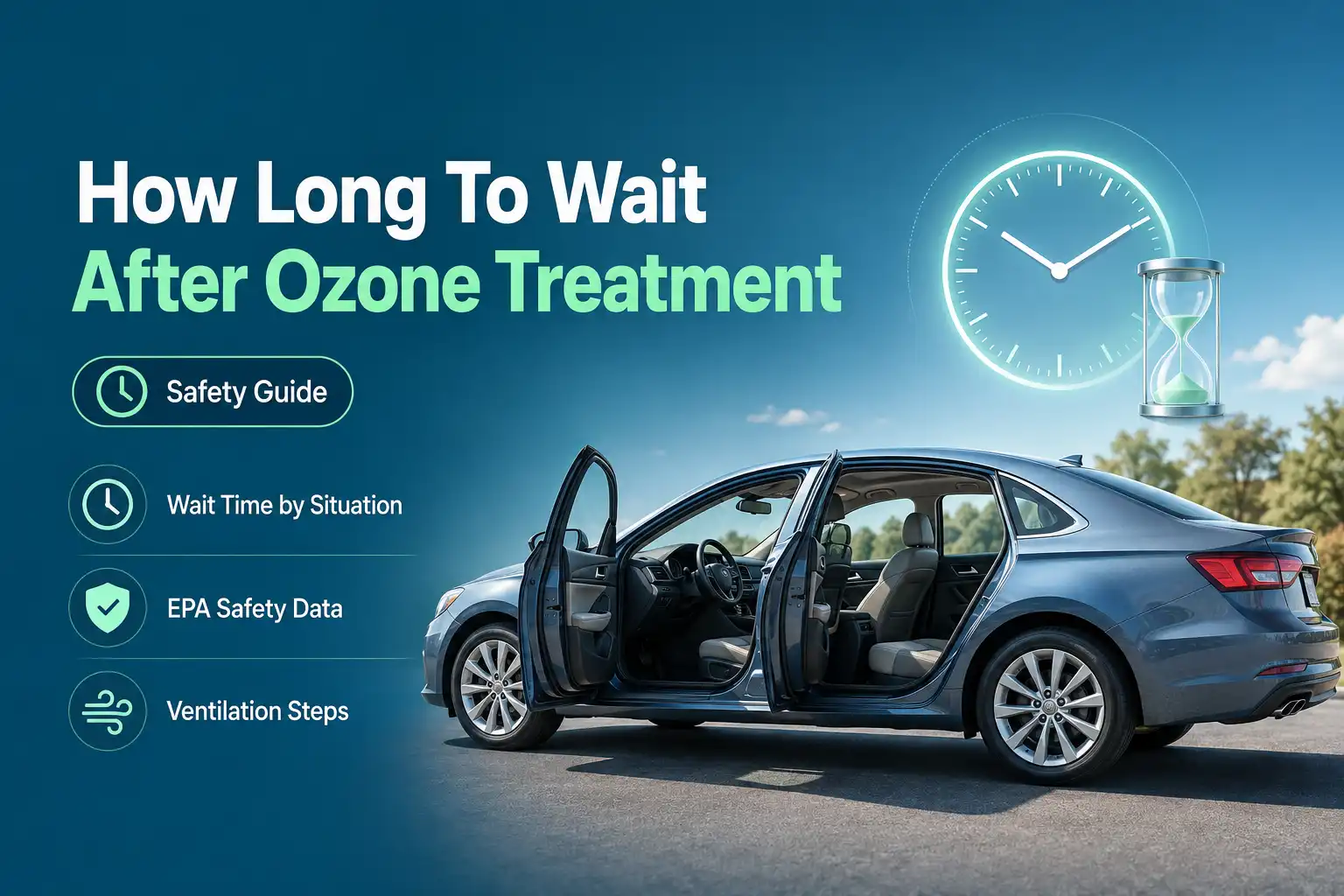
Most cars need 30 minutes to 2 hours of ventilation after an ozone treatment before it is safe to get back in. The exact time depends on how long the generator ran, how large your cabin is, and whether anyone riding is more sensitive to the residual gas.

Audible — Listen Free for 30 Days
One free credit a month and thousands of titles included.
Listen Free for 30 DaysWaiting long enough matters because ozone has to fully break back down into breathable oxygen. Getting back in too soon means breathing a gas the EPA has directly linked to respiratory irritation, not just noticing a strong smell.
Run time and wait time are two separate steps, and mixing them up is a common mistake. Run time is how long the generator itself operates, while wait time starts only after the machine has been turned off and you are ready to ventilate.
How Long To Leave The Ozone Generator Running In Your Car
Recommended Best Deal Products


Most car odors clear with a 30 to 120 minute run time, depending on how strong the smell is. A light odor like fast food or a wet umbrella often clears in as little as 15 to 30 minutes.
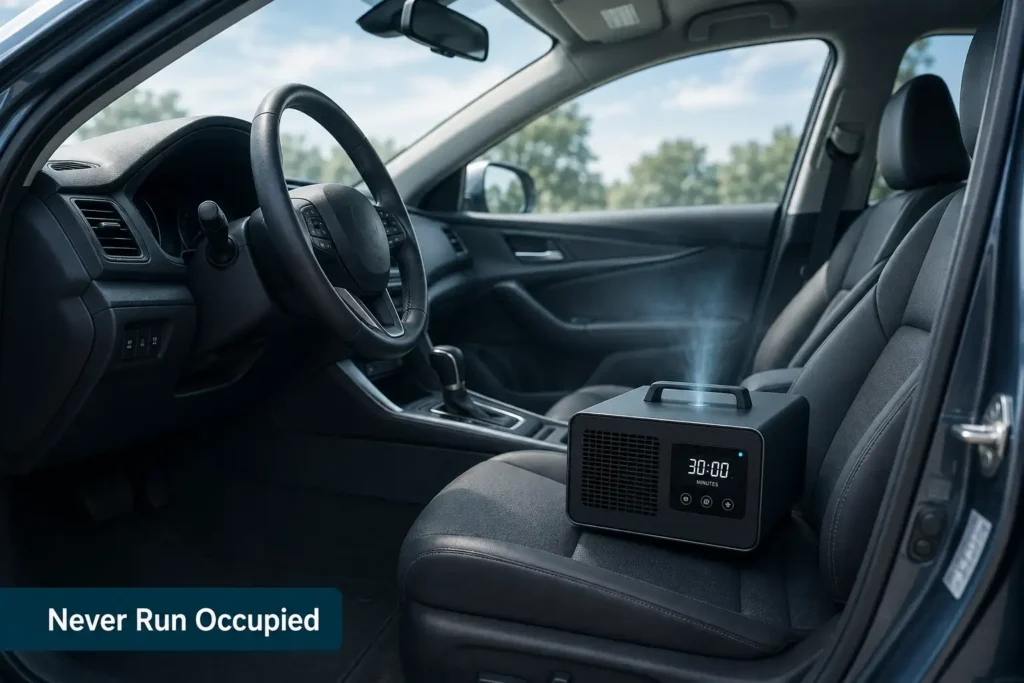
Smoke, pet accidents, and mold usually need the full 1 to 2 hour range, and severe cases may call for a second treatment rather than one extended cycle. Detailing guidance generally caps a single cycle at 2 hours, since running much longer raises the risk of drying out rubber seals and interior trim without meaningfully improving the result.
Never run an ozone generator overnight or for 8 or more hours in one cycle. If the odor is still noticeable after a full cycle and proper ventilation, repeat the treatment on a separate occasion instead of extending the run time indefinitely.
A distinct, sharp smell right after the cycle ends is normal and does not mean the treatment failed. That smell is the ozone itself, and it fades on its own once the required wait time and ventilation are complete, so there is no need to mask it with an air freshener before that point.
What Determines How Long You Should Wait After Treatment
Treatment Length And Output
A short, low-output cycle produces less residual ozone than a long cycle on a high-output machine. The stronger and longer the treatment, the more time the gas needs to fully decay.
Vehicle Size
A sedan has less air to clear than an SUV or truck, so residual ozone dissipates faster once the doors and windows open. Larger cabins hold the gas a little longer even with the same ventilation effort, and cargo areas in SUVs and vans add extra volume that also needs to clear.

Prime for Young Adults — 6 Months Free
Students and 18–24s get six months of Prime free, then half price.
Start 6 Months FreeOdor Severity And Passenger Sensitivity
Heavier treatments used for smoke or mold leave more residual gas behind than a quick treatment for a mild smell. Children, older adults, and anyone with asthma or another respiratory condition should wait longer than the minimum, regardless of how the cabin smells.
People also vary in how strongly they react to leftover ozone even outside these groups. If you or a passenger has ever had a strong reaction to cleaning fumes, smoke, or other airborne irritants, treat that as a signal to wait toward the high end of the range as well.
If You Ran A Short Treatment Cycle
If you ran the generator for 30 minutes or less on a low-output setting for a mild odor, wait 30 to 45 minutes after the cycle ends before opening the door. Open all doors and run the fan on fresh air mode for about 10 minutes before driving.
This shorter path is common for everyday smells like a spilled drink or a fast food bag left in the car overnight. If the cabin still smells noticeably like ozone after the 45 minute mark, give it another 15 minutes rather than getting in right away.
If You Ran A Longer Or Higher Output Treatment
If you ran the generator for an hour or more, or used a higher-output unit for smoke, mold, or a strong pet odor, wait at least 2 hours before re-entering the vehicle. Air the car outdoors with all doors and windows open the entire time, since residual concentrations from a stronger treatment stay hazardous longer during the transition back to oxygen.
Smoke odor treatments are usually the ones that push closer to the 2 hour mark or beyond, since heavier residue means a stronger cycle in the first place. If cigarette smell keeps coming back after ventilation and repeat ozone cycles, our guide to the best deodorizer for cigarette smoke covers cleaning and enzyme-based options that target the residue ozone alone may not fully remove.
If You Drive A Larger Vehicle Or Have Sensitive Passengers
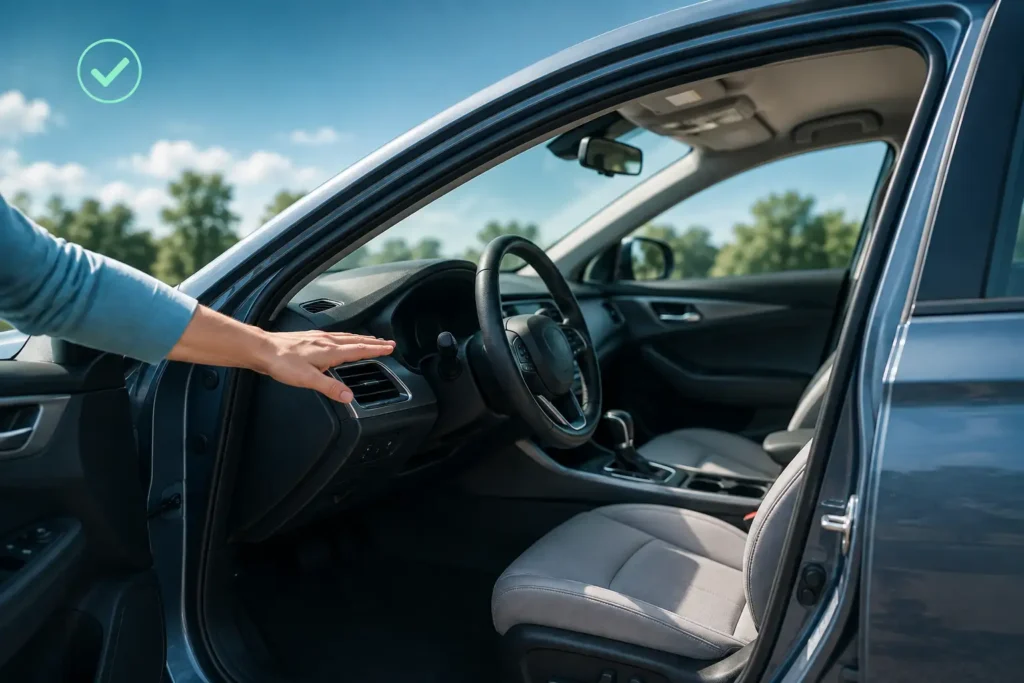
- SUVs, trucks, and minivans: Add 15 to 30 minutes to whichever wait time applies above, since the larger cabin holds residual gas a little longer.
- Children or older adult passengers: Wait toward the longer end of the range and ventilate a few extra minutes before they get in.
- Passengers with asthma or respiratory conditions: Wait the full high end of the range every time, even after a short, mild treatment, and consider stepping outside first to confirm there is no lingering ozone smell.
Why Ozone Needs Time To Fully Break Down
Ozone is a reactive gas made of three oxygen atoms that naturally decays back into the two-atom oxygen we breathe. That decay takes time, and opening the doors and windows speeds up the process by replacing the air inside the cabin with fresh air from outside rather than waiting for the gas to break down in a sealed space.
The wait matters because of documented health effects, not just comfort. The EPA states that ozone exposure can worsen chronic respiratory conditions such as asthma and reduce the body’s ability to fight off respiratory infection, and that people vary widely in how sensitive they are to it.
No federal agency has approved ozone generators for use in occupied spaces. The California Air Resources Board notes that elevated ozone exposure can cause permanent lung damage over time and that children and people with existing respiratory disease face the highest risk.

Prime Gaming — Free In-Game Loot
Free monthly games, in-game content and a Twitch channel sub.
Claim Free LootOzone Generator Wait Time Chart By Situation
| Situation | Minimum Wait Time | Ventilation Steps |
|---|---|---|
| Short cycle, sedan, mild odor | 30 to 45 minutes | Open all doors, fresh air fan for 10 minutes |
| Long or high-output cycle, any vehicle | 2 hours minimum | Doors and windows open outdoors the full wait |
| SUV, truck, or minivan | Add 15 to 30 minutes to base wait | Same steps, larger cabin needs extra time |
| Children, older adults, or asthma | High end of range, every time | Confirm no ozone smell before entry |
Ozone Generator Wait Time FAQ
How do I know if it is safe to get back in?
If you no longer notice a sharp, chemical smell after the full recommended wait and ventilation period, it is generally safe to re-enter. If any hint of that smell remains, wait another 15 to 30 minutes, since the smell is a reliable sign that residual ozone is still present.
Can I just crack a window instead of fully airing out?
No. Ozone needs cross ventilation to clear efficiently, so open at least two doors or all four windows rather than cracking a single window. A single gap does not create enough airflow to replace the air inside the cabin within the recommended time.
Does the ozone smell mean it is still dangerous?
Yes. The sharp smell after treatment means residual ozone is still present at a noticeable concentration. Wait until the smell is completely gone and the recommended time has passed before getting in, rather than judging safety by comfort alone.
Is it safe for kids or pets to ride right after?
Wait toward the longer end of the recommended range and confirm the smell is fully gone before kids or pets get in, since both groups are more sensitive to residual ozone than most adults and cannot report symptoms as clearly.
What happens if I get back in too soon?
Getting in before the ozone has fully cleared can cause coughing, chest tightness, or throat irritation within minutes. Step back out, open the doors wider, and wait longer before trying again, since symptoms typically ease once you are back in fresh air.
How long to wait after an ozone treatment depends on the treatment length, vehicle size, and who is riding, not a single fixed number. Use the chart above to match your exact situation, ventilate fully with doors and windows open, and confirm the ozone smell is gone before anyone gets back in. Keeping a simple record of your run time and wait time for each treatment also makes it easier to repeat what worked if the odor returns later.
Once the cabin has aired out, an air freshener review like this one can help you decide whether to add a scent afterward. For guidance on choosing the right unit before your next treatment, see our best ozone generator for car guide.