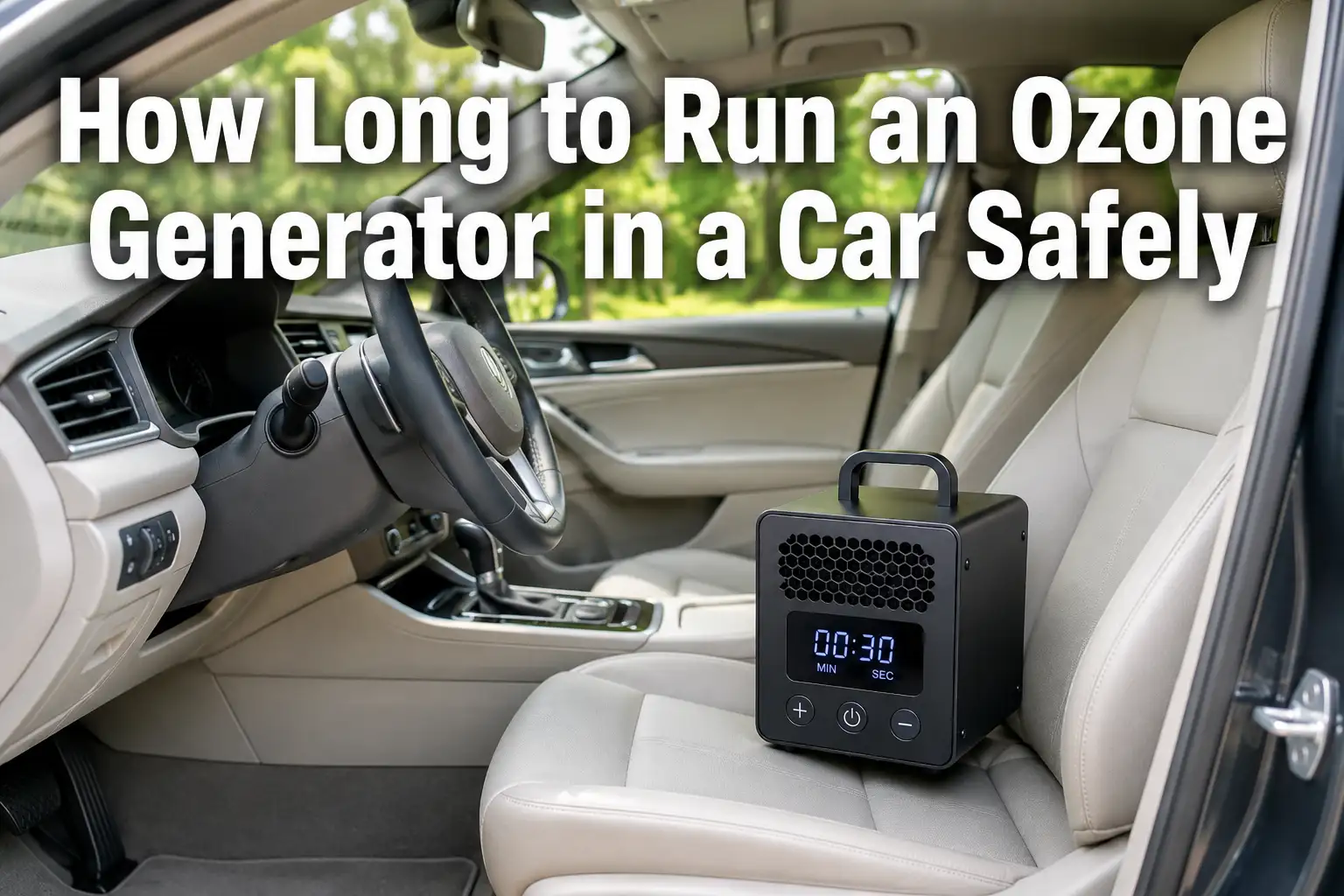
How Long to Run an Ozone Generator in a Car Safely
Last Updated on August 6, 2026 by Albert Duke
Most ozone treatments run somewhere between 15 minutes and 4 hours, and the right number for your car depends on two things: how bad the odor is and how big your cabin is. Running it longer than the situation calls for does not speed up odor removal, it just raises the risk of damage to seals, leather, and trim. This guide breaks the timing down by both variables so you can run one safe, effective session instead of guessing.

Audible — Listen Free for 30 Days
One free credit a month and thousands of titles included.
Listen Free for 30 DaysHow Long to Run an Ozone Generator by Odor Severity
Recommended Best Deal Products

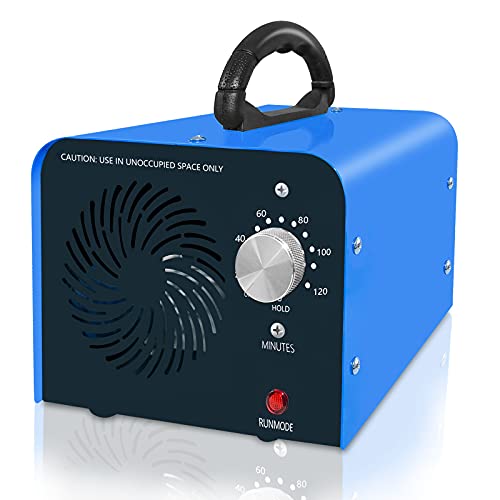

Odor severity is the biggest factor in run time. A faint musty smell needs far less exposure than a car that reeks of cigarette smoke, and treating them the same way either wastes time or risks unnecessary damage.
| Odor Severity | Typical Run Time | Vehicle Size Adjustment | Repeat Treatment Needed |
|---|---|---|---|
| Light or Mild | 15 to 30 minutes | Add 5 to 10 minutes for SUVs and trucks | Rarely, one session usually clears it |
| Moderate | 30 to 60 minutes | Add 10 to 15 minutes for larger cabins | Occasionally, if smell returns after 24 hours |
| Severe, Smoke or Mold | 2 to 4 hours | Add 30 minutes or run a second session for vans and full-size SUVs | Often, multiple shorter sessions beat one long one |
These ranges hold up across most consumer ozone generators. Detailing industry guidance places light odors at 15 to 30 minutes, moderate odors at 30 to 60 minutes, and severe smoke odors at 2 to 4 hours or multiple treatments, which lines up with what most consumer-unit manufacturers recommend on their own product timers.
Running the generator well past these ranges does not clean the car any faster. It just raises exposure time on materials that are sensitive to ozone, which is covered in more detail further down.
How Vehicle Size Changes Ozone Generator Run Time
A compact sedan reaches an effective ozone concentration much faster than a three-row SUV or a cargo van simply because there is less air volume to saturate. If you are treating a larger vehicle, plan on adding time rather than assuming the same session length will work.
The generator’s output, measured in milligrams per hour, matters just as much as cabin size. A higher-output unit reaches the same concentration faster in a larger vehicle, while a smaller consumer unit may need the extra time listed in the table above to fully saturate a bigger cabin. If you are shopping for a unit and want one with output high enough to handle a larger vehicle without excessive run time, our best ozone generator for car guide breaks down output ratings by vehicle size.
Step by Step Safe Ozone Generator Session for Your Car
Recommended Best Deal Products
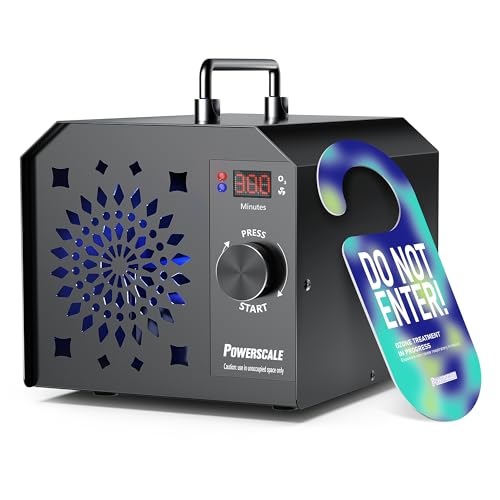
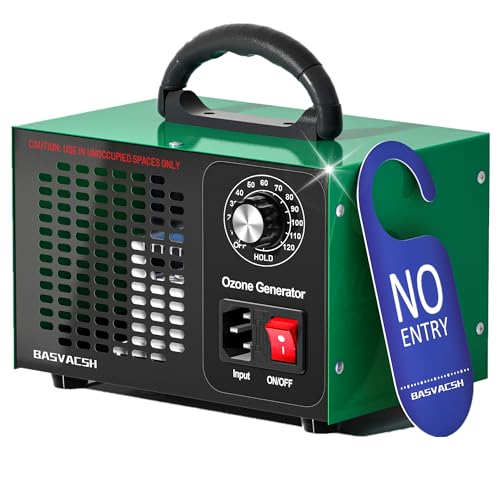

Following the right sequence matters as much as the run time itself. Skipping the prep or ventilation steps is where most owners run into trouble.
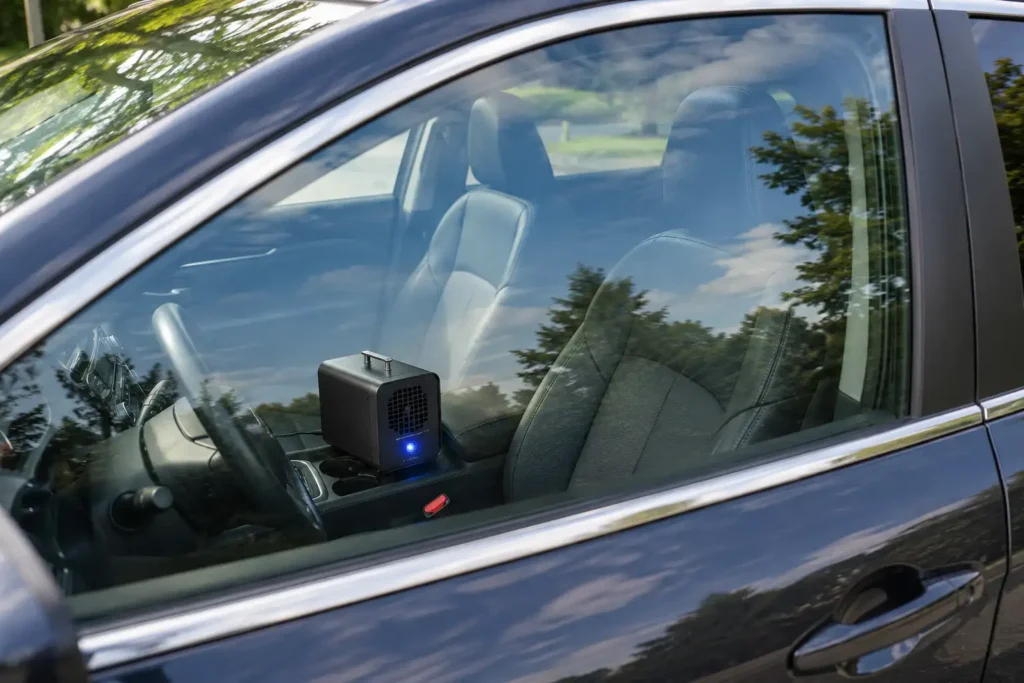
- Vacuum and wipe down the interior first. Ozone neutralizes odor molecules in the air, but it does not clean embedded stains or debris, and a car interior detailing kit handles that step before you start.
- Set the generator’s timer before you leave the vehicle, using the run time from the table above as your starting point.
- Close all windows and doors, and make sure no people or pets are inside or will re-enter during the session.
- Turn the car’s HVAC to recirculate mode partway through the session if the vehicle can run with the engine or accessory power on, since running the fan on high with the system in recirculate mode pulls ozone through the ventilation system to reach the evaporator and vents where odors often hide.
- Do not extend the session past the recommended range just because the smell is still faint through the glass, ozone concentration inside a sealed cabin is much higher than what you can detect from outside.
Ozone Generator Run Time for Common Car Odors
The severity chart above works as a starting point, but a few specific odor types deserve their own quick guidance since owners search for them individually.
- New car smell you want to reduce: This is a mild case, 15 to 20 minutes is usually enough since the smell comes from off-gassing materials rather than embedded odor sources.
- Pet odor or accidents: Falls in the moderate range at 30 to 60 minutes, but only after the stain or accident spot has been cleaned and dried first, ozone will not remove odor still trapped in wet padding.
- Vomit or bodily fluid odor: Treat this as severe, 2 to 4 hours, and expect to repeat the session once after a thorough interior cleaning, since these odors tend to soak deep into foam and carpet backing.
- Mildew or musty smell from water intrusion: Severe range applies here too, and drying out the actual moisture source first is essential, ozone treatment on a still-damp interior will not stop mold from returning.
Why Running It Too Long Causes Car Interior Damage
Recommended Best Deal Products


Ozone is reactive by design, which is exactly why it neutralizes odor molecules so effectively. That same reactivity attacks rubber seals, leather, and certain plastics through a process called ozone cracking when exposure runs long or concentrated enough.

Prime for Young Adults — 6 Months Free
Students and 18–24s get six months of Prime free, then half price.
Start 6 Months FreeShort, properly timed sessions rarely cause visible damage. The risk climbs sharply with overnight runs, back-to-back sessions with no recovery time, or units left on for hours beyond what the odor actually required. Our full breakdown of what ozone damage looks like and what it costs to fix covers the specific materials at risk and realistic repair costs if a session already ran too long.
No federal agency has approved ozone generators for use in occupied spaces, which is a health reason to keep sessions contained and controlled, not just a materials one. The California Air Resources Board also warns that ozone can react with existing air chemicals to form secondary pollutants like formaldehyde, another reason a controlled, well-timed session beats an extended one.
How to Air Out Your Car After an Ozone Treatment
Ventilation is not optional, and rushing it is one of the most common mistakes after a session ends.

- Open every door and window as soon as the timer ends, and let the cabin air out for 15 to 30 minutes before anyone gets back in.
- Run the climate control on fresh air mode with the fan on high during this window rather than recirculate, since ozone breaks down quickly once fresh airflow moves through the cabin.
- Do not judge safety by smell alone. A faint chlorine-like scent can still mean ozone concentration is above a safe breathing level even after the strongest smell has faded.
Signs You Need a Repeat Treatment Instead of a Longer One
If odor returns within 24 hours of a properly timed session, run a second short treatment rather than extending the next one. Repeated short sessions are safer than one long session and usually work just as well for stubborn smells.
If the smell persists after two or three sessions, the source itself likely was not fully cleaned before treatment. Odor trapped in carpet padding, seat foam, or the cabin air filter needs to be physically removed or replaced, since ozone only neutralizes airborne odor molecules, not the material holding the smell. Swapping a saturated cabin air filter often resolves lingering smoke odor that ozone alone could not fully clear.
It is also worth checking whether the odor is actually gone or simply masked by the ozone smell itself right after treatment. Wait a full day after the ventilation window before judging whether a session worked, since some odors that seem gone immediately after treatment can reappear once the cabin returns to normal temperature and humidity.
Frequently Asked Questions
Can I run an ozone generator in my car overnight
No. Overnight runs go well beyond the safe range for any odor severity and significantly raise the risk of damage to seals, leather, and trim. Stick to the ranges in the table above and repeat a short session the next day if needed.
Is 30 minutes enough to remove smoke smell from a car
Thirty minutes handles light smoke odor in most cases, but heavier or long-embedded smoke smell usually needs 2 to 4 hours or multiple shorter sessions. Cleaning the interior and replacing the cabin air filter first makes a single session far more effective.
Do I need to turn the AC on during ozone treatment
Running the HVAC in recirculate mode partway through the session helps push ozone through the vents and evaporator, where trapped odors often hide. It is not strictly required for a basic treatment, but it improves results for smoke and mildew odors specifically.

Prime Gaming — Free In-Game Loot
Free monthly games, in-game content and a Twitch channel sub.
Claim Free LootHow long should I wait to drive after ozone treatment
Air the cabin out for 15 to 30 minutes with doors and windows open and the fan on fresh air mode before getting back in and driving. Waiting the full ventilation window matters more than judging by smell alone.
Does a stronger ozone generator mean a shorter run time
Yes, generally. A higher-output unit reaches effective concentration faster, which can shorten the needed run time, especially in larger vehicles. It does not change the odor-severity guidelines, a stronger unit still only needs as long as the odor actually requires.