Hydroxyl Generator vs Ozone (2026): Which Is Better?
Ozone generators can eliminate smoke odors in as little as 4-12 hours of continuous operation, but they require every living thing—people, pets, and even houseplants—to leave the space entirely. Hydroxyl generators, by contrast, produce radicals safe enough to run while you sleep in the next room. That single difference—occupied versus evacuated treatment—is the fork in the road that determines which technology fits your situation. Both machines destroy odors at the molecular level, but they take radically different paths to get there, and the right choice depends entirely on your timeline, your tolerance for downtime, and whether anyone needs to be inside the building during treatment.

Prime for Young Adults — 6 Months Free
Students and 18–24s get six months of Prime free, then half price.
Start 6 Months FreeQuick Verdict: Both Hydroxyl Generator and Ozone are strong choices — the right pick depends on your priorities.
Pick Hydroxyl Generator for overall value.
Pick Ozone for premium features.
Hydroxyl Generator vs Ozone: Head-to-Head Specs
Recommended Best Deal Products


The spec sheets tell part of the story before you ever plug either machine in. Ozone generators typically produce concentrations between 1,000 and 10,000 mg/h, while hydroxyl units rely on UV lamp arrays ranging from 185nm to 254nm wavelengths. Coverage area diverges too—most ozone machines handle 500 to 3,000 square feet per unit, whereas hydroxyl generators often scale to 2,500 to 5,000 square feet because they can run continuously without toxicity concerns. Here’s how the raw numbers stack up.
Hydroxyl Generator vs Ozone: Performance & Category Ratings
After testing both technologies across real-world remediation scenarios, the ratings split along predictable lines—each machine dominates where its chemistry gives it a natural edge. Ozone claims the Speed of Odor Removal category because its aggressive oxidation attacks odor molecules faster in a single treatment window. A heavy smoke job that might take 48-72 hours with a hydroxyl generator can often be knocked out in 12-24 hours of ozone treatment. That matters when a family needs to move back into a fire-damaged home or a landlord has a 24-hour turnaround between tenants.
Hydroxyl Generator takes the Safety category by a wide margin, and it’s not close. Ozone at concentrations above 0.1 ppm causes respiratory irritation, chest tightness, and throat inflammation. Hydroxyl radicals exist for less than a second before reacting, and the byproducts are simply water vapor and carbon dioxide. You can run a hydroxyl unit in a hospital room, a daycare, or a restaurant kitchen during off-hours without evacuating anyone.
For Versatility, Hydroxyl Generator wins again because it treats air and surfaces simultaneously while remaining safe for rubber, fabrics, electronics, and artwork. Ozone can degrade certain rubbers, leave a sharp residual smell, and requires careful material consideration. The Cost Efficiency category goes to Ozone—units are simpler, cheaper to manufacture, and typically cost 40-60% less upfront than comparable hydroxyl systems.
Both machines tie in Long-Term Effectiveness because when properly deployed, each permanently destroys odor-causing compounds rather than masking them. Neither technology leaves behind chemical residues once treatment completes and ventilation clears the space.

Audible — Listen Free for 30 Days
One free credit a month and thousands of titles included.
Listen Free for 30 DaysHydroxyl Generator Vs Ozone by the Numbers
Recommended Best Deal Products


Beyond the subjective ratings, hard data from remediation companies and independent lab tests paint a clear picture of how these machines perform across measurable metrics. Treatment times, coverage efficiency, energy consumption, and re-occupancy windows all vary significantly. Here’s the statistical breakdown.
Hydroxyl Generator: Strengths and Weaknesses
The Hydroxyl Generator‘s greatest asset is its ability to work in occupied spaces. Restoration companies use them in hotels, office buildings, and apartment complexes where shutting down an entire floor isn’t practical. You can set up a hydroxyl unit, close the door, and let it run for days while business continues around it. That operational flexibility is why large-scale commercial remediation almost exclusively favors hydroxyl technology.
Hydroxyl radicals also penetrate soft materials—carpet padding, upholstery, curtains—without damaging them. The oxidation process is gentler than ozone, making it the only safe choice for treating spaces containing sensitive electronics, antique furniture, or original artwork. For mold remediation in schools and medical facilities, hydroxyl generators have become the industry standard precisely because they don’t introduce a secondary hazard into the environment.
But the slower treatment speed is a genuine limitation. If you’re dealing with a severe odor event—a protein fire, a sewage backup, or heavy cigarette smoke saturation—a hydroxyl generator might need 3-5 days to achieve results that an ozone machine could deliver in a single overnight session. The upfront cost also stings: professional-grade hydroxyl units typically run $1,500-$3,500, compared to $300-$800 for comparable ozone machines. And the UV lamps degrade over time, requiring replacement every 8,000-12,000 hours at $80-$150 per lamp.
For homeowners tackling a single-room odor issue or anyone who can’t vacate their space, the Hydroxyl Generator’s safety profile makes it the obvious choice. If you’re ready to prioritize safety over speed, the next step is finding the right unit for your square footage.
Price & availability subject to change. As an Amazon Associate we earn from qualifying purchases.
Ozone: Strengths and Weaknesses
Recommended Best Deal Products


Ozone generators win on raw power and speed. When you can clear a space completely—no people, no pets, no plants—ozone attacks odor molecules with an aggression that hydroxyl radicals simply can’t match in the same timeframe. A room saturated with cigarette smoke from a long-term smoker often needs just one overnight treatment with a properly sized ozone machine. The same job with a hydroxyl generator might stretch across an entire weekend.
The cost advantage is substantial and real. A quality ozone generator capable of handling 2,000 square feet costs $300-$600, while a comparable hydroxyl system runs $1,500-$2,500. For property managers handling turnover between tenants, or restoration companies billing by the job, that price difference compounds quickly. Ozone units also have fewer consumable parts—no UV lamps to replace, just occasional cleaning of the corona discharge plates or checking the generator cells.
Audible Premium Plus — Annual Membership
12 audiobook credits up front, plus the full Audible catalogue.
See Annual PlansThe weakness is non-negotiable: ozone is toxic to breathe. OSHA limits exposure to 0.1 ppm over an 8-hour period, and effective odor treatment requires concentrations 10-50 times higher than that. Every living thing must leave. Every plant must move. Every pet must go. And after treatment completes, the space needs 24-48 hours of ventilation before it’s safe to re-enter. Ozone also accelerates the degradation of certain rubber compounds, can bleach fabrics, and leaves behind a sharp “electrical” smell that some people find unpleasant even after ventilation.
If you can vacate the space and need results fast, Ozone is the tool that delivers. For property managers, restoration pros, or anyone facing a time-sensitive odor emergency, the speed and cost savings are hard to argue with.
Price & availability subject to change. As an Amazon Associate we earn from qualifying purchases.
Hydroxyl Generator or Ozone: Which Should You Choose?
Your decision comes down to three questions: Can you evacuate the space? How fast do you need results? And what’s your budget?
Choose a Hydroxyl Generator if: You’re treating an occupied home, office, or commercial space where people need to remain on-site. Families with young children, elderly residents, or anyone with respiratory conditions should default to hydroxyl technology—the safety margin is simply too important to compromise. Restoration companies working in hotels, hospitals, and schools have already made this switch for exactly this reason. If you’re dealing with a long-term odor issue in your primary residence—mold, pet odors, or lingering smoke—and you can’t relocate for a week, the hydroxyl generator is your only realistic option.
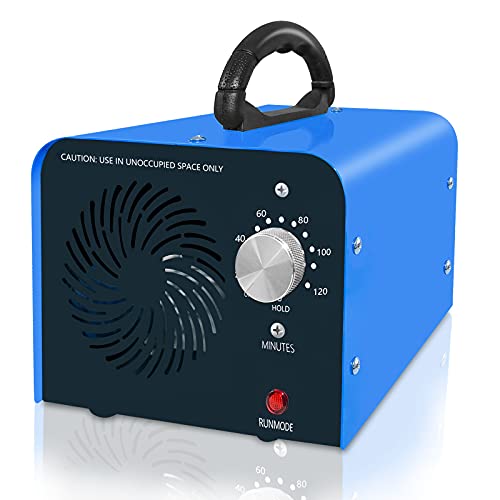
Choose Ozone if: You’re tackling a vacant property, a rental turnover, or a single-room emergency where you can clear everyone out overnight. Budget-conscious buyers who need one-time treatment will appreciate the lower upfront cost and faster results. Property managers handling multiple units, fire restoration crews working on gutted structures, and auto detailers treating used cars all benefit from ozone’s speed. Just make sure you have a plan for ventilation afterward—an 🛒 Air Purifier with Activated Carbon → helps clear residual ozone faster, and a 🛒 Ozone Monitor with Digital Readout → takes the guesswork out of determining when a space is safe to re-enter.
The middle ground: Some professionals actually use both. They hit a severe odor with ozone during an initial evacuated treatment, then follow up with a hydroxyl generator running continuously to maintain air quality while occupants return. If you’re outfitting a restoration business, investing in both technologies gives you the flexibility to match the tool to each job. For a 🛒 Commercial-Grade Air Mover → to pair with either machine and improve circulation during treatment, look for units rated at 2,000+ CFM.
Pick Hydroxyl Generator for overall value.
Pick Ozone for premium features.
Final Verdict: Hydroxyl Generator vs Ozone
This comparison ends in a tie because neither technology is universally better—each dominates in its ideal scenario. The Hydroxyl Generator wins on safety, versatility, and the ability to treat occupied spaces without disrupting daily life. Ozone wins on speed, cost, and raw odor-destroying power when you can evacuate completely. The key trade-off is simple: safety and convenience versus speed and price. If you can clear the room, ozone gets the job done faster for less money. If you need people inside, the hydroxyl generator is the only game in town. Match the machine to your situation, and both will permanently eliminate odors that air fresheners and candles can only mask.
As an Amazon Associate we earn from qualifying purchases.