Battery Light On in Car While Driving: Causes, Test, and Fix
Last Updated on July 24, 2026 by Albert Duke
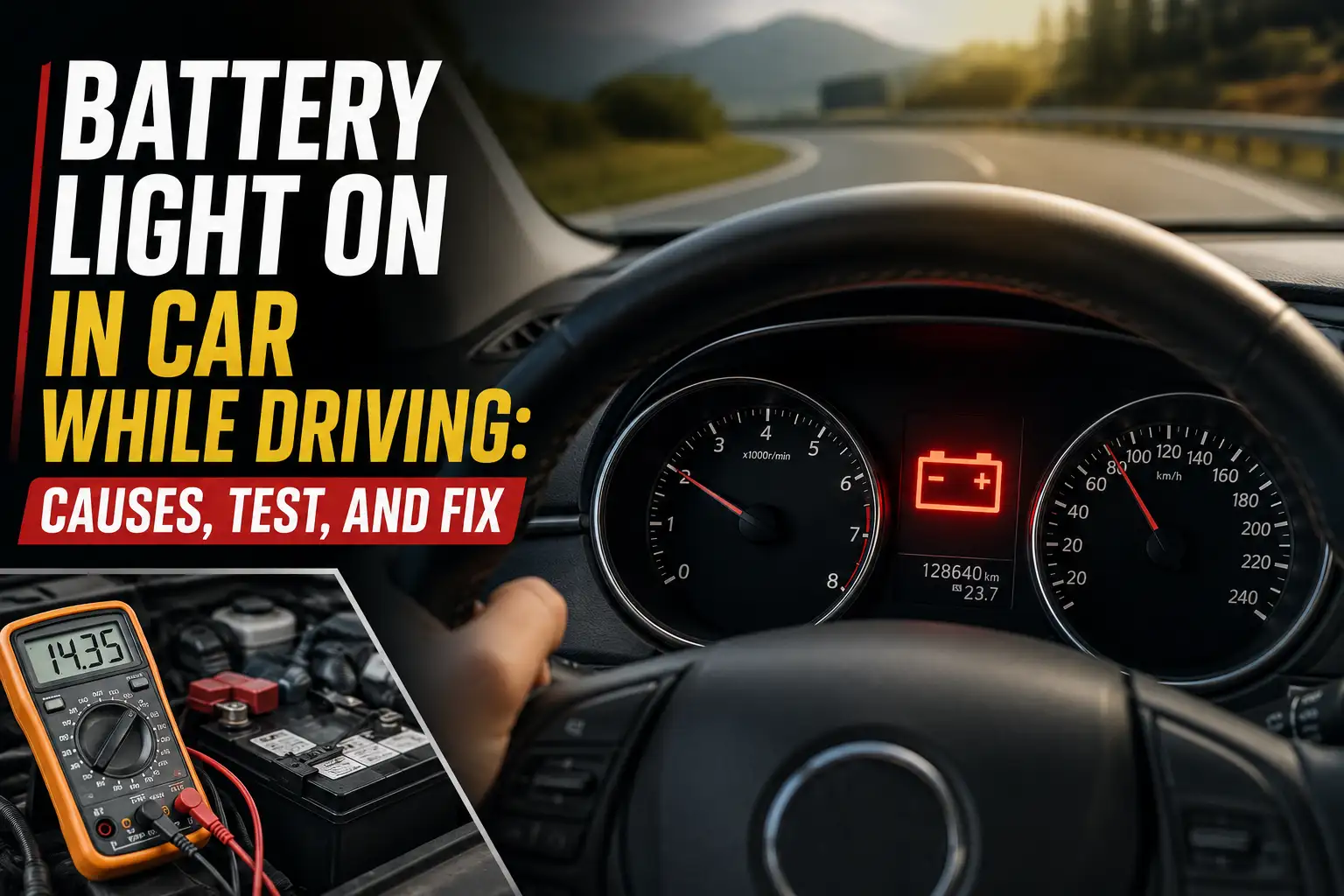
If your battery light comes on and stays on while you’re driving, it means your alternator has stopped charging the battery, and your car is now running purely on whatever charge is left stored in the battery itself. This isn’t the same as a quick flicker when you start the engine, that’s normal. A battery light that stays lit is telling you the charging system has failed.

Audible — Listen Free for 30 Days
One free credit a month and thousands of titles included.
Listen Free for 30 DaysHere’s what to do right now: turn off anything electrical you don’t strictly need, air conditioning, heated seats, the stereo, phone chargers, to conserve whatever power remains. Keep the headlights on if it’s dark, since visibility matters more than a few extra minutes of runtime.
Depending on your battery’s health, you may have around an hour of driving before the car loses enough power to keep running. Don’t shut the engine off until you’ve reached a safe place to stop, since a depleted battery may not have enough charge left to start the car again.
This guide walks through what actually causes this, a real multimeter test you can run yourself to confirm the diagnosis, a clear answer on whether it’s safe to keep driving, and what repairs typically cost so you know if a quote is fair.
What Causes the Battery Light to Come On While Driving
Several different issues can trigger this light, ranging from a five-minute fix to a genuine part replacement.
Loose or corroded battery terminals. If the cable clamps connecting the battery to the rest of the electrical system are loose or covered in corrosion, current can’t flow efficiently, which can trigger the light even if the battery and alternator are both perfectly healthy. This is worth checking first since it costs nothing to fix if caught early.
A worn or slipping serpentine belt. This belt drives the alternator along with several other engine accessories. If it’s loose, cracked, or has slipped off its pulley, the alternator can’t spin properly and won’t generate power, even if the alternator itself is fine.
A failing alternator. This is the most common root cause. The alternator converts mechanical energy from the running engine into the electrical power that recharges your battery and runs your car’s electronics. When it fails internally, whether from worn brushes, a bad diode, or general wear, it simply stops producing enough power.
A bad voltage regulator. This component, part of the alternator, controls how much power gets sent to the battery. A failing regulator can cause overcharging rather than undercharging, which is actually a different problem with its own warning signs, like a battery that runs hot or drains fluid faster than normal.

Prime for Young Adults — 6 Months Free
Students and 18–24s get six months of Prime free, then half price.
Start 6 Months FreeA blown fuse or wiring fault. Less common, but a blown fuse in the charging circuit or a damaged wire can cause the same symptom without anything being mechanically wrong with the battery or alternator at all.
How to Test Your Alternator and Battery With a Multimeter
| Test Condition | Reading | What It Means |
|---|---|---|
| Battery at rest, engine off | ~12.6V | Battery is healthy and fully charged |
| Battery at rest, engine off | Below 12.4V | Battery may be weak, separate from alternator |
| Engine running, normal charging | 13.8V to 14.4V | Alternator is charging correctly |
| Engine running, undercharging | Below 13V | Alternator, belt, or wiring fault likely |
| Engine running, overcharging | Above 15V | Bad voltage regulator, risk of battery damage |
You don’t have to guess which of these it is. A basic digital multimeter, the kind sold at any auto parts store for under $20, lets you confirm the diagnosis yourself in a few minutes.
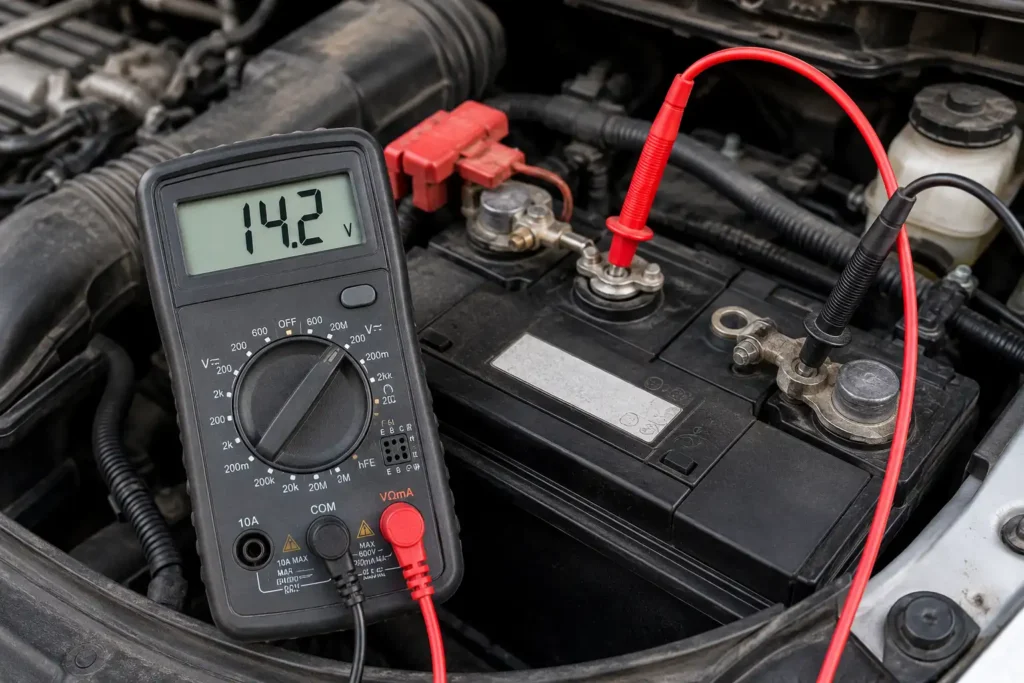
- Turn off the engine completely. Set your multimeter to DC voltage mode, on a range above 15V if it’s not auto-ranging.
- Test the battery at rest. Connect the red probe to the positive terminal and the black probe to the negative terminal. A fully charged, healthy battery should read approximately 12.6 volts. If it reads noticeably lower, the battery itself may be weak, separate from any alternator issue.
- Start the engine and test again, with the probes still connected the same way. A properly functioning alternator should push that reading up to somewhere between 13.8 and 14.4 volts. This confirms the alternator is actively charging the battery while the engine runs.
- Interpret the results:
- Below 13 volts while running means the alternator isn’t charging properly, pointing toward a failing alternator, a slipping belt, or a wiring issue.
- Between 13.8 and 14.4 volts is the healthy range, meaning the charging system is working correctly and your battery light issue may be a loose connection or a false trigger elsewhere.
- Above 15 volts points to a bad voltage regulator overcharging the system, which can damage the battery over time if left unaddressed.
- For a more thorough check, rev the engine to around 1,500 RPM and retake the reading, since idle speed alone can sometimes be too low for the alternator to show its true output. You can also turn on multiple accessories (headlights, AC, radio) during the test to see if the voltage holds steady under load; a healthy system shouldn’t drop much below 13 volts even with everything running.
One important safety note: never disconnect the battery cable while the engine is running to “test” the alternator. Some old-school advice suggests this, if the engine keeps running, the alternator is working, but this method risks a voltage spike that can damage your ECU, radio, and other sensitive electronics. A multimeter test gives you the same answer without the risk.
Is It Safe to Keep Driving With the Battery Light On
This depends heavily on where you are and how far you need to go.
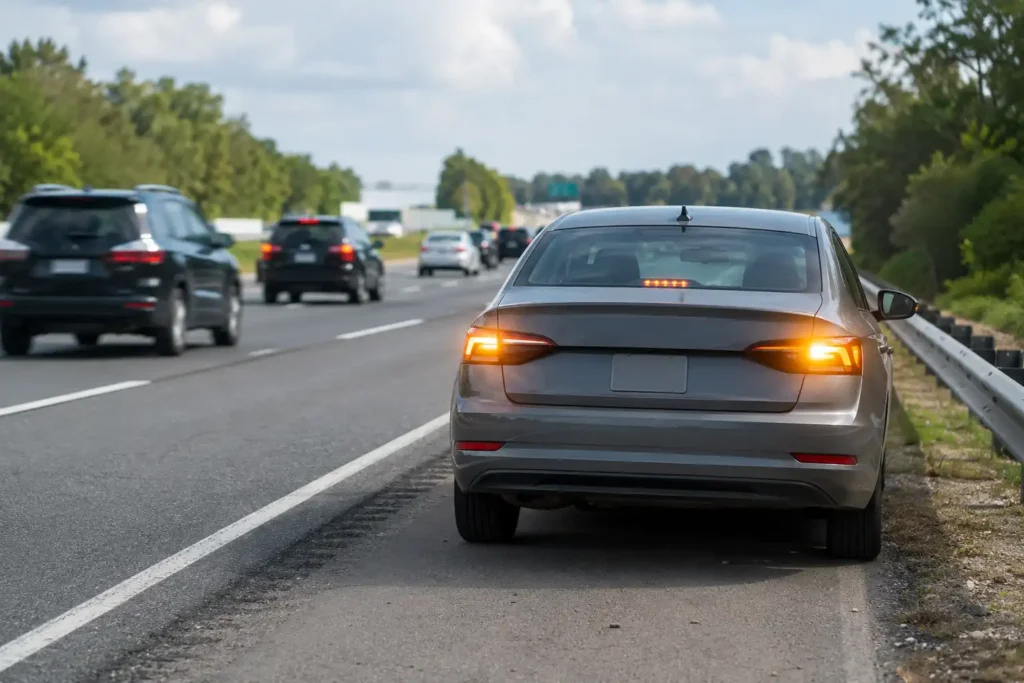
If you’re close to a safe stopping point (home, a repair shop, a parking lot), it’s generally reasonable to continue with nonessential electronics turned off, as outlined above. Most vehicles will keep running for a while on stored battery charge alone.
If you’re on a highway or far from anywhere safe to stop, this becomes riskier. As the battery depletes further, you risk losing power steering assist, which makes the car significantly harder to control, especially at low speeds or when maneuvering. In more severe cases, the engine can stall outright, which is far more dangerous in fast-moving traffic than pulling over early.
The general rule: if you can reach a safe destination within a reasonable distance and you’re conserving power, continuing cautiously is usually fine. If the light comes with other warning signs, dimming headlights, a stalling engine, unusual smells, or the power steering feeling heavier than normal, treat that as your signal to pull over immediately rather than pushing further.
Keeping a reliable jump starter in your car is a smart backup for exactly this kind of situation, since a battery that’s drained too far may need a jump to get moving again even after the underlying issue is fixed.
How Much Does It Cost to Fix a Battery Light Problem
Repair costs vary enormously depending on what’s actually wrong, which is exactly why the multimeter test above is worth doing before you assume the worst.

Prime Gaming — Free In-Game Loot
Free monthly games, in-game content and a Twitch channel sub.
Claim Free LootLoose terminal or corrosion: Often free or under $20 in cleaning supplies (a wire brush and terminal cleaner) if you catch it yourself. This is the cheapest possible outcome and worth ruling out first.
Serpentine belt replacement: A relatively minor cost on its own, and shops will often replace it during alternator work anyway since it typically has to come off regardless.
Alternator replacement: This is where estimates vary widely depending on source and vehicle. RepairPal and Kelley Blue Book both put the average full replacement, parts and labor included, somewhere between roughly $750 and $1,073. Other sources note a much broader possible range of $100 to $1,000 or more, depending heavily on whether you choose a new, remanufactured, or OEM part, and how accessible the alternator is in your specific engine bay. Labor alone commonly runs $85 to $175 per hour, with the job typically taking one to two hours on most vehicles.
DIY option: If you’re mechanically confident, an alternator rebuild kit costs as little as $30 to $60 and includes the brushes, bearings, and internal parts needed to restore a failing unit, though you won’t get the warranty that comes with a new replacement. A basic new alternator on its own, before labor, typically runs $200 to $400 for common vehicles.
If your diagnosis points more toward a weak battery than a failing alternator, our best car battery for the money guide covers reliable options without overpaying for features you don’t need.
Frequently Asked Questions
Recommended Best Deal Products


How long can you drive with the battery light on?
Often around an hour if a failing alternator is the cause, though this varies by battery health and how many electrical accessories are running. Conserve power by turning off nonessential electronics, and get to a safe stopping point rather than pushing your luck.
What voltage should a car battery read while driving?
A healthy charging system should read approximately 13.8 to 14.4 volts with the engine running. Readings below 13 volts suggest undercharging, while readings above 15 volts suggest a bad voltage regulator overcharging the system.
Can a bad battery cause the battery light to come on, not just the alternator?
Yes. While a failing alternator is the most common cause, an old or weak battery, loose terminals, corrosion, or a blown fuse can all trigger the same warning light even when the alternator itself is completely healthy.
Is it the battery or the alternator?
A multimeter test settles this quickly. If the battery reads normally at rest (~12.6V) but doesn’t rise above 13V with the engine running, the alternator likely isn’t charging it properly. If the battery reads low even before starting the car, the battery itself may be the weaker link.