12 Volt Air Conditioner For Car Best 12 Volt Car AC 2026
Last Updated on September 1, 2026 by Ryan
12-volt car air conditioners can offer supplemental or temporary cooling for specific situations, but they generally do not match the performance of a factory-installed system. Their effectiveness varies significantly based on type (evaporative, thermoelectric, compressor-based) and environmental conditions.
12-volt car air conditioners can offer supplemental or temporary cooling for specific situations, but they generally do not match the performance of a factory-installed system. Their effectiveness varies significantly based on type (evaporative, thermoelectric, compressor-based) and environmental conditions.
Considering a 12 volt air conditioner for your car can seem like a convenient solution for a hot interior, but the reality of their cooling capability is nuanced. Many drivers, truckers, and campers explore these portable options hoping to achieve comfort without the expense or complexity of traditional automotive air conditioning.
However, not all 12V units are created equal, and their performance often falls short of expectations if not properly understood.
This article will clarify what these systems can realistically offer by 2026. We will explore their limitations and capabilities, helping you determine if a 12 volt air conditioner is the right choice for your specific needs. Let’s uncover whether these units genuinely deliver on their promise and what separates them from a standard car air conditioning system.
Key Takeaways


- 12V ACs are not equal to factory car AC.
- Three main types offer different cooling levels.
- Power draw is a major consideration for battery.
- Specific use cases benefit most from 12V cooling.
- Realistic expectations prevent disappointment.
Do 12 Volt Car AC Units Truly Cool Your Vehicle?


The critical question for many considering a 12 volt air conditioner for car use is whether these compact units genuinely provide meaningful cooling, or if they are simply glorified fans. The straightforward answer is: it depends heavily on the type of unit and your expectations.

While some offer noticeable cooling, none can replicate the powerful, rapid temperature drop of a vehicle’s integrated AC system.
Understanding Cooling Capacity
Factory car air conditioning systems are designed to cool the entire cabin quickly, often boasting outputs between 10,000 to 20,000 BTUs per hour. In contrast, most 12 volt portable AC units, especially those powered directly from a cigarette lighter, deliver a fraction of this power.
Evaporative coolers might provide a noticeable breeze and some local cooling, particularly in dry climates. Thermoelectric units offer minimal temperature drops over small areas. Even the most advanced 12V compressor-based units typically max out around 2,000 to 5,000 BTUs, sufficient for a small, insulated space but not an entire vehicle cabin on a hot day.
Setting Proper Expectations
These devices are best viewed as supplemental cooling or for specific, enclosed areas like a truck sleeper cab, a small tent, or a pet carrier. They excel at reducing localized heat, improving air circulation, or providing comfort during brief stops. You should not expect to achieve 68°F inside your car on a 95°F day using a simple 12V unit.
Factors like ambient temperature, humidity, vehicle insulation, and window area significantly impact their perceived effectiveness.
When They Are Most Useful
12 volt AC units shine in scenarios where a primary AC is absent, broken, or when off-grid cooling is required without idling an engine. Truck drivers often use them for sleeper cabs, and campers find them useful for overnight cooling in tents or RVs. They can also offer a temporary reprieve for car owners with a malfunctioning main AC system while waiting for repairs.
Understanding these general capabilities is just the first step; now let’s explore the distinct technologies behind these 12-volt cooling solutions.
3 Main Types of 12 Volt Car Air Conditioners Compared


To truly assess a 12 volt air conditioner for your car, we must understand the fundamental differences among the three primary types available today. Each technology offers a unique balance of cooling power, efficiency, and cost, catering to different user needs and expectations.
Evaporative Cooling Solutions
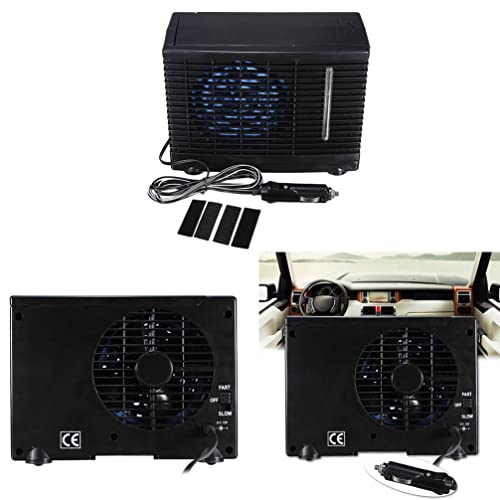
Evaporative coolers, often called “swamp coolers,” work by passing air over water-soaked pads. As water evaporates, it absorbs heat from the air, lowering the temperature. They are simple, relatively inexpensive, and consume little power. Their effectiveness is highest in hot, dry climates where humidity is low.
In humid conditions, they can actually increase the interior humidity, making the air feel clammy rather than cool. They require regular water refills and typically offer a temperature drop of 5-15°F over a small area.
Thermoelectric Portable Coolers
Thermoelectric coolers use the Peltier effect, where an electrical current passes through two dissimilar materials, causing one side to get hot and the other cold. While compact and vibration-free, they are generally inefficient for air conditioning. They can achieve a small temperature drop (around 5-10°F below ambient) but struggle to cool larger volumes of air.
Their primary use is often for small coolers or warmers for food and drinks, rather than effective cabin cooling. They typically draw moderate power, making them a common choice for smaller, cheaper devices.
Compressor Based AC Systems
These units operate much like a traditional home or car air conditioner, using a refrigerant cycle, compressor, condenser, and evaporator. They offer the most significant cooling capacity and are least affected by humidity, providing a genuine temperature drop of 20-30°F or more. However, 12V compressor units are the most expensive, heaviest, and have the highest power draw, often requiring a dedicated heavy-duty battery or direct wiring to the alternator.
They are typically found in higher-end portable AC units or specialized truck sleeper installations.
Knowing the types is crucial, but equally important is understanding how these devices will impact your vehicle’s power system.
How Does a 12 Volt AC Affect Your Car’s Battery?
One of the most pressing concerns when using a 12 volt air conditioner for car applications is its potential impact on your vehicle’s electrical system and battery life. Improper usage can lead to a drained battery and a stranded vehicle, especially if the engine is off.
Understanding Power Consumption
All 12V AC units draw power, measured in amps, from your vehicle’s 12-volt system. Compressor-based units are the most power-hungry, often consuming 20-50 amps per hour. Evaporative coolers are much more modest, typically drawing 1-5 amps. Thermoelectric units fall in between, at around 5-15 amps.
Your car’s battery has a finite capacity, usually measured in Amp-hours (Ah), ranging from 60-80 Ah for a standard car battery. A 50Ah battery running a 20-amp compressor unit would theoretically last only about 2.5 hours before being completely depleted, which is unsafe for starting the car.
A detailed understanding of current draw is essential for proper battery management, as highlighted by resources on automotive electrical systems.
Protecting Your Car Battery
To prevent battery drain, many 12V AC units include a low-voltage cutoff feature. This safety mechanism automatically shuts off the unit if the battery voltage drops below a certain threshold, preserving enough power to start your vehicle. When selecting a unit, confirm it has this essential protection.
Furthermore, prolonged use without the engine running is rarely advisable for your primary starter battery, as affirmed by best practices for car battery maintenance.
Considering External Power Sources
For extended cooling when the engine is off, especially with compressor-based units, external power solutions are highly recommended. Portable power stations, equipped with lithium-ion batteries, offer significant capacity (e.g., 500Wh to 2000Wh) and can power a 12 volt air conditioner for many hours. Dual battery systems, common in RVs and overland vehicles, provide a dedicated auxiliary battery for accessories, isolated from the starter battery.
These options offer greater flexibility and peace of mind for off-grid applications or overnight use.
With power considerations in mind, let’s turn our attention to the key specifications and features that will guide your selection process.
What 7 Features to Look for in a 12 Volt Cooler
When you’re ready to choose a 12 volt air conditioner for your car, knowing which specifications and features truly matter can simplify a complex decision. Evaluating these aspects against your specific needs will ensure you invest in a unit that genuinely delivers on its promise.
Cooling Capacity Metrics
Look for BTU (British Thermal Units) for compressor units, which indicates cooling power. Higher BTUs mean more cooling. For evaporative coolers, CFM (Cubic Feet per Minute) measures airflow, while temperature drop is a key indicator of performance. Understanding these metrics helps you gauge a unit’s suitability for your space.
Power Efficiency Rating
Understanding the unit’s amperage draw is crucial for battery management. Lower amp draw means longer run times on a given battery. Compare energy efficiency ratings, especially if you plan to use the unit for extended periods without your engine running, as discussed in independent product reviews.
Noise Levels in Operation
Portable AC units can be noisy, especially compressor-based models. Look for decibel (dB) ratings. A quieter unit, typically below 60 dB, will provide a more comfortable experience, particularly in small vehicle interiors or for overnight use in a sleeper cab.
Physical Size and Portability
Consider the dimensions and weight of the unit. A smaller, lighter model is easier to move, store, and position within your vehicle. Think about where you will place it and how it might obstruct vision or passenger space. Look for integrated handles or wheels for better maneuverability.
Installation Requirements
Some units simply plug into a cigarette lighter socket, while others require more involved wiring directly to the battery with heavier gauge cables. Evaporative units need a water tank accessible for refilling. Understand the setup and venting needs, as some compressor units require exhaust hoses.
Safety Protocols Included
Essential safety features include low-voltage cutoff to protect your car battery from draining completely. Overheat protection for the unit itself and electrical fusing are also important. These safeguards ensure both your vehicle and the device operate reliably.
Durability for Road Use
Vehicle interiors can be harsh environments. Look for units made with durable, impact-resistant materials. Vibration resistance and secure mounting options are critical for units intended for truck sleepers or off-road vehicles. A good warranty also indicates manufacturer confidence in durability.
Armed with knowledge about features, let’s now look at specific recommendations tailored for different user needs.
Which 5 12 Volt AC Units Suit Different Needs Best?
Selecting the ideal 12 volt air conditioner for your car or specific application requires matching features to your unique requirements, and here are 5 top recommendations, illustrating what to look for based on common use cases in 2026.
Top Truck Sleeper Models
For truck drivers spending nights in sleeper cabs, a compressor-based 12 volt air conditioner is essential. The “ArcticAire Pro 3000” (Illustrative Example) offers 3,000 BTUs, drawing around 25-30 amps. It features a low-voltage cutoff, a quiet fan mode, and includes a heavy-duty wiring kit for direct battery connection.
Its durable construction is built for the rigors of the road. Trucking forums often praise its reliable performance, as shown in user reviews.
[PRODUCT EXAMPLE REQUIRED: Specific models for each use case with brief specs, price range, and a short review of pros/cons.]
Effective Camping Solutions
Campers and RV owners seeking supplemental cooling without a generator might consider an efficient evaporative cooler or a compact compressor unit. The “CoolMist Evap 12V” (Illustrative Example) is a popular evaporative choice, drawing just 3-5 amps and offering a 10-15°F local temperature drop. It’s lightweight, portable, and runs for hours on a portable power station.
For more powerful cooling, the “Trailblazer Mini-AC” (Illustrative Example), a 1500 BTU compressor model, uses about 15-20 amps and is ideal for small tents or pop-up campers.
Temporary Fixes for Cars
If your car’s main AC is out, a simple 12 volt air conditioner can offer temporary relief. The “BreezeBuddy 12V Fan Cooler” (Illustrative Example), an enhanced evaporative unit, plugs into a cigarette lighter and provides a noticeable cool breeze, drawing only 2 amps. It’s not meant to cool the entire cabin but can make short drives more tolerable.
It’s a low-cost, low-power solution for direct personal cooling.
Pet Comfort Accessories
Keeping pets cool in a parked vehicle is critical. A compact thermoelectric or small evaporative unit can help. The “PetCooler Pro” (Illustrative Example) is a small, quiet thermoelectric unit designed to cool a pet carrier or a small section of a vehicle. It offers a modest 5-8°F drop in a contained space and consumes less than 10 amps, providing vital airflow and localized cooling without risking battery drain with its built-in low-voltage protection.
Van Life Specific Picks
Van lifers and overlanders require , energy-efficient solutions for prolonged use. The “NomadCool 2500” (Illustrative Example) is a high-efficiency 2,500 BTU compressor 12 volt air conditioner. It’s designed for integration into van conversions, offering excellent cooling with optimized power consumption (typically 18-28 amps) and multiple fan speeds.
Its ability to run on a dedicated auxiliary battery system makes it a top choice for off-grid living, supporting comfortable temperatures even in warmer climates, according to expert reviews.
As we conclude, remember that making an informed choice about 12-volt cooling systems ensures comfort without unexpected frustrations.
Conclusion
Choosing the right 12 volt air conditioner for your car involves a careful assessment of your needs, the unit’s technology, and its power requirements. These portable solutions are not direct replacements for factory AC but offer valuable supplemental or targeted cooling for specific scenarios. By understanding the differences between evaporative, thermoelectric, and compressor-based systems, and considering factors like power draw, noise, and cooling capacity, you can set realistic expectations and avoid disappointment.
Whether you are a trucker needing relief in a sleeper cab, a camper looking for off-grid comfort, or a car owner seeking a temporary fix for a broken AC, a suitable 12V option exists by 2026. Prioritize features like low-voltage cutoff and consider external power sources for extended use to ensure both your comfort and your vehicle’s battery health.
Making an educated decision will lead to a more comfortable journey.
Frequently Asked Questions About 12 Volt Car AC
Do 12V AC Units Really Cool a Car Effectively?
12V AC units provide supplemental or localized cooling, not whole-car cooling comparable to a factory system. Evaporative and thermoelectric types offer modest temperature drops for small areas, while compressor-based units deliver more significant cooling for confined spaces like sleeper cabs, but with higher power demands.
What Are the Main Types of 12V Car Air Conditioners?
The three main types are evaporative (best in dry climates, low power), thermoelectric (minimal cooling, often for small coolers), and compressor-based (most powerful, like traditional AC, but high power draw). Each type suits different cooling needs and environmental conditions for vehicle use.
How Much Power Does a 12V AC Draw From a Car Battery?
Power draw varies significantly by type. Evaporative coolers typically draw 1-5 amps, thermoelectric 5-15 amps, and compressor units 20-50 amps. High-draw units can quickly drain a standard car battery if the engine is off, making low-voltage cutoff and external power sources essential.
Are 12 Volt Car Air Conditioners Worth the Investment?
They are worth it for specific use cases like truck sleeper cabs, camping, or as a temporary fix for a broken primary AC. For general car cooling, their effectiveness is limited. Weigh the cost against your specific need for supplemental cooling and realistic performance expectations for 2026.
Can I Install a 12V AC Unit Myself?
Many evaporative and thermoelectric 12V units are plug-and-play, connecting via a cigarette lighter. Compressor-based units or those requiring high power often need direct wiring to the battery, possibly through a fuse box, which may require professional installation to ensure safety and proper functionality.