Import a Car from Japan: Understanding the Total Cost
Last Updated on September 1, 2026 by Ryan
Importing a car from Japan involves a complex array of costs beyond the initial purchase price, encompassing shipping, insurance, duties, taxes, and local compliance. Understanding these various fees is crucial for an accurate budget. The final price significantly varies based on the vehicle, destination country regulations, and chosen import method.
🎯 Key Takeaways
Recommended Best Deal Products


- Budget for purchase, shipping, duties, taxes, and local compliance.
- Costs vary widely by car, country, and import method.
- Obtain detailed quotes from customs brokers early.
- Factor in potential modification costs for local roadworthiness.
- Marine insurance protects against shipping damage and loss.
Vehicle to the United States (CBP)”>Importing a car from Japan involves more than just the vehicle’s purchase price. The total financial cost to legally import a car and make it roadworthy in your country is a sum of many distinct fees and charges. Understanding these expenses upfront is crucial for accurate budgeting and to avoid unexpected financial surprises later in the process. From the moment you win an auction to the day you register your vehicle, several stakeholders and regulations contribute to the final amount you’ll pay.
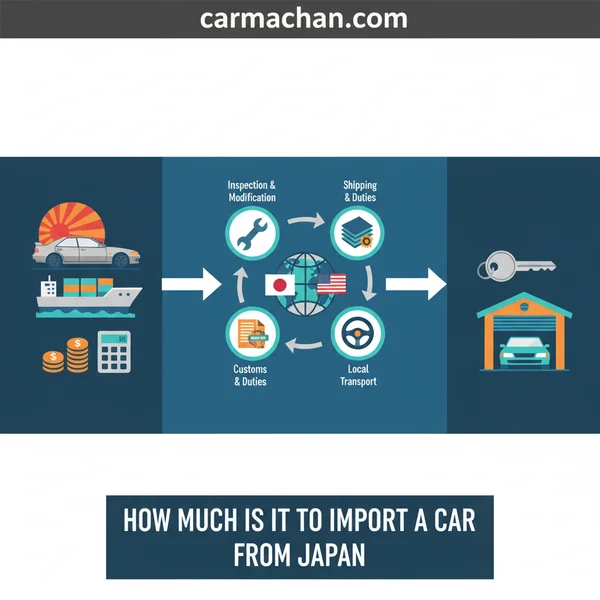
This detailed breakdown will help you navigate the complexities of international car import. We will cover all the direct financial costs, typical ranges, and key factors that influence your overall expenditure. Our goal is to provide you with a clear, itemized picture of what to expect, ensuring you can make informed decisions about your Japanese import.
Itemized Breakdown of Import Costs from Japan
Bringing a car from Japan to your driveway involves a series of financial steps. Each stage accrues its own set of fees, which combine to form your total import cost. It’s essential to account for every single one.

The Car’s Base Price and Acquisition Fees
- Vehicle Purchase Price: This is the starting point. Whether you buy from a dealer or an online auction, this price can range wildly from $3,000 for an older kei car to $50,000+ for rare JDM legends or newer luxury models.
- Auction/Agent Fees: If you use an auction agent, they typically charge a fee. This often includes auction house fees, bank transfer fees, and their service commission. Expect this to be between ¥10,000 to ¥50,000 (approx. $70 – $350 USD), plus a percentage of the car’s value for the agent.
- Inland Transport in Japan: The car needs to get from its auction house or seller to the departure port. This cost varies based on distance and vehicle size, usually between ¥15,000 to ¥30,000 (approx. $100 – $200 USD).
- De-registration and Export Certificates: Mandatory paperwork for export. These are typically included in agent fees or are minimal, around ¥2,000 – ¥5,000 (approx. $15 – $35 USD).
Shipping and Marine Insurance
Once the car is purchased and ready, the next major hurdle is getting it across the ocean. Shipping methods and protective measures add significant costs.
- Ocean Freight (Shipping): This is one of the largest costs. It depends on the shipping method (RORO vs. Container), car size, and destination port.
- Roll-on/Roll-off (RORO): Your car is driven onto the ship and secured. Generally cheaper for single vehicles. Expect $800 – $2,500 USD for most destinations.
- Container Shipping: Your car is loaded into a shipping container. More secure, but pricier. A 20ft container for one car might cost $2,000 – $4,000 USD. A 40ft container can fit two cars, potentially splitting costs.
- Marine Insurance: Highly recommended to protect against damage or loss during transit. It’s usually calculated as a percentage of the car’s declared value (including purchase and shipping costs). Typically, this is 0.5% – 1.5% of the total CIF (Cost, Insurance, Freight) value.
The Ultimate Japanese Car Import Cost Walkthrough
Embarking on the journey of importing a car from Japan can be an incredibly rewarding experience, offering access to unique vehicles often unavailable in local markets. However, the true cost extends far beyond the initial purchase price. This comprehensive, step-by-step guide is meticulously designed to demystify the financial aspects of importing, helping you understand and budget for every expense involved. Following these detailed instructions is crucial to avoid unexpected fees, ensure a smooth process, and ultimately bring your dream Japanese car to your doorstep without breaking the bank.
Step 1: Initial Research & Comprehensive Budgeting
What you need: Access to the internet for research (car auction sites, import regulation databases, currency converters), a spreadsheet program or pen and paper for budgeting, and an understanding of your target vehicle’s market value.
Instructions: Before anything else, identify the specific car you want and thoroughly research your country’s import regulations. Determine age restrictions, emissions standards, and any left-hand drive (LHD) vs. right-hand drive (RHD) rules. Get a realistic estimate of the car’s purchase price in Japan. Crucially, create a preliminary budget that includes estimated costs for agent fees, shipping, marine insurance, import duties, local taxes, port charges, compliance modifications, and registration fees. Account for potential currency exchange rate fluctuations between the Japanese Yen and your local currency to mitigate financial surprises.
Pro Tip: Always over-budget slightly, perhaps by 10-15%, to cover unforeseen circumstances or minor cost increases. It’s better to have extra funds than to be caught short during the import process.
Step 2: Car Sourcing, Auction & Agent Fees
What you need: A reputable Japanese import agent or exporter, a deposit for bidding, access to major Japanese auction house websites (e.g., USS, TAA, HAA), and understanding of their fee structures.
Instructions: Once you’ve identified your target car, you’ll typically work with a Japanese import agent who has access to auction houses. Your agent will charge a service fee, which can be a flat rate (e.g., ¥50,000-¥100,000) or a percentage of the car’s value. Beyond the agent’s fee, you’ll pay the auction house fees (typically ¥10,000-¥20,000), a recycling fee (for environmental disposal in Japan, usually ¥10,000-¥20,000), and inland transport costs to move the car from the auction house to the Japanese port (ranging from ¥15,000-¥40,000 depending on distance). These initial costs are often required upfront or shortly after a successful bid.
Pro Tip: Request a comprehensive breakdown of all agent, auction, and local transport fees from your agent before you place any bids. Ensure transparency and no hidden charges.
Step 3: Shipping & Marine Insurance Costs
What you need: A shipping quote from your agent or a direct freight forwarder, and an understanding of marine insurance options.
Instructions: Shipping is a significant cost. You have two main options: Roll-on/Roll-off (RoRo) or Container shipping. RoRo is generally cheaper for single vehicles (ranging from $800-$2,000 depending on destination) as cars are driven onto a specialized cargo ship. Container shipping (typically $1,500-$4,000 for a 20ft container) offers more protection and allows for additional items to be shipped, but is more expensive for a single car. Factor in terminal handling charges at both ends. Marine insurance is highly recommended, costing roughly 1-2% of the car’s declared value, protecting against damage or loss during transit.
Pro Tip: While slightly increasing the initial cost, always opt for marine insurance. The peace of mind and protection against unforeseen transit incidents far outweigh the relatively small premium.
Step 4: Destination Country Import Duties & Taxes
What you need: Your country’s specific customs regulations, import duty rates for vehicles, and tax forms for sales tax/VAT.
Instructions: This is where costs vary drastically by country. You will be required to pay import duties, which are typically a percentage of the car’s declared value plus the shipping cost. For example, the US charges 2.5% on cars (non-commercial, non-trucks), while Australia has 5% import duty and 10% GST. The UK has 10% import duty and 20% VAT (for cars under 30 years old). Additionally, you may face local sales tax or Value Added Tax (VAT) on the total imported value (car value + shipping + duty). Some countries also have luxury car taxes or emissions-based fees.
Pro Tip: Contact your national customs agency or a licensed customs broker before importing to get exact calculations for your specific vehicle and declared value. Miscalculations here can lead to significant unexpected bills.
Step 5: Port Charges & Customs Clearance
What you need: Original import documents (Bill of Lading, Export Certificate, commercial invoice), potentially a customs broker.
Instructions: Upon arrival at your destination port, the vehicle will incur various charges. These include port storage fees (if not cleared promptly, e.g., $50-$100 per day after a free period), terminal handling charges (THC), and potentially demurrage if the ship is delayed or unloading is slow. You will also need to formally clear the car through customs. While you can do this yourself, many choose to hire a customs broker (typically $200-$500) who specializes in handling all documentation, calculating duties, and expediting the clearance process. Their expertise can save time and prevent costly mistakes.
Pro Tip: Employing a customs broker is highly recommended, especially for first-time importers. Their fee is often a sound investment to avoid delays, fines, and ensure all paperwork is correctly submitted, preventing further storage charges.
Step 6: Local Transport & Compliance Modifications
What you need: A flatbed tow truck or car carrier, a local mechanic or inspection center, and potentially specific parts for modifications.
Instructions: Once cleared through customs, you’ll need to arrange transport for the car from the port to your home or a workshop. This typically involves hiring a flatbed tow truck, costing $100-$500 depending on distance. Depending on your country’s regulations, the car may require significant modifications to meet local roadworthiness and emissions standards. This could include speedometer conversion (km/h to mph), lighting changes, emissions system adjustments, or even seatbelt upgrades. Budget anywhere from a few hundred to several thousand dollars for parts and labor, plus inspection fees, depending on the car and the regulations.
Pro Tip: Thoroughly research your country’s specific compliance requirements before importing. Some cars are notoriously difficult or expensive to comply, which could make an import financially unfeasible.
Step 7: Vehicle Registration & Licensing
What you need: Vehicle inspection report (if applicable), proof of ownership (import documents), local insurance policy, and registration forms from your local Department of Motor Vehicles (DMV) or equivalent.
Instructions: The final step involves legally registering and licensing your imported vehicle for road use. First, you’ll need to obtain a local insurance policy. Then, depending on your jurisdiction, the car may need a final safety inspection to confirm it meets all local standards after any modifications. Finally, visit your local vehicle registration authority (e.g., DMV, DVLA) to pay registration fees (which can be annual or one-time), obtain license plates, and any road tax or stamp duty. Ensure you have all import documentation, including the original export certificate, Bill of Lading, and customs clearance forms.
Pro Tip: Keep all original import documents, including invoices and customs clearance forms, meticulously organized. These documents are vital for proving legal ownership and import, and will be required for the registration process.
✅ Final Checklist
- All payments for the car, agent, shipping, duties, and local fees confirmed and settled.
- Received all original import documents (Export Certificate, Bill of Lading, customs release, invoices).
- Car successfully cleared customs and transported from the port.
- Necessary compliance modifications (if any) completed and verified.
- Vehicle fully registered, insured, and licensed for legal road use in your name.
Important Notes:
- Safety Considerations: Always choose reputable import agents, shippers, and customs brokers. Beware of deals that seem too good to be true, as they often come with hidden risks or fraudulent practices. Ensure your chosen agent provides transparent communication and verifiable references.
- When to Seek Professional Help: For your first import, or for high-value/complex vehicles, strongly consider engaging a licensed customs broker and an experienced import agent. Their expertise can save you significant time, stress, and potential financial penalties due to errors in documentation or non-compliance.
- Estimated Time and Cost Range: The entire import process, from purchase to registration, typically takes between 2 to 4 months, though it can extend longer due to unforeseen shipping or customs delays. The total cost to import a car from Japan can range significantly, but a general rule of thumb is to expect the final cost to be 1.5x to 2.5x the initial Japanese purchase price. For example, a car bought for $10,000 in Japan might cost between $15,000 and $25,000 (excluding major modifications) to have legally on the road in your country.
Key Factors Influencing Your Total Import Budget
Beyond the direct, itemized costs, several variables can significantly shift your total import expenditure. Understanding these factors will help you estimate your budget more accurately and plan for potential contingencies.
Vehicle Specifics and Condition
The type of car you choose plays a huge role in the final price. Not all cars are created equal when it comes to import costs.
- Vehicle Type, Age, and Value: These characteristics directly impact duties, taxes, and even shipping rates. Newer, more valuable cars often incur higher duties and taxes. Larger vehicles cost more to ship. Some countries offer tax breaks for older, classic vehicles, while others impose restrictions or higher fees.
- Vehicle Condition: A car in excellent condition might have a higher purchase price but fewer post-import repair costs. A cheaper car requiring significant restoration or repairs after arrival will add to your total. Inspecting the vehicle thoroughly (or having an agent do so) before purchase is vital to avoid unexpected mechanical expenses.
- Modifications and Aftermarket Parts: If the car comes with extensive aftermarket modifications, these might affect its declared value for customs or even pose compliance issues in your destination country. Factory-spec vehicles are often simpler to process.
Destination Country Regulations & Logistics
Your country’s specific import laws and the logistical steps involved once the car reaches your port are critical financial considerations.
- Duties and Taxes: This is a major variable. Every country has different import duties, Goods and Services Tax (GST) or Value Added Tax (VAT), and other levies. These are often calculated as a percentage of the car’s CIF value (Cost, Insurance, Freight). Percentages can range from 0% to over 30% depending on your country and the car’s age/type. Research your specific country’s rates thoroughly.
- Compliance and Modification Costs: Your country likely has specific regulations for roadworthiness, emissions, and safety. This might include headlight alignment, seatbelt modifications, or even full Right-Hand Drive (RHD) to Left-Hand Drive (LHD) conversions. These costs can be substantial, ranging from a few hundred dollars to several thousands of dollars (e.g., $5,000 – $15,000+ for LHD conversions).
- Port Charges and Customs Brokerage: Once the car arrives, port fees, terminal handling charges, and storage fees apply. A customs broker typically handles the complex customs clearance process for a fee, usually between $200 – $500 USD, depending on your location and the complexity of the shipment.
- Local Transportation: From the arrival port to your home or compliance workshop, you’ll need local transport. This could be a flatbed truck or professional driver, costing $100 – $500+ depending on the distance.
- Local Registration and Licensing: The final step is registering your imported car. This involves state/provincial taxes, registration fees, license plates, and potentially an initial safety inspection fee. These vary widely by jurisdiction, from a few hundred to over a thousand dollars.
Navigating Duties, Taxes, and Compliance Regulations
Once your chosen vehicle is on its way, the next major hurdle involves understanding and paying the necessary duties and taxes, and ensuring it meets your country’s specific import regulations. These costs can significantly impact your total budget and vary widely by destination.
Understanding Import Duties and Local Taxes
Every country has its own set of tariffs, often based on the vehicle type, engine size, and age. For instance, in the United States, most imported cars face a 2.5% import duty on the declared value. However, countries within the European Union often have higher duties, sometimes around 10%, plus a Value Added Tax (VAT) that can range from 19-27% on the total CIF (Cost, Insurance, Freight) value. It’s not just the car’s price; these taxes apply to the shipping and insurance costs too!
- Research Tariff Codes: Familiarize yourself with your country’s specific Harmonized Tariff Schedule (HTS) codes for vehicles to get accurate duty rates.
- Factor in Sales Tax/VAT: Don’t forget your local sales tax or VAT, which is typically applied when the vehicle clears customs or is registered.
- Customs Brokers Are Key: A good customs broker can help you accurately calculate these costs and ensure smooth clearance.
Emission and Safety Standards: The Compliance Challenge
Beyond financial costs, regulatory compliance is perhaps the trickiest part. Most countries have stringent emission (EPA in the US) and safety (DOT in the US) standards that Japanese domestic market (JDM) cars were not originally designed to meet. This is where the infamous “25-year rule” for US imports comes into play: vehicles manufactured 25 years or more prior to the import date are generally exempt from these federal standards, making them much easier (and cheaper) to import.
- Check Exemption Rules: See if your desired car qualifies for any age-based or specific use exemptions in your country.
- Understand Modification Costs: If your car doesn’t qualify for an exemption, modifications to meet local standards (e.g., catalytic converters, lighting, seat belts) can be extensive and expensive, potentially costing thousands of dollars.
- Pre-Purchase Verification: Before buying, verify with local authorities or a reputable importer if the specific model can be legally registered in your region without prohibitive modifications.
Smart Strategies for Estimating and Saving on Import Costs
Importing a car from Japan doesn’t have to break the bank if you approach it strategically. Careful planning and savvy decision-making can help you minimize expenses and avoid nasty surprises.
Get Detailed Quotes and Understand Incoterms
Don’t settle for vague estimates. Demand comprehensive, itemized quotes from every service provider you consider. Shipping quotes, for example, often use “Incoterms” like FOB (Free On Board) or CIF (Cost, Insurance, Freight). FOB means the seller covers costs only until the car is loaded onto the ship in Japan; you’re responsible for everything from there. CIF includes the cost of shipping and insurance to your destination port. Understanding these terms prevents unexpected charges.
- Itemized Breakdowns: Insist on a line-by-line breakdown of all fees, including port handling, customs clearance, and inland transport.
- “Landed Cost” Estimates: Ask for a “landed cost” estimate, which should cover all expenses up until the car is available for pickup in your home country.
- Compare Multiple Bids: Obtain quotes from at least three different shipping companies and customs brokers to compare prices and services.
Budgeting for the Unexpected and Hidden Fees
Even with the most meticulous planning, unexpected costs can arise. It’s wise to set aside a contingency fund, typically 10-15% of your total estimated cost, to cover unforeseen expenses. Common hidden fees include demurrage (storage charges at the port if your car isn’t cleared promptly), unexpected inspection fees, or minor repairs needed for local compliance checks.
- Factor in Demurrage: Port storage fees can add up quickly if there are customs delays. Aim to have all paperwork ready ahead of time.
- Marine Insurance: Always opt for marine insurance during transit. While an added cost, it protects your investment against damage or loss at sea, which is invaluable peace of mind.
- Currency Exchange Fluctuations: Be mindful of exchange rate movements between the Japanese Yen and your local currency, as this can affect the final purchase price and shipping costs.
Your Japanese Dream Car: A Journey Worth Taking
Importing a car from Japan is a multifaceted journey, extending far beyond the initial purchase price. From meticulous vehicle sourcing and diverse shipping options to navigating complex duties, taxes, and compliance regulations, each step adds to the total cost. By understanding these various financial layers and employing smart budgeting strategies, you empower yourself to make informed decisions.
Thorough research and partnering with experienced professionals are your best allies in this adventure. Don’t let the complexities deter you; the unique thrill of owning a piece of Japanese automotive culture is an incredibly rewarding experience. Start your planning today, and get ready to turn your dream car into a reality!
❓ Frequently Asked Questions
What are the primary cost categories when importing a car from Japan?
The primary categories include the vehicle purchase price (auction/dealer), Japanese local fees (auction, freight to port), international shipping (ocean freight, marine insurance), destination country charges (port fees, customs clearance, duties, taxes), and local compliance/registration fees (modifications, inspections, registration).
How do import duties and taxes vary by country, and what should I expect?
Import duties and taxes are highly country-specific, influenced by factors like the car’s age, engine size, value, and origin. For example, some countries have a flat rate, others use a sliding scale, and certain vehicle types (e.g., EVs, classic cars) might have exemptions or reduced rates. It’s essential to check your specific country’s customs website or consult a broker.
What’s the difference in cost between RORO and container shipping?
RORO (Roll-on/Roll-off) shipping is generally more economical for single vehicles, as cars are driven onto and off the vessel directly. Container shipping offers more protection and allows for multiple vehicles or personal items but is typically more expensive per car unless you’re consolidating with others in a shared container.
Are there any hidden or unexpected costs I should be aware of?
Yes, unexpected costs can include currency exchange rate fluctuations, demurrage charges if your car isn’t cleared promptly from port, unforeseen compliance modification needs, and unexpected storage fees. Always build a contingency fund into your budget to cover these potential surprises.
How can I get an accurate total cost estimate before committing to an import?
To get an accurate estimate, first determine your target vehicle’s value. Then, contact a reputable customs broker or import specialist in your country; they can provide detailed quotes covering shipping, duties, taxes, and local compliance requirements tailored to your specific situation and vehicle type.
What impact does the vehicle’s age or condition have on import costs?
A vehicle’s age significantly impacts import duties and eligibility in many countries, with older cars often having different tax structures or even being restricted from import. Its condition affects its purchase price and potential compliance modification costs if repairs are needed to pass local inspections, adding to the overall expense.