GAP Insurance Cost in Texas: Your Price Guide & Factors
Last Updated on September 1, 2026 by Ryan
GAP insurance in Texas typically costs between $300-$700 as a one-time purchase or $20-$40 annually when added to your auto policy. Your specific premium is significantly influenced by factors such as vehicle value, loan amount, and the provider (dealership vs. direct insurer).
🎯 Key Takeaways
- Compare dealer vs. insurer GAP costs.
- Vehicle value significantly impacts your premium.
- Longer loan terms often mean higher GAP prices.
- Bundling with auto insurance can reduce annual rates.
- Shop multiple providers for the best Texas deal.
If you’re buying a new or used car in the Lone Star State, you’re likely wondering how much GAP texas” target=”_blank” rel=”noopener noreferrer” title=”NerdWallet: Gap Insurance in Texas”>insurance
will add to your budget. In Texas, you can typically expect to pay anywhere from $200 to $700 for GAP insurance as a one-time fee if purchased through a dealership or lender. For coverage purchased directly from a major auto insurer, the cost is usually much lower, often ranging from just $20 to $60 per year, added to your existing policy.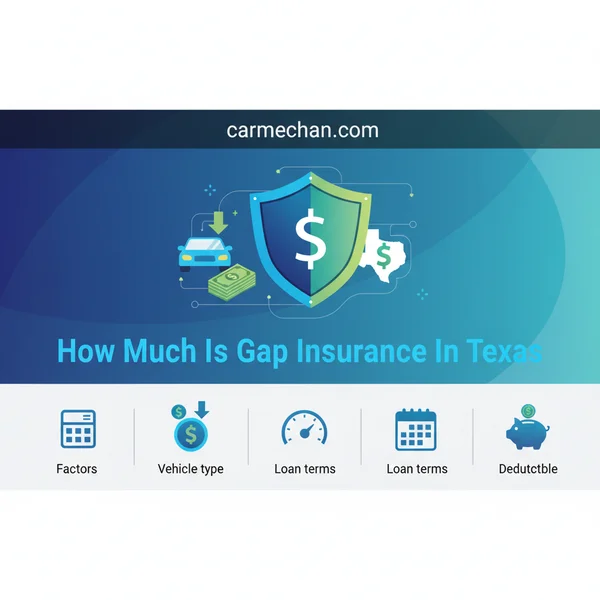
Understanding these costs upfront is crucial for Texans, especially given the state’s diverse vehicle market and varying loan structures. Knowing the typical price range and what influences it helps you budget effectively and negotiate for the best deal, ensuring you’re not overpaying for essential financial protection against vehicle depreciation.
Average Costs and Price Ranges for GAP Insurance in Texas
When it comes to the direct cost of GAP insurance in Texas, the way you acquire it significantly impacts your final price. There are generally two primary avenues: through the dealership or lender during your vehicle purchase, or directly from your existing auto insurance provider.

Direct Answer: What You Can Expect to Pay
- Dealership/Lender Pricing (One-Time Fee): Most commonly, GAP insurance purchased at the point of sale in Texas will be rolled into your loan as a one-time fee. This can range from $300 to $700, with an average often falling between $400 and $600. While convenient, this option often costs more because the premium is usually marked up by the dealer or lender. For example, if you finance a new truck for $50,000, your GAP coverage through the dealership might be a flat $550 added to your loan balance.
- Direct Insurer Pricing (Annual Premium): Opting for GAP coverage directly from a major auto insurance company, like GEICO, Progressive, or State Farm, is almost always more affordable. Texas drivers typically pay an additional $20 to $60 per year for this coverage, which is simply added to your regular auto insurance premium. This difference highlights a substantial potential saving over the life of your loan.
Texas Specifics on Pricing Models
Texas doesn’t have unique state-specific regulations that dictate a fixed GAP insurance pricing model. Instead, providers follow industry standards. Dealerships and lenders in Texas often present GAP insurance as a flat fee, which is then financed along with your vehicle, accruing interest over the loan term. This means a $500 GAP policy might actually cost you more over five years once interest is factored in. In contrast, direct insurers in Texas integrate GAP as an endorsement to your existing policy, charging a small, ongoing annual premium that reflects the actual risk more accurately without additional financing charges.
Everything You Need to Know About GAP Insurance Costs in Texas
Navigating the world of car insurance can be complex, and understanding the true cost of specific add-ons like Guaranteed Asset Protection (GAP) insurance is crucial, especially in Texas. This comprehensive guide will walk you through the precise steps required to determine “how much is GAP insurance in Texas” for your specific situation. By following these detailed instructions, you’ll be equipped to compare options, understand pricing factors, and make an informed decision, saving you potential financial headaches down the road.
Step 1: Understand the ‘Why’ – What is GAP Insurance?
What you need: A basic understanding of your car loan details (original amount, current balance, interest rate), and awareness of your vehicle’s make, model, and year.
Instructions: Before diving into costs, it’s vital to grasp what GAP insurance covers. It pays the difference between your car’s actual cash value (ACV) and the amount you still owe on your loan if your vehicle is declared a total loss or stolen. In Texas, new cars depreciate rapidly, making this coverage particularly valuable if you financed a large portion of your vehicle, have a long loan term, or put little money down. Confirming this need first will ensure you’re not paying for unnecessary coverage.
Pro Tip: GAP insurance is typically most beneficial during the first few years of your car loan when depreciation outpaces loan repayment. If your loan balance is already significantly lower than your car’s market value, you might not need it.
Step 2: Collect Your Essential Vehicle & Loan Data
What you need: Your vehicle’s Year, Make, Model, VIN (Vehicle Identification Number), current odometer reading, original purchase price, current outstanding loan balance, original loan term (e.g., 60 months, 72 months), original down payment amount, and your credit score (as this can sometimes influence rates from certain providers).
Instructions: Accurate quotes depend on accurate information. Gather all these details meticulously. Your car loan statement or online banking portal will provide the outstanding balance, original loan term, and down payment. The vehicle’s title or registration will have the VIN. Having this information readily accessible will streamline the quote process and ensure the figures you receive are tailored to your specific situation, preventing discrepancies later on.
Pro Tip: Organize this information in a simple spreadsheet or a dedicated note on your phone. This makes it easy to provide consistent data when requesting multiple quotes, ensuring an apples-to-apples comparison.
Step 3: Identify Potential GAP Insurance Providers in Texas
What you need: Access to the internet, your current auto insurance policy details, and contact information for your car dealership (if applicable).
Instructions: In Texas, GAP insurance can be purchased from several sources: the dealership where you bought the car, your primary auto insurance carrier (like Geico, Progressive, State Farm, Allstate), or specialized third-party GAP insurance providers. Start by checking if your current auto insurer offers it, as bundling can sometimes lead to discounts. Then, consider contacting your dealership for their offer. Finally, search for reputable third-party providers online. Compile a list of at least 3-5 potential sources.
Pro Tip: Many Texas credit unions also offer competitive GAP insurance rates, often significantly lower than dealership options. If you’re a member or eligible to join one, definitely include them in your research.
Step 4: Obtain Multiple Quotes: Dealerships vs. Independent Insurers
What you need: Your compiled vehicle and loan data (from Step 2), and a method of contact (phone, email, online forms) for your chosen providers.
Instructions: Systematically contact each identified provider to request a GAP insurance quote. For dealerships, inquire about their direct GAP product. When contacting your primary insurer or a third-party provider, explicitly state you are seeking a standalone GAP insurance policy or an add-on to your existing coverage. Provide the exact same vehicle and loan data to each to ensure comparable quotes. Note down not just the total cost, but also if it’s a one-time fee or an annual premium, and any specific terms for cancellation or claims.
Pro Tip: Be wary of high-pressure sales tactics, especially at dealerships. If they present a quote as a single, lump sum added to your loan, ask for the explicit breakdown of the GAP insurance cost on its own, both as a total and potentially as a monthly equivalent.
Step 5: Decipher Your Quotes: Key Cost Factors to Analyze
What you need: All the quotes you’ve received, and a calculator (or spreadsheet).
Instructions: Once you have multiple quotes, it’s time to compare. GAP insurance costs in Texas typically range from a one-time fee of $400-$800 if purchased from a dealership (often financed into your loan) to $20-$60 per year if purchased from an independent insurer. Analyze how the cost relates to your vehicle’s value, the loan amount, and the loan term. Higher loan-to-value ratios and longer loan terms often result in slightly higher GAP premiums. Pay attention to whether the quotes are for a single payment that covers the entire loan term or an annual/monthly premium, as this significantly impacts the total cost.
Pro Tip: Don’t just look at the raw number. Calculate the total cost over the expected duration you’ll need the coverage. For example, a $600 lump sum versus $40/year for 3 years ($120 total) are vastly different propositions.
Step 6: Investigate Payment Structures & Potential Discounts
What you need: Your collected quotes and a willingness to ask questions.
Instructions: GAP insurance can be paid in a few ways: a one-time upfront fee, financed into your car loan, or as an annual/monthly premium. Inquire about the interest rate if it’s financed through the dealership, as this can inflate the total cost. Also, ask each provider about any available discounts. This could include multi-policy discounts (if bundling with auto insurance), good driver discounts, or even specific promotions. Some insurers might offer a reduced rate if you set up automatic payments. Be persistent in asking about all possible cost-saving avenues.
Pro Tip: Financing GAP insurance into your car loan means you’ll pay interest on the GAP premium itself. Paying it upfront or as a separate annual premium is almost always more cost-effective if you have the means.
Step 7: Review the Policy Details and Make an Informed Decision
What you need: Your final shortlisted quotes, a copy of the policy terms and conditions (or sample policy), and a quiet space to read.
Instructions: Before finalizing any purchase, thoroughly read the policy’s fine print. Confirm what situations are covered and, more importantly, what exclusions exist (e.g., often not covering negative equity from previous loans rolled over). Understand the claims process, cancellation policy (especially if you pay upfront and later decide to cancel), and refund eligibility. Ensure the coverage amount is adequate to cover the potential ‘gap’ for your specific loan. Only after understanding all these aspects should you choose the policy that offers the best balance of coverage, terms, and cost for your situation in Texas.
Pro Tip: Pay close attention to the maximum payout limit of the GAP policy. Ensure it’s sufficient to cover the largest potential gap you might face, which is typically early in your loan term.
✅ Final Checklist
- Verified understanding of GAP insurance necessity for your specific vehicle and loan.
- Collected all necessary vehicle and loan data accurately.
- Obtained at least 3-5 comparable quotes from different provider types (dealership, primary insurer, third-party, credit union).
- Compared total costs, payment structures, and identified all applicable discounts.
- Read and understood the full policy terms, including coverage, exclusions, and cancellation policies.
Important Notes:
- Cancellation Rights: In Texas, you often have the right to cancel your GAP waiver (from a dealership) and receive a prorated refund if you pay off your loan early, sell the car, or refinance. Always confirm these terms.
- When to Seek Professional Help: If your financial situation is complex, or you are struggling to understand the fine print of policies, consider consulting a financial advisor or an independent insurance agent. They can offer unbiased advice tailored to your needs.
- Estimated Cost Range: As discussed, GAP insurance in Texas can range from a one-time fee of $400-$800 (often financed by dealerships) to an annual premium of $20-$60 (from independent insurers or credit unions). The total cost will depend heavily on your chosen provider, vehicle value, loan amount, and how it’s paid.
Key Factors Influencing Your GAP Insurance Premium in Texas
While the provider type (dealership vs. direct insurer) is a major determinant of GAP insurance cost in Texas, several other factors specific to your vehicle and loan details also play a significant role. These variables help providers assess their risk and set your individual premium.

Vehicle and Loan Details Matter Most
The core of GAP insurance is bridging the gap between your vehicle’s value and your loan balance, so it’s logical that these figures heavily influence your premium:
- Vehicle Value: Higher-value vehicles often come with higher GAP insurance premiums. This is because the potential “gap” could be larger, especially with rapid depreciation on luxury models. For instance, GAP insurance for a $70,000 luxury SUV will typically be more expensive than for a $25,000 compact sedan, even if both are new.
- Loan Amount: A larger loan amount means a bigger potential outstanding balance, thus increasing the insurer’s risk. Texans with substantial vehicle loans will likely face slightly higher GAP costs.
- Loan-to-Value (LTV) Ratio: This is critical. If your loan amount is significantly higher than your vehicle’s purchase price (e.g., you rolled negative equity from a previous car into the new loan, or made no down payment), your LTV is high, and your GAP premium will reflect that increased risk.
- Loan Term: Longer loan terms (e.g., 72 or 84 months) mean your vehicle will depreciate faster than you pay down the principal, creating a larger gap for a longer period. This increased risk often translates to a higher GAP insurance cost in Texas.
- Vehicle Depreciation Rate: Some vehicles depreciate faster than others. A car known for rapid depreciation might have a slightly higher GAP premium, as the insurer anticipates a larger potential gap.
Provider and Bundling Options in Texas
Beyond vehicle specifics, where and how you purchase the coverage also dictates your final price in Texas:
- Lender vs. Insurer: As highlighted, dealerships and lenders typically charge a higher, one-time fee, while direct insurers offer lower annual premiums. Always compare quotes from both before committing.
- Bundling with Your Auto Insurance: If you purchase GAP insurance from your primary auto insurer, it’s often added as an endorsement to your existing policy. This bundling can sometimes qualify you for minor multi-policy discounts, further reducing the overall cost of your insurance portfolio.
- Credit Union Programs: Some Texas credit unions offer GAP insurance to their members at competitive rates, often lower than dealerships. If you’re a member, this is worth exploring.
Where to Purchase GAP Coverage: Dealerships vs. Direct Insurers
Once you understand what influences GAP insurance costs, the next crucial step is knowing where to buy it. In Texas, you primarily have two avenues, each with its own advantages and potential drawbacks.
Dealership GAP: Convenience vs. Cost
Many car buyers opt for GAP insurance through the dealership at the time of purchase. This can feel incredibly convenient, as it’s often presented as part of the financing package. The cost of the GAP policy is typically rolled into your auto loan, meaning you don’t pay a lump sum upfront. While this avoids an immediate out-of-pocket expense, it’s important to understand the implications:
- Rolled into Loan: You pay interest on the GAP premium over the life of your loan, increasing its overall cost.
- Higher Premiums: Dealerships often mark up GAP policies, making them more expensive than what you might find elsewhere. Expect to pay anywhere from $400 to $1,000 or more for a policy that covers the entire loan term.
- Less Negotiation: There’s often less room to negotiate the price of a dealership’s GAP offering compared to other add-ons.
For example, if a dealership quotes you $600 for GAP, and it’s rolled into a 60-month loan at 5% interest, you’ll end up paying more than $600 for that coverage over time.
Direct Insurers: Potential Savings & Flexibility
Your existing auto insurance provider or a specialized third-party insurer is another excellent option for GAP coverage. This route often provides more competitive pricing and greater flexibility.
- Lower Premiums: Many primary auto insurers offer GAP as an add-on to your standard policy, often costing as little as $20 to $60 per year. This can translate to significant savings compared to dealership offerings, especially for longer loan terms.
- Separate Billing: You’ll typically pay for GAP coverage as part of your regular insurance premium, rather than having it amortized into your car loan.
- Comparison Shopping: This approach allows you to easily shop around and compare quotes from various providers, ensuring you get the best deal.
Imagine paying $40/year for GAP with your current insurer for five years – that’s only $200 total, a fraction of what a dealership might charge. Always get quotes from both your primary insurer and the dealership before making a decision.
Determining If GAP Insurance is a Smart Investment in Texas
Given the potential costs and benefits, how do you decide if GAP insurance is truly right for your situation in the Lone Star State? It boils down to assessing your risk factors and financial comfort level.
Scenarios Where GAP Shines
GAP insurance is particularly valuable for Texas drivers in several common situations where the risk of negative equity is high:
- Minimal Down Payment: If you put down less than 20% on a new car, or financed 100% of the purchase price, you’re likely to owe more than the car is worth from day one.
- Long Loan Terms: Loans stretching 60 months or longer mean slower equity build-up, leaving a larger gap between your loan balance and the car’s depreciated value for a longer period.
- Rapid Depreciation: Some vehicles, particularly luxury cars, certain electric vehicles, or models with a known history of fast value loss, can depreciate quickly.
- High Mileage: If you drive many miles each year, your vehicle will depreciate faster than average, increasing your negative equity risk.
- Leased Vehicles: GAP insurance is almost always required for leases because you never own the vehicle, and the lease agreement specifies your liability for total loss.
Consider a brand-new truck bought in Texas for $50,000 with only $2,000 down and a 72-month loan. If it gets totaled a year later, your loan balance could still be $45,000, while the actual cash value might only be $38,000. GAP would cover that $7,000 difference.
When You Might Skip GAP
While GAP insurance offers vital protection for many, it’s not always necessary. You might consider foregoing it if:
- Large Down Payment: If you put down 20% or more on your vehicle, you’re likely to have instant equity, minimizing the risk of owing more than it’s worth.
- Short Loan Term: A loan term of 36 months or less often means you pay down the principal fast enough to keep pace with or outrun depreciation.
- Buying Used (and Older) Vehicles: Older used cars have already undergone their steepest depreciation. The market value is often closer to the loan amount, or you might even have positive equity immediately.
- Paying Cash: If you own the car outright, there’s no loan balance to worry about, so GAP insurance is irrelevant.
For instance, if you bought a three-year-old sedan for $20,000 with a $6,000 down payment and a 48-month loan, your risk of negative equity is significantly lower, making GAP less critical.
Conclusion
Understanding GAP insurance in Texas is about more than just a single price tag; it’s about navigating a range of factors that influence its cost and determining its value for your specific situation. From the type of vehicle you drive and your loan terms to your credit score and the provider you choose, each element plays a role.
Take the time to gather quotes from both dealerships and direct insurers, comparing not just the dollar amount but also what each policy covers. Evaluate your personal financial risk – do you have a low down payment or a long loan? By doing your homework, you can make an informed decision that protects your investment and ensures peace of mind on Texas roads.
❓ Frequently Asked Questions
What’s the typical one-time cost for GAP insurance purchased from a dealership in Texas?
When purchased from a dealership in Texas, GAP insurance is often a one-time fee ranging from $300 to $700, which can be rolled into your car loan, increasing your total interest paid.
How do direct insurers price GAP insurance differently compared to dealerships in Texas?
Direct insurers in Texas typically charge an annual premium, often between $20 and $60, which is usually much lower than the upfront dealership cost, making it a more cost-effective option over time.
What specific vehicle factors increase the cost of GAP insurance in Texas?
In Texas, the cost of GAP insurance is higher for vehicles with a greater difference between the purchase price and their rapid depreciation, especially new cars or those with long loan terms and small down payments.
Can I roll GAP insurance into my auto loan in Texas, and how does that affect the total cost?
Yes, you can roll GAP insurance into your auto loan in Texas, particularly when buying from a dealership; however, this increases the total amount you finance and therefore the overall interest you’ll pay on the GAP coverage.
Are there any alternatives to traditional GAP insurance in Texas for protecting my loan?
Some lenders in Texas offer “waiver of deficiency” clauses or similar products, and you might also consider making a larger down payment or choosing a shorter loan term to reduce your GAP exposure.
How long do I typically need GAP insurance in Texas before it might no longer be necessary?
You typically need GAP insurance in Texas for the first 2-3 years of your loan, or until your vehicle’s market value catches up to or exceeds your outstanding loan balance, which you can track by monitoring depreciation.