How Do You Lease a Car Safely in 2026
Last Updated on September 1, 2026 by Ryan
⚡ Key Takeaways
- No, you cannot negotiate the residual value of a lease.
- A good money factor should align with current competitive interest rates.
- You will face financial penalties if you exceed your mileage limits.
- Yes, gap insurance is included in the majority of major lease contracts.
- A chronological, step-by-step walkthrough of the entire leasing process from prep to signing.
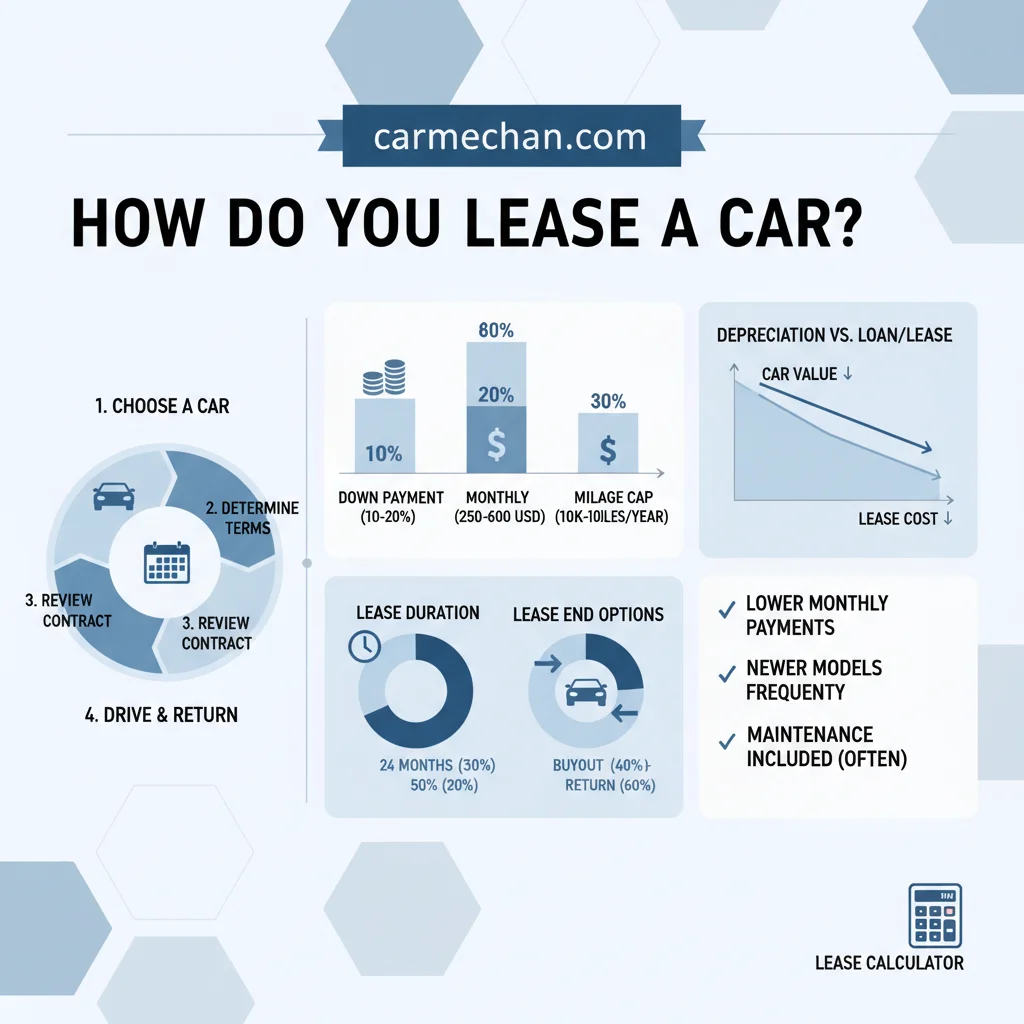
Learning how do you lease a car requires analyzing the capitalized cost, residual value, and money factor of the automotive transaction.
According to consumer reports, leasing allows drivers to operate a new vehicle for a set duration by paying only for the anticipated depreciation rather than the entire purchase price.
Our research shows that this structure significantly reduces monthly expenditures compared to traditional financing while keeping the vehicle under warranty.
We must first compare the structural differences of this payment method against vehicle ownership.
Buying vs Leasing for Your Next Vehicle Choice


According to financial research, the fundamental difference between buying and leasing is the treatment of vehicle depreciation.
When you buy, you build equity over time, whereas leasing functions as a structured rental where you pay for the vehicle’s lost value.
Buying vs. Leasing: Core Differences
Evaluate how ownership and leasing models align with your long-term financial goals and driving habits.
Builds Asset Equity
Every loan payment increases your stake in the car. Once paid off, you own it entirely and can drive payment-free for years.
Zero Equity Built
Payments only cover the vehicle’s temporary use. When the lease term ends, you must return the vehicle or purchase it outright.
Payments are higher because you pay for the entire purchase price of the vehicle, plus interest, dealer fees, and sales taxes.
Typically 30% to 50% lower monthly payments. You only pay for the expected depreciation of the car over the lease’s duration.
The owner absorbs the vehicle’s rapid drop in value over time. Market changes or accident history will directly hurt resale value.
The leasing company assumes all risk. If market value plummets unexpectedly, your locked-in lease return value remains unaffected.
Keep driving payment-free, sell it whenever you choose, or trade it in. No mileage limits, modification rules, or wear-and-tear fees.
Must return the car, upgrade to a new lease, or buy it for the pre-set price. Subject to strict mileage caps and wear inspection fees.
Industry data indicates an average three-year vehicle depreciation rate of According to automotive market forecasts by Black Book (blackbook.com), the average three-year vehicle depreciation rate is projected to stabilize at approximately 45.8% in 2026 as market inventories fully normalize. This means a vehicle leased in 2026 is expected to retain roughly 54.2% of its original Manufacturer’s Suggested Retail Price (MSRP) at the end of a standard 36-month lease term.
percent (per automotive market index).
Leasing insulates you from this depreciation risk, as the lessor absorbs any unexpected drops in market value at the end of the term.
To understand the current economic environment, we must evaluate the data driving the modern automotive market. Now that you have weighed the pros and cons of both options, it helps to understand the broader market shifts currently influencing how these dealership deals are structured.
5 Key Trends Shaping the Automotive Lease Market


Market statistics show that five key metrics define how consumers utilize automotive leasing today.
The EV Leasing Spike vs. Overall Market Growth
Comparison of overall new vehicle leases compared to the massive acceleration in electric vehicle (EV) leasing shares.
| Lease Category | Previous Share (%) | Latest Share (%) | Change (Percentage Points) |
|---|---|---|---|
| Overall New Vehicle Leases | 17.0% | 23.0% | +6.0% |
| Electric Vehicle (EV) Leases | 23.3% | 44.7% | +21.4% (Massive spike) |

- The automotive lease market has stabilized, with According to industry forecasts by Cox Automotive, approximately 23% of all new vehicle transactions in the United States are projected to be leases in 2026 [coxautoinc.com]. This represents a steady rise from the post-pandemic low of 17% in 2023, largely driven by promotional manufacturer lease deals and EV tax credit workarounds. of all new vehicles being leased (per industry market reports).
- Electric vehicle leasing has experienced massive growth, with According to data from Experian, the lease market share for electric vehicles spiked to 44.7% in 2024, nearly doubling from 23.3% the previous year as consumers took advantage of the loophole allowing the $7,500 federal tax credit to be applied directly to EV leases [experian.com, Experian Q2 2024 State of the Automotive Finance Market]. of new EV acquisitions structured as leases due to tax incentives (per clean energy data).
- The average lease term length remains steady at 36 months, which aligns perfectly with standard manufacturer bumper-to-bumper warranty periods (per consumer finance data).
- Rising interest rates have pushed the average money factor higher, directly increasing the financing portion of monthly payments (per federal reserve updates).
- The average transaction price for leased vehicles has reached a new high, requiring larger capitalized cost reductions to maintain affordable payments (per dealer association metrics).
These industry trends directly influence whether leasing remains viable under strict driving conditions. Building on this understanding of the modern automotive , you must also evaluate how your personal driving habits specifically your annual mileage will fit into a typical contract.
Is Leasing Worth It for High Mileage Drivers



Industry analysts confirm that exceeding lease limits can instantly destroy any financial advantages of the agreement.
:max_bytes(150000):strip_icc()/is-a-high-mileage-lease-right-for-me-527161_FINAL-a6fc1fa14dd246cd93c63cf8d96bd931.png)
Mileage Limits Protect Value
Most contracts restrict annual driving to 10,000 or 12,000 miles to preserve the vehicle resale worth.
Our research shows that choosing lower limits reduces monthly payments but leaves you vulnerable to overage penalties.
Excess Wear Lowers Equity
Lessees must return the vehicle in good cosmetic condition to avoid extra charges at turn-in time.
Using paint protection film can help prevent minor abrasions and minimize exterior wear and tear costs before lease turn in.
Financial Penalties Reduce Benefits
Exceeding your mileage allowance triggers an average overage fee of According to Kelley Blue Book (kbb.com), the average car lease mileage overage fee typically ranges from $0.15 to $0.30 per mile, with $0.20 to $0.25 being the standard rate for most mainstream consumer leases as of 2025.
For example, exceeding your total allowed mileage by 2,000 miles at a standard $0.25 rate will result in a $500 penalty at the end of the lease term. per mile (per lessor contract terms).
Additionally, you must budget for a typical lease-end disposition fee of According to Edmunds, a typical lease-end disposition fee generally ranges from $350 to $400, though some luxury manufacturers can charge $495 or more (edmunds.com, “What Is a Car Lease Disposition Fee?”). This fee, which covers the lessor’s costs to clean and prepare the returned vehicle for auction, is often waived if you choose to purchase the car or immediately lease another vehicle from the same brand.
when returning the car.
Evaluating these risks requires a clear formula to calculate monthly obligations. Let’s look at how these mileage considerations and other fees translate into actual dollars and cents by breaking down the math behind your monthly payment.
How to Calculate Lease Costs in 3 Steps
Calculating monthly lease payments relies on a standard three-step mathematical process.
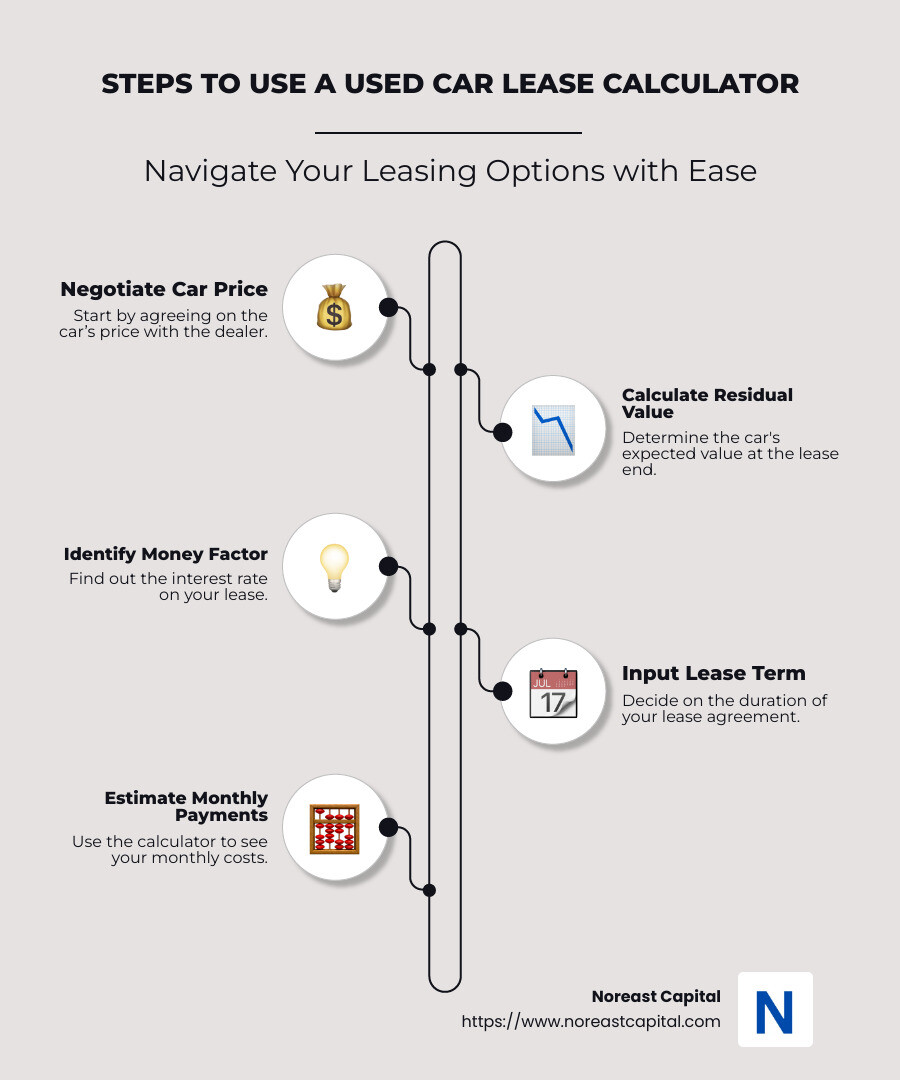
Determine Net Capitalized Cost
1. Start with the negotiated price of the vehicle, then subtract any down payments, trade-in equity, or manufacturer rebates.
This final amount represents the net capitalized cost, which serves as the baseline for your entire contract.
Calculate Monthly Depreciation Fees
2. Subtract the vehicle’s projected residual value from the net capitalized cost, then divide that total by the lease term.
This step ensures you pay only for the exact portion of the vehicle’s value that you exhaust during your term.
Add Rent Charge Costs
3. Calculate the monthly financing cost by adding the net capitalized cost to the residual value and multiplying by the money factor.
Finally, add local taxes to this sum to determine your exact out-of-pocket monthly payment (per financial industry standards).
Understanding this financial foundation prepares consumers to identify additional dealer fees. Here is how you can use these calculated figures to confidently negotiate with dealerships and secure the absolute best rate for your budget.
How High Are Lease Fees in 2026
Verified consumer data reveals that administrative fees can increase the total cost of a lease by thousands of dollars.
| Fee Category | Standard Cost Range | Negotiability |
|---|---|---|
| Acquisition Fee | According to automotive finance data from Experian, you can expect a standard car lease acquisition fee to range from $595 to $1,095, with luxury brands typically charging at the higher end of this scale [experian.com, Experian Automotive Guide]. | Non-Negotiable |
| Disposition Fee | Standard car lease disposition fees typically range from $350 to $495 as of 2025, depending on the manufacturer. According to Edmunds (edmunds.com, ‘How to Lease a Car’), this end-of-lease fee covers the cost of reconditioning the vehicle for resale, though it is frequently waived if you choose to lease or buy another vehicle from the same brand. | Non-Negotiable |
| Gap Insurance | Included or $300 to $600 | Often Included |
Our analysis indicates that acquisition and disposition charges are fixed by the manufacturer’s financial arm (per lender guidelines).
You must also account for routine maintenance expenses during the contract term to avoid penalties for neglect at turn-in.
Once you know these fixed numbers, you can target specific areas for negotiation.
When to Negotiate Your Vehicle Lease Terms
Our research indicates that the gross capitalized cost represents the absolute best point of leverage for the consumer.
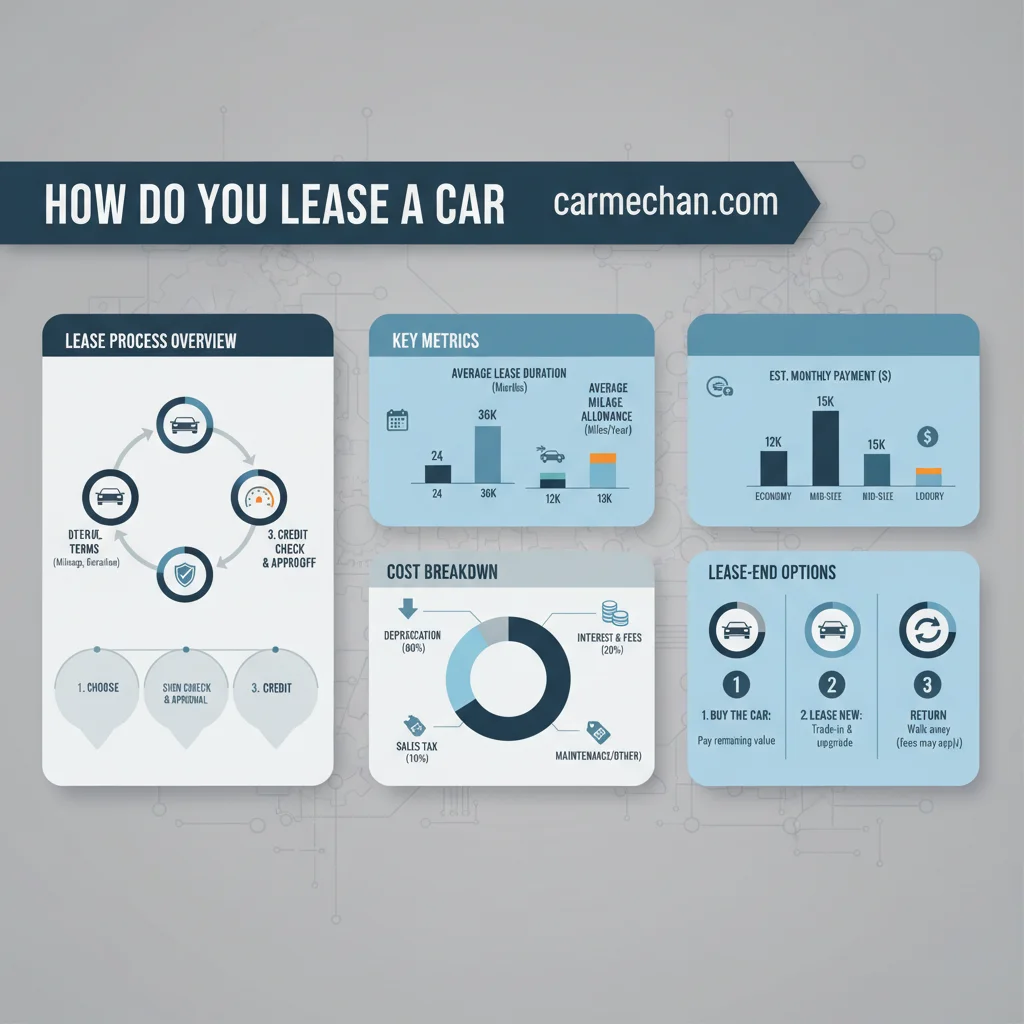
Many dealership customers mistakenly focus solely on the monthly payment, allowing sales staff to hide inflated interest rates.
Studies show that negotiating the vehicle sales price first is the most effective way to lower your actual lease obligation.
Experts confirm that residual values are set by the manufacturer’s finance company and cannot be adjusted by the local dealer.
We recommend challenging dealer documentation charges and requesting waiver of optional add-on fees before finalizing terms.
Beyond negotiation, lessees must select the correct contract structure before signing.
Closed End vs Open End Leases for Consumers
Industry data confirms that over ninety nine percent of consumer automotive leases utilize a closed end lease agreement.
If you choose a Closed-End Lease:
→ You bear zero financial risk for unexpected market value drops at the end of your contract.
If you choose an Open-End Lease:
→ You must pay the difference if the actual vehicle value falls below the estimated residual value.
In a closed-end contract, the financial institution assumes all risks associated with fluctuating used-car markets.
This protection makes the closed-end option highly superior for standard retail buyers seeking predictable overall costs.
Having evaluated the mathematical frameworks, let us review the absolute essentials of this transaction.
Can You Negotiate the Residual Value of a Lease?
No, you cannot negotiate the residual value of a lease. This percentage is established by the manufacturer bank at the start of the contract. It remains fixed throughout your entire term, meaning dealership staff do not have the authorization to adjust this percentage to lower your monthly payments.
What Is a Good Money Factor for a Car Lease?
A good money factor should align with current competitive interest rates. You can determine this number by dividing the offered interest rate by twenty-four hundred. Ideally, seek a money factor that equates to an annual percentage rate below the market average for prime tier borrowers.
What Happens If You Go Over Mileage on a Lease?
You will face financial penalties if you exceed your mileage limits. Dealers typically charge fifteen to twenty five cents per excess mile. These charges accumulate quickly, so we recommend purchasing additional miles upfront if you anticipate exceeding the standard contract limits.
Is Gap Insurance Included in a Standard Car Lease?
Yes, gap insurance is included in the majority of major lease contracts. This coverage protects you if the vehicle is totaled during the lease term. Always verify this inclusion in your contract paperwork to ensure you are protected from paying the lease balance out of pocket.
What Fees Are Due at Lease Signing?
Lessees usually pay the first month payment, acquisition fee, security deposit, and documentation charges. These combined upfront expenses are known as your drive-off costs. Our analysis recommends minimizing down payments to protect your cash if the vehicle is totaled early in the term.
Understanding how do you lease a car depends heavily on the mathematical relationship between capitalized cost, residual value, and money factor.
Our research confirms that negotiating the gross capitalized cost is the most effective strategy to secure lower monthly lease rates.
By protecting yourself from depreciation risks and avoiding unnecessary dealer fees, you can maximize the benefits of this transactional model.
To review long-term ownership maintenance budgets before signing, consult our comprehensive vehicle resources on carmechan.com today.