How To Remove Cosigner From Car Title After Payoff 2026
Last Updated on September 1, 2026 by Albert Duke
Removing a cosigner from a car title after payoff typically involves obtaining the lien release, completing a title transfer application, and submitting required documents to your state’s Department of Motor Vehicles (DMV). This process ensures you gain sole legal ownership of the vehicle.
Removing a cosigner from a car title after payoff ensures you have full legal ownership and control over your vehicle. This crucial step prevents future complications, especially if you plan to sell the vehicle or update your personal information in 2026.
Typically, the process involves obtaining the lien release from your lender, completing a title transfer application, and submitting all required documents to your state’s Department of Motor Vehicles (DMV). Taking these steps formally removes the cosigner’s name, solidifying your sole ownership.
We will now outline the exact steps you need to take to complete this important process efficiently.
Key Takeaways
- Obtain official lien release from lender.
- Complete state-specific title transfer forms.
- Submit all necessary documents to the DMV.
- Address challenges like uncooperative cosigners.
- Receive a new title showing sole ownership.
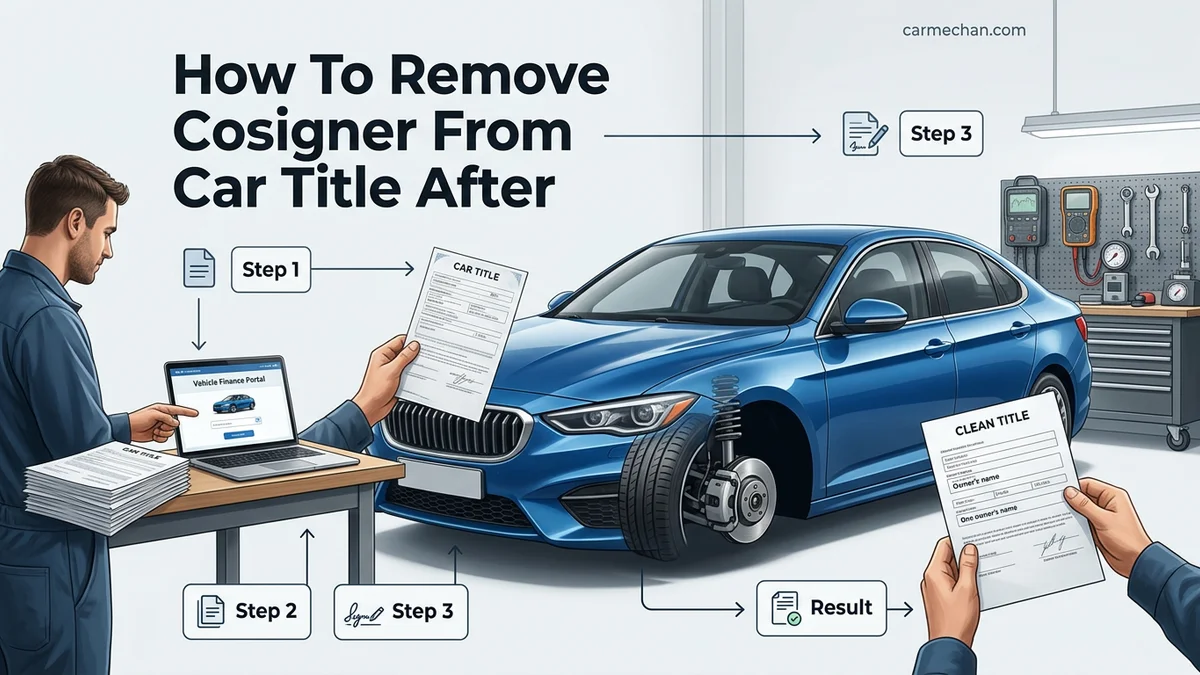
How to Secure Cosigner Release in 5 Steps
To effectively remove a cosigner from your car title after the loan is paid off, follow these specific steps. Each action plays a vital role in gaining sole control of your vehicle’s ownership.

Obtain Lien Release
Your first step is to get the official lien release from the financial institution that held your car loan. This document confirms the loan is fully paid and removes their interest in the vehicle.
Lenders typically mail the lien release automatically within 10-30 days after the final payment. If you do not receive it within a month, contact their customer service department.
Contact Cosigner
Once you have the lien release, reach out to your cosigner. Explain that the loan is paid off and you need their signature to remove their name from the title.
Schedule a convenient time for both of you to complete the necessary paperwork. Clear communication here helps ensure a smooth process.
Visit DMV Website
Each state has unique requirements for title transfers. Visit your state’s Department of Motor Vehicles (DMV) website to find specific forms and instructions.
Look for forms related to title transfers or removing a lienholder and cosigner. Print these out or note down the exact forms needed for your specific situation.
Submit Paperwork
Gather all required documents, including the original title, the lien release, and the completed state-specific forms. Both you and your cosigner will likely need to sign these documents.
Submit everything to the DMV, either in person, by mail, or through an authorized third-party agent. Pay any applicable title transfer fees at this stage.
Confirm New Title
After submitting the paperwork, the DMV will process your request. You will receive a new car title with only your name listed as the sole owner.
Verify that all information on the new title is accurate. Keep this official document in a safe place, as it is crucial proof of your vehicle ownership.
While these steps outline the general procedure, successful removal hinges on gathering the correct documentation.
What Essential Documents Do You Need
Successfully removing a cosigner from a car title depends heavily on presenting the correct and complete set of documents to the relevant authorities. Missing even one item can delay the entire process.
Original Vehicle Title
You must present the original car title, not a copy. This document proves current ownership and includes space for new owner information and signatures.
The original title will show both your name and your cosigner’s name. It is the fundamental document for any ownership changes.
Official Lien Release
This is the document from your lender stating that the vehicle loan has been fully satisfied. It officially removes the financial institution’s claim on your car.
Ensure the lien release is an original, official document, often on the lender’s letterhead.
Personal Identification Proof
Both you and your cosigner will need valid government-issued identification. This usually includes a driver’s license or state ID card.
The DMV uses these to verify identities and confirm signatures on the title transfer forms. Make sure your ID is current and not expired.
State Application Forms
Your state’s DMV will have specific forms for title transfers and removing a cosigner. These forms collect necessary information for updating vehicle records.
Examples include an Application for Certificate of Title or a Vehicle Transfer Form. Always check your local DMV website for the most current versions.
Odometer Disclosure Statement
Many states require an odometer disclosure statement when a vehicle title is transferred. This form certifies the vehicle’s mileage at the time of transfer.
While primarily for sales, some DMVs require it even for transfers between current owners. Both you and your cosigner may need to sign it.
Gathering these documents is straightforward when all parties cooperate, but sometimes you face unique challenges.
3 Scenarios for Difficult Cosigner Removal
While the process for removing a cosigner is usually smooth, specific challenging situations can complicate title transfer. Addressing these requires patience and often professional guidance.

Unresponsive Cosigner
An unresponsive or uncooperative cosigner can halt your title transfer. Start by sending a formal, certified letter detailing the need for their signature and a deadline.
If that fails, consider seeking legal advice. Some states might allow for a court order to compel signature, especially since the loan is paid off. Small claims court could be an option if property rights are being impeded.
Deceased Cosigner
Removing a deceased cosigner from a car title involves probate laws. You will need the cosigner’s death certificate and potentially court documents from their estate.
The executor of the estate typically has the authority to sign on behalf of the deceased. Contact your DMV for specific requirements, as these vary by state, often involving an affidavit or court order.
Unable to Locate
If you cannot find your cosigner, removing them from the title becomes very difficult. Your first step involves attempting to contact them through all known channels.
Legal recourse may involve “service by publication,” where a notice is published in a local newspaper. This is a complex legal process and usually a last resort. Consulting an attorney is highly recommended in such cases to determine state-specific options.
Overcoming these hurdles often requires understanding how state-specific regulations govern vehicle titles.
How Do State Laws Impact Title Changes
The exact process for removing a cosigner from a car title can significantly vary depending on your specific state’s Department of Motor Vehicles (DMV) regulations. Always consult your local DMV for accurate guidance.
Specific Forms Vary
Every state designs its own title application and transfer forms. The names, layouts, and required fields on these documents can differ significantly.
Always download or request the forms directly from your state’s official DMV or motor vehicle agency website to ensure you have the correct version for 2026.
Processing Timeframes Differ
The time it takes to process a title transfer and issue a new title can vary widely by state. Some states offer same-day service, while others may take several weeks.
Check your state’s DMV website for current processing estimates. Expedited processing may be available for an additional fee in some jurisdictions.
Notary Public Needs
Many states require signatures on title documents to be notarized. A notary public verifies the identity of the signers and witnesses their signatures.
Ensure you know if notarization is required for your state’s forms before you and your cosigner sign anything. This prevents delays later in the process.
Online Service Availability
Some states offer online portals for certain title transactions, while others require in-person visits or mailed submissions. Check your state DMV’s website for available options.
Even if you cannot complete the entire process online, you might be able to download forms or schedule appointments digitally.
Understanding these state-specific nuances is crucial, and it’s equally important to be aware of any associated costs.
What Fees Are Associated With Title Changes
Removing a cosigner from your car title may incur various fees, which can differ by state and specific circumstances. Budgeting for these helps ensure a smooth, uninterrupted process.
Title Transfer Costs
States charge a fee for processing a new title certificate. This title transfer cost covers the administrative work involved in updating vehicle ownership records.
These fees typically range from $15 to $100 across different states. Always check your local DMV for the exact amount.
Notary Service Charges
If your state requires notarized signatures, you will incur a small fee for notary services. Notaries typically charge a few dollars per signature.
Some banks or credit unions offer free notary services to their customers. Plan ahead to avoid last-minute searches for a notary.
Expedited Processing Fees
If you need your new title quickly, many DMVs offer expedited processing for an additional charge. This can significantly reduce the waiting period.
The cost for expedited service varies but can be a convenient option if you are on a tight schedule, such as preparing to sell the vehicle soon.
Potential Extra Charges
Depending on your state, you might encounter other minor fees. These could include late fees if you delay the transfer or specific emissions testing charges in some regions.
Always review your state’s DMV website or contact them directly for a comprehensive list of all potential costs associated with managing vehicle title changes in 2026.
Being prepared for these costs is part of completing the cosigner removal process, ensuring you fully understand your new sole ownership.
Gain Full Vehicle Control Today
Successfully removing a cosigner from your car title after payoff is a significant step toward achieving full legal autonomy over your vehicle. This comprehensive guide equips you with the knowledge to navigate the necessary paperwork, state regulations, and potential challenges effectively in 2026.
By following the outlined steps, gathering the correct documents, and understanding the state-specific requirements, you can streamline the process. Remember to communicate clearly with your cosigner and be prepared for potential fees.
Taking these actions ensures your car title accurately reflects your sole ownership. You gain complete control for future decisions, whether selling, trading, or simply enjoying your paid-off vehicle.
Common Questions About Cosigner Removal
Can I Remove a Cosigner If the Car Loan Is Not Fully Paid Off?
No, you cannot remove a cosigner from a car title until the loan is completely paid off. The cosigner is legally responsible for the debt until the lender issues a lien release, which only happens once the financing is satisfied. Refinancing the loan in your name alone might be an alternative before payoff.
What If My Cosigner Cannot Be Reached to Sign the Title?
If your cosigner cannot be reached, you may need to pursue legal avenues. Options include sending certified letters, publishing notices, or in some extreme cases, seeking a court order for title transfer. Consult your state’s DMV or a legal professional for specific guidance on absentee cosigner protocols.
Is It Possible to Remove a Deceased Cosigner From a Car Title?
Yes, removing a deceased cosigner from a car title is possible, though it involves specific legal steps. You will typically need a copy of the death certificate and possibly probate court documents or an affidavit from the estate’s executor. Contact your state’s DMV for their precise requirements.
How Long Does It Take to Get a New Car Title After Cosigner Removal?
The time to receive a new car title after cosigner removal varies by state. Some states offer same-day service for in-person applications, while others may take several weeks to process and mail the new title. Check your specific state’s DMV website for current processing times and options.
Are There Different Procedures for Electronic Versus Paper Titles?
Yes, there can be different procedures for electronic versus paper titles. For electronic titles, the lienholder electronically releases their interest, and you may need to apply for a paper title conversion. For paper titles, you typically submit the physical document. Always confirm the process with your state DMV based on your title type.