How Much Does a GMC Sierra 1500 Weigh? Your Ultimate Weight Guide
Last Updated on September 1, 2026 by Ryan
The GMC Sierra 1500 typically weighs between 4,500 and 5,500 pounds, depending heavily on its specific configuration. Key factors like engine size, cab style, bed length, and drivetrain (2WD vs. 4WD) significantly influence its exact curb weight, which is the vehicle’s operational weight without passengers or cargo.
🎯 Key Takeaways


- Sierra 1500 curb weight varies widely by configuration.
- Engine, cab, bed length, and 2WD/4WD impact weight most.
- Curb weight defines the truck’s empty operational weight.
- GVWR and payload capacity directly relate to curb weight.
- Check your door jamb sticker for your truck’s exact weight.
When you’re asking, “How much does a GMC Sierra 1500 weigh?”, you’re looking for a figure that’s more complex than a single number. Typically, a GMC Sierra 1500’s curb weight falls within a range of approximately 4,500 to 5,500 pounds. This variation isn’t arbitrary; it’s a direct result of the specific configuration of your truck.

Understanding your Sierra’s exact curb weight is practical and important. It directly influences your truck’s payload capacity, affects fuel consumption, and is a foundational number for calculating towing limits safely. Whether you’re hauling gear, connecting a trailer, or just want to optimize your truck’s performance, knowing this weight is a critical first step.
Understanding GMC Sierra 1500 Curb Weight Variations


The term curb weight refers to the total weight of a vehicle with all standard equipment, fluids (oil, coolant, full fuel tank), and without any passengers, cargo, or aftermarket accessories. It’s the weight of the truck as it sits on the dealer lot, ready to drive. For the GMC Sierra 1500, this figure is highly variable due to the multitude of available options.
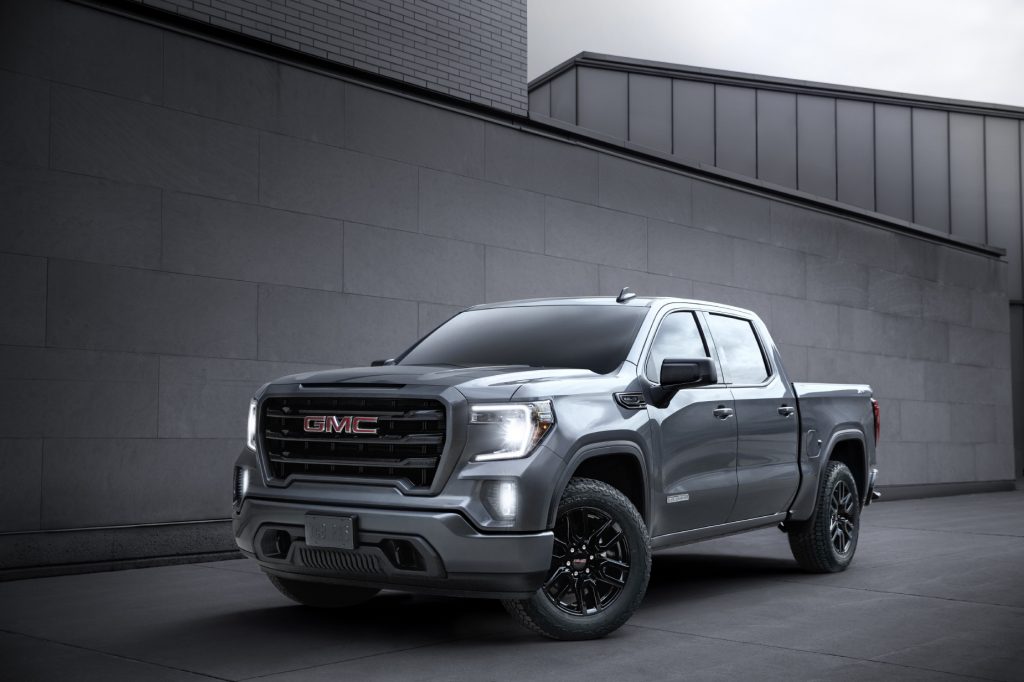
You’ll find that the lightest Sierra 1500 models, often Regular Cab 2WD configurations with the smallest engine, will sit at the lower end of the spectrum. Conversely, a fully loaded Crew Cab 4WD with a powerful V8 engine and a longer bed will push towards the upper limit. Here are some illustrative examples to give you a clearer picture:
Typical Sierra 1500 Curb Weights by Configuration
- Regular Cab, Long Bed, 2WD (e.g., 2.7L Turbo): Around 4,300 – 4,500 lbs
- Double Cab, Standard Bed, 2WD (e.g., 5.3L V8): Around 4,700 – 4,900 lbs
- Double Cab, Standard Bed, 4WD (e.g., 5.3L V8): Around 4,900 – 5,100 lbs
- Crew Cab, Short Bed, 2WD (e.g., 5.3L V8): Around 4,900 – 5,100 lbs
- Crew Cab, Short Bed, 4WD (e.g., 6.2L V8): Around 5,200 – 5,400 lbs
- Crew Cab, Standard Bed, 4WD (e.g., 3.0L Duramax): Around 5,400 – 5,600 lbs
These figures are approximate and can vary slightly based on the specific model year, trim level (e.g., SLE, SLT, Denali), and optional equipment (such as larger wheels, specific suspension packages, or advanced technology add-ons). Always refer to your truck’s specific owner’s manual or the label on the driver’s side door jamb for the most accurate curb weight for your individual vehicle. This label, often called the Safety Compliance Certification Label, provides crucial details including the Gross Vehicle Weight Rating (GVWR) and Gross Axle Weight Ratings (GAWR).
Everything You Need to Know About GMC Sierra 1500 Weight


Understanding the weight of your GMC Sierra 1500 is far more crucial than simply knowing if it’s “heavy.” This comprehensive, step-by-step guide will walk you through all the essential information, from defining key weight terms to locating specific figures on your truck and even how to get an accurate measurement. Knowing your truck’s precise weight and capacities is vital for safe towing, proper payload management, ensuring legal compliance, and making informed decisions about modifications or upgrades. Let’s dive in and demystify your Sierra’s true heft!
Step 1: Grasping Essential Weight Terminology
What you need: A basic understanding of automotive terms, access to this guide.
Instructions: Before you start searching for numbers, it’s critical to understand what each weight term signifies.
- Curb Weight: This is the weight of the vehicle with all standard equipment, fluids (oil, coolant), and a full tank of fuel, but without passengers or cargo. This is the “empty” weight of your truck.
- Gross Vehicle Weight Rating (GVWR): This is the maximum permissible total weight of your fully loaded truck, including the vehicle itself, all passengers, cargo, and any accessories. It’s a critical safety limit set by the manufacturer.
- Payload Capacity: The maximum allowable weight of cargo and passengers that a truck can carry. It’s calculated by subtracting the truck’s Curb Weight from its GVWR.
- Gross Combined Weight Rating (GCWR): The maximum permissible total weight of the truck, its cargo, passengers, AND any attached trailer with its cargo. This is crucial for towing.
Pro Tip: Don’t confuse Curb Weight with GVWR. Your truck’s Curb Weight is its actual empty weight, while GVWR is the maximum it’s designed to safely handle when loaded, and it’s almost always a higher number.
Step 2: Locating the Door Jamb Certification Label
What you need: Your GMC Sierra 1500, a good light source (flashlight if needed), and possibly reading glasses.
Instructions: The most direct and accurate source for your specific truck’s official weight ratings is the certification label, typically found on the driver’s side door jamb (the pillar when the door is open). Look for a white or yellow sticker that contains a lot of detailed information. On this label, you will clearly find the “GVWR” (Gross Vehicle Weight Rating) and often the “GAWR” (Gross Axle Weight Rating) for both the front and rear axles. These are specific to your VIN and factory configuration, providing the legally binding limits for your vehicle. Take a photo or write down these critical numbers.
Pro Tip: This label provides the GVWR that your vehicle must never exceed. It accounts for the vehicle’s original factory configuration, so any significant modifications will affect the actual curb weight you can carry before hitting this limit.
Step 3: Consulting Your Owner’s Manual
What you need: Your GMC Sierra 1500’s owner’s manual (physical copy or digital version).
Instructions: Your owner’s manual is a treasure trove of specific information. Navigate to the “Specifications” or “Capacities and Specifications” section, usually found towards the back of the manual. Here, you’ll find tables listing approximate curb weights for various Sierra 1500 configurations based on cab style (Regular, Double, Crew), bed length (Short, Standard, Long), engine size (e.g., 2.7L Turbo, 5.3L V8, 6.2L V8), and drivetrain (2WD or 4WD). While these are often base figures, they provide an excellent starting point and illustrate how different options affect overall weight. Note down the range applicable to your truck’s general setup.
Pro Tip: If you have a digital owner’s manual (often available on the GMC website or via a mobile app), use the search function for terms like “weight,” “specifications,” or “GVWR” to quickly pinpoint the relevant pages.
Step 4: Utilizing GMC’s Official Website and Online Resources
What you need: Internet access, your truck’s VIN (Vehicle Identification Number) if available.
Instructions: Visit the official GMC website (GMC.com) and navigate to the “Build & Price” section for new models or the “Owners” section for existing vehicles. For new trucks, you can configure a Sierra 1500 exactly like yours to see its estimated curb weight and GVWR based on selected options. For older models, you might find an archive of specifications. Additionally, reputable automotive review sites (like Edmunds, Kelley Blue Book, MotorTrend) often publish detailed specifications, including curb weights, for various trims and model years. Cross-reference information from multiple reliable sources to ensure accuracy, especially if you can’t find specific data for your exact VIN.
Pro Tip: When using online resources, always prioritize official manufacturer data. Third-party sites can be helpful but might not always have the absolute latest or most precise figures for every single configuration detail.
Step 5: Accounting for Specific Configuration Variables
What you need: Knowledge of your Sierra’s exact build, including cab type, bed length, engine, and drivetrain.
Instructions: The weight of a GMC Sierra 1500 isn’t a single fixed number; it varies significantly based on its specific configuration. A base model Regular Cab/Short Box with a 2.7L Turbo engine and 2WD might have a curb weight around 4,400-4,700 lbs (2,000-2,130 kg). In contrast, a fully-optioned Crew Cab/Standard Box with a 6.2L V8 engine and 4WD could easily weigh between 5,200-5,500 lbs (2,360-2,495 kg) or even more. The heavier engine, larger cab, longer bed, and 4×4 system all add substantial weight. Ensure you are looking at figures that match your specific truck’s setup when researching.
Pro Tip: Even subtle differences, like opting for a sunroof, larger wheels, or heavy-duty trailering package, can add dozens of pounds to the curb weight, subtly impacting your remaining payload capacity.
Step 6: Factoring in Aftermarket Accessories and Permanent Gear
What you need: A comprehensive list of all non-factory installed accessories and frequently carried items.
Instructions: Your truck’s factory curb weight changes the moment you add anything not installed at the assembly plant. Common additions that increase weight include: bed liners (50-100 lbs), tonneau covers (50-150 lbs), running boards/nerf bars (30-80 lbs), heavier tires and aftermarket wheels (can vary significantly), lift kits, utility racks, heavy-duty bumpers, winches (50-100+ lbs), and toolboxes. Even frequently carried items like a full-size spare tire (if not standard), recovery gear, or a permanently installed air compressor contribute to the actual curb weight. Be thorough in listing everything you’ve added or always carry.
Pro Tip: Don’t forget the weight of a full tank of fuel (a typical 24-gallon tank adds about 144 lbs) and any passengers when calculating your total load. These items directly reduce your available payload capacity.
Step 7: Performing an Actual Weigh-In at a Certified Scale
What you need: Your GMC Sierra 1500 (with a full tank of gas and any typical gear you carry), a public weigh station (truck stop, landfill, recycling center), and a small fee (typically $10-$20).
Instructions: For the most accurate “actual curb weight” of your specific, modified, and loaded truck, visit a certified public scale. Truck stops (like CAT Scales) are excellent for this. Before going, ensure your fuel tank is full and load any items you typically carry in your truck day-to-day (tools, bed liner, etc.), but no passengers. Drive onto the scale as instructed and get a printout. This will give you the precise actual weight of your truck. If the scale allows, you can get individual axle weights by positioning your front and then rear axles on separate pads.
Pro Tip: Weigh your truck “empty” (just you and a full tank, no extra cargo or passengers) to establish your true current curb weight. This figure is essential for accurately calculating your available payload capacity: GVWR minus this actual empty weight.
✅ Final Checklist
-
✅ All relevant weight terminology (Curb Weight, GVWR, Payload) understood.
-
✅ Driver’s side door jamb sticker consulted for specific GVWR and GAWR figures.
-
✅ Owner’s manual reviewed for factory base curb weights matching your configuration.
-
✅ GMC’s official website and other reputable online sources cross-referenced for data.
-
✅ All aftermarket accessories and permanent gear accounted for in weight calculations.
-
✅ An actual weigh-in performed at a certified scale for ultimate accuracy (highly recommended).
Important Notes:
- Safety Considerations: Never exceed your truck’s Gross Vehicle Weight Rating (GVWR) or Gross Axle Weight Ratings (GAWR). Overloading can severely compromise braking performance, handling, tire integrity, and vehicle stability, leading to dangerous situations and potential mechanical failure. Always err on the side of caution.
- When to Seek Professional Help: If you’re involved in commercial hauling, planning extensive modifications, or are unsure about your calculations, consult with a certified mechanic, a dealership service department, or a trailer/RV specialist. They can provide expert advice and ensure your vehicle remains safe and compliant.
- Estimated Time and Cost Range: Researching weights through your manual and online resources typically takes 30-90 minutes. Visiting a public weigh station usually takes 15-30 minutes and costs approximately $10-$20, depending on the facility. The total time for a thorough understanding could be 1-2 hours, with minimal cost.
Key Factors Influencing Sierra 1500 Weight
How Your Configuration Adds or Subtracts Pounds
Several core specifications directly impact your Sierra 1500’s curb weight. Understanding these helps explain the range of weights you see across different models. Each choice made during manufacturing, from the engine under the hood to the number of drive wheels, adds or subtracts significant pounds.

- Engine Size and Type: The engine is a primary contributor to overall weight. For example, the smaller, turbocharged 2.7L engine will be lighter than the larger 5.3L V8. The heaviest options are typically the 6.2L V8 and the 3.0L Duramax Turbo-Diesel, due to their robust construction and additional components. A diesel engine, for instance, often includes heavier components for emissions and durability compared to a similarly sized gasoline engine.
- Cab Style: More interior space means more materials, which means more weight. Regular Cabs (two doors, single row of seating) are the lightest. Double Cabs (four doors, but with smaller rear doors and less rear legroom) are heavier. The Crew Cab (four full-sized doors, spacious rear seating) is consistently the heaviest cab option.
- Bed Length: A longer bed requires more steel for the bed itself and a longer frame, increasing the truck’s overall weight. The Short Bed (approx. 5′ 8″) is the lightest, followed by the Standard Bed (approx. 6′ 6″), and finally the Long Bed (approx. 8′) is the heaviest. This difference can be several hundred pounds between the shortest and longest options.
- Drivetrain (2WD vs. 4WD): Adding 4-wheel drive capability significantly increases weight. A 4WD system incorporates additional components like a transfer case, front differential, stronger axles, and often heavier suspension components. Expect a 4WD Sierra to weigh approximately 200-350 pounds more than its identical 2WD counterpart.
Beyond these major components, other elements contribute smaller, cumulative additions: larger wheel sizes, premium interior materials, sunroofs, advanced safety technology packages, and heavy-duty trailering packages can all incrementally increase the curb weight of your specific Sierra 1500. Every option chosen from the factory adds to the final figure you’ll find on your door jamb.
Understanding your GMC Sierra 1500’s curb weight is just one piece of the puzzle. To truly comprehend its capabilities and limitations, you need to be familiar with related terms like GVWR and payload capacity. These figures directly impact how much you can safely carry and tow.
Decoding Related Weight Terms: GVWR and Payload Capacity
Beyond the truck’s inherent weight, two critical numbers determine its operational capacity: Gross Vehicle Weight Rating (GVWR) and Payload Capacity. Knowing these is paramount for safe and legal operation.
What is GVWR (Gross Vehicle Weight Rating)?
The Gross Vehicle Weight Rating (GVWR) is the maximum permissible total weight of your fully loaded Sierra 1500. This isn’t just the truck itself; it includes the curb weight of the vehicle plus the weight of all occupants, cargo, fluids, and any aftermarket accessories. Essentially, it’s the absolute heaviest your truck can be while still operating safely as designed by GMC.
- Why it matters: Exceeding your truck’s GVWR can compromise braking performance, handling, tire integrity, and suspension components, leading to dangerous situations and potential mechanical failures.
- Practical example: A GMC Sierra 1500 might have a GVWR ranging from approximately 6,800 to 7,300 pounds, depending on its configuration. This means the truck, plus everything and everyone inside, must not weigh more than this specified limit.
Understanding Payload Capacity
Payload capacity is the maximum amount of weight your Sierra 1500 can carry, including passengers, cargo, and any additional equipment added to the vehicle. It’s essentially the difference between your truck’s GVWR and its curb weight. Think of it as the “extra” weight your truck is designed to safely transport.
- Calculation: Payload Capacity = GVWR – Curb Weight
- What’s included: Don’t forget that everything you add post-purchase, like a bed liner, toolboxes, fifth-wheel hitches, or even a full tank of gas beyond the factory calculation, reduces your available payload. Every person, every bag of groceries, and every piece of gear counts!
- Real-world tip: If your Sierra 1500 has a curb weight of 5,200 lbs and a GVWR of 7,000 lbs, your payload capacity is 1,800 lbs. This is the total weight you can add, so if you have four passengers weighing 600 lbs total, you only have 1,200 lbs remaining for cargo.
Locating Your Specific Sierra’s Weight Information
While general ranges provide a good starting point, the most accurate weight information for your specific GMC Sierra 1500 is readily available on the vehicle itself. It’s crucial to consult these official sources, as exact figures vary significantly by trim, options, and model year.
Where to Find Your Truck’s Official Weights
Forget generic online specs when it comes to critical safety data. Your truck has its own unique weight ratings printed directly on it:
- Driver’s Side Door Jamb Sticker: This is your primary source. Open the driver’s door, and you’ll find a white or yellow sticker (often called the “Tire and Loading Information” placard or “VIN plate”). This sticker clearly lists your specific Sierra’s GVWR, GAWR (Gross Axle Weight Rating for front and rear axles), and often the curb weight or “Occupant and Cargo Carrying Capacity,” which is essentially your max payload. This is the most accurate information, tailored to your truck’s exact configuration.
- Owner’s Manual: Your vehicle’s owner’s manual provides a wealth of information, including general specifications for various models and configurations. While it won’t be as precise as the door jamb sticker for your exact vehicle’s curb weight, it offers detailed tables for GVWR, payload, and towing capacities across the Sierra 1500 lineup.
- GMC Official Website / VIN Decoder: If you’re buying used or just curious, GMC’s official website (under “build and price” or “specifications” for a specific model year) can offer generalized data. For highly specific details, some online VIN decoder tools can pull factory specifications based on your Vehicle Identification Number.
Why Accuracy Matters
Relying on accurate weight information isn’t just about following rules; it’s about safety, longevity, and peace of mind. Guessing or using generalized figures can lead to serious consequences:
- Safety Risks: Overloading can severely degrade handling, increase stopping distances, put undue stress on tires (leading to blowouts), and make your vehicle unstable, especially at highway speeds or during emergency maneuvers.
- Legal Ramifications: Exceeding weight limits can result in fines and penalties, particularly if you’re involved in an accident while overloaded. Commercial applications are especially scrutinized.
- Vehicle Damage & Warranty Void: Persistent overloading can accelerate wear and tear on your truck’s engine, transmission, suspension, brakes, and chassis. In some cases, damage caused by exceeding weight ratings may even void your vehicle’s warranty.
- Practical Tip: Before loading up for a big trip or job, always consult your door jamb sticker. If in doubt, use a certified truck scale to weigh your loaded vehicle to ensure you’re within all specified limits.
Conclusion
Understanding how much a GMC Sierra 1500 weighs isn’t a trivial detail; it’s fundamental to safe, efficient, and responsible truck ownership. We’ve explored the significant variations in curb weight across different trims and configurations, highlighting that no two Sierra 1500s are exactly alike. Equally important are the concepts of GVWR and payload capacity, which define your truck’s maximum operational limits for carrying people and cargo.
Remember, the average curb weight for a Sierra 1500 typically falls between 4,500 and 5,500 pounds, but your specific vehicle’s exact weight, GVWR, and payload are unique. For the most accurate figures, always consult the sticker on your driver’s side door jamb or your owner’s manual. Making informed decisions based on these numbers will not only protect your investment but, more importantly, ensure the safety of everyone on the road. Drive smart, drive safe!
❓ Frequently Asked Questions
What’s the typical weight range for a GMC Sierra 1500 across configurations?
The curb weight for a GMC Sierra 1500 generally spans from approximately 4,500 pounds for a base Regular Cab 2WD model to over 5,500 pounds for a fully equipped Crew Cab 4WD with a larger engine. This range accounts for all standard variations.
How do different engine options affect the Sierra 1500’s curb weight?
Engine choice plays a notable role; for instance, the 2.7L Turbo is lighter than the 5.3L V8, while the 6.2L V8 and 3.0L Duramax diesel are typically the heaviest options, adding several hundred pounds to the overall weight. More powerful or diesel engines require robust supporting components.
What role do cab style and bed length play in the overall weight?
Cab style is a major factor, with Crew Cabs being the heaviest, followed by Double Cabs, and then Regular Cabs due to their increasing size and material use. Similarly, longer bed lengths (Standard or Long) add more weight than Short Beds.
Can you explain the difference between curb weight, GVWR, and payload capacity?
Curb weight is the empty vehicle’s weight. Gross Vehicle Weight Rating (GVWR) is the maximum permissible total weight of the truck, including its curb weight, passengers, and cargo. Payload capacity is the maximum weight of passengers and cargo a truck can carry, calculated by subtracting the curb weight from the GVWR.
Why is knowing your Sierra’s curb weight important?
Knowing your curb weight is crucial for calculating your available payload capacity, ensuring you don’t overload your truck for safe towing and hauling, and understanding its general performance characteristics. It’s also foundational for understanding other weight ratings.
Where can I find the exact curb weight for my specific GMC Sierra 1500?
The most accurate curb weight for your individual truck is typically found on the driver’s side door jamb sticker, which provides specific weight ratings from the manufacturer. You can also consult your owner’s manual or the manufacturer’s website for model-year specific specifications.