Rooftop Tent Weight Limit: Dynamic Vs Static Ratings And Heavy-Duty Picks for 2026
Last Updated on September 2, 2026 by Albert Duke
Imagine waking up to a breathtaking mountain sunrise from the roof of your vehicle, only to realize a loud, ominous crack overhead. Ignoring your vehicle rooftop tent weight limit can quickly turn an idyllic overlanding trip into an expensive structural disaster.

Prime for Young Adults — 6 Months Free
Students and 18–24s get six months of Prime free, then half price.
Start 6 Months FreeEvery vehicle and roof rack combination has strict engineering thresholds designed to keep you safe both on the highway and at the campsite. Understanding these heavy-duty limits prevents permanent damage to your car’s frame.
This article breaks down dynamic versus static ratings, calculation formulas, heavy-duty gear options, and passenger load impacts so you can configure your setup safely.
Understanding Your Rooftop Tent Weight Limit
Recommended Best Deal Products


When you start shopping for an overlanding setup, understanding the rooftop tent weight limit is critical for safety on the road and at camp. In plain English, this limit refers to the maximum load your vehicle roof and rack system can safely bear without compromising structural integrity.
Exceeding these rated limits risks severe vehicle damage, including dented roof panels, warped door frames, or catastrophic roof rack failure while traveling at highway speeds. Because weight behaves differently when you are cruising down the interstate versus sleeping at a campsite, manufacturers divide these ratings into two distinct categories.
What Is Dynamic Weight Capacity?
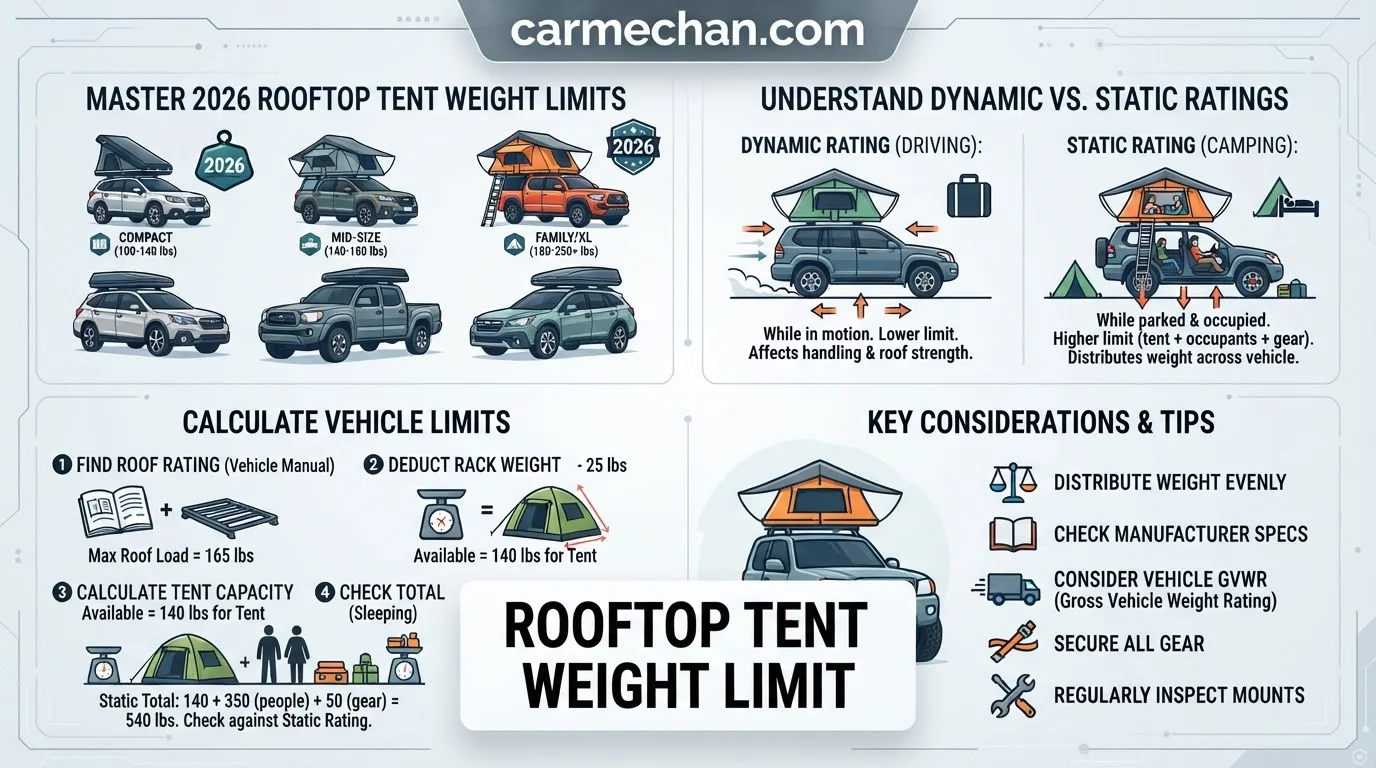
Dynamic weight capacity is the maximum load your vehicle can carry safely while the car is actively in motion. When you drive, sudden braking, sharp cornering, and hitting potholes generate massive downward and lateral forces that multiply the weight of your gear.
A standard dynamic limit of 150 lbs while driving accounts for these kinetic forces. This rating dictates the actual weight of the rooftop tent itself, as well as any hard-mounted brackets or permanently attached crossbars you use during transit.
What Is Static Weight Capacity?
Static weight capacity measures the maximum load your roof can support while the vehicle is completely parked and stationary. Because the vehicle is not moving, the physics change entirely, shifting the burden from sudden motion forces to simple gravity compression.

Audible — Listen Free for 30 Days
One free credit a month and thousands of titles included.
Listen Free for 30 DaysA typical static limit of 600 lbs while parked allows the roof system to support the dead weight of the tent, plus multiple sleeping adults and gear. This capacity rating relies heavily on the physical strength of your vehicle pillars and whether you are using factory crossbars or heavy-duty aftermarket alternatives.
Dynamic vs. Static Rooftop Tent Weight Limits Explained
Vehicle owners often feel confused by the stark contrast between how much weight their roof can handle while driving versus sitting parked at camp. Understanding these two distinct ratings prevents structural damage, ruined factory roofs, and dangerous highway handling issues. The engineering limits change drastically the moment the vehicle shifts from motion to a stationary campsite setup.
Forces at Play While Driving
Dynamic weight limits dictate the maximum downward and lateral forces your roof racks can safely endure while the vehicle is in motion. Manufacturers set dynamic limits much lower than static limits because driving introduces complex external forces. Cornering applies lateral G-forces, sudden braking creates forward momentum shifts, and hitting potholes at highway speeds generates massive vertical shock loads.
A common misconception is that roof strength ratings reflect static load capabilities alone, leading drivers to overload their setups for transit. In reality, a stationary 150-pound tent transforms into a punishing dynamic weight multiplier when traveling at speed. Hitting a severe bump or speed bump at 35 mph can spike the effective gravitational load of that tent to triple or quadruple its resting mass.
A 150-lb rooftop tent hitting a severe speed bump at 35 mph can experience transient peak forces exceeding 450 lbs of downward impact energy due to sudden deceleration and suspension compression.
Load Distribution While Parked
Static weight limits apply only when the vehicle is completely parked, the engine is off, and the tent is deployed for sleeping. In this stationary mode, the physical load path changes entirely compared to highway transit. The total weight of the tent plus occupants no longer rests solely on the vehicle roof channels and rack towers.
Instead, the sturdy telescopic ladder acts as a structural support pillar, transferring a significant portion of the sleeping load directly to the ground. The remaining weight distributes safely across the vehicle frame, reinforced roof mounts, and crossbars. This clever load-sharing geometry is why static weight limits routinely accommodate 600 pounds or more, easily supporting multiple adults.
How to Calculate Your Vehicle Rooftop Tent Weight Limit
Recommended Best Deal Products


Calculating your vehicle safe load capacity requires comparing hard manufacturer numbers against your hardware and camping gear. Skipping this math can lead to damaged roof rails, compromised handling, or structural roof failure while driving down the highway.
To prevent catastrophic failures, you must balance what the roof can handle in motion against what it can support while parked. Going through a step-by-step verification process ensures your vehicle remains safe and roadworthy under any conditions.
Audible Premium Plus — Annual Membership
12 audiobook credits up front, plus the full Audible catalogue.
See Annual PlansChecking Manufacturer Specs
Locate your vehicle manufacturer roof load specifications in the physical owner manual or inside the digital glovebox app. Look specifically for the dynamic rating, which dictates the maximum downward force your roof can endure while the vehicle is in motion.
Never rely on generic online forum estimates or dealership guesses when finding this baseline number. Standard passenger cars, sedans, and compact crossovers often feature dynamic limits ranging from 100 to 165 pounds, whereas heavy-duty off-road SUVs and trucks may support higher loads.
Next, account for the combined weight of all hardware components that permanently sit on top of your vehicle. This includes aftermarket crossbars, specialized mounting brackets, anti-theft security bolts, and the physical housing of the tent itself.
For instance, if your factory vehicle limit is 165 pounds, but your heavy-duty crossbars weigh 35 pounds and the tent weighs 130 pounds, your math reveals 165 minus 35 minus 130 equals zero remaining dynamic margin. Exceeding this baseline before you even pack personal gear creates an immediate highway hazard.
Calculating Total Occupant and Gear Load
Once parked at your campsite, the engineering dynamic shifts from driving forces to static gravity weight limits. This static rating is typically four times higher than the driving limit because the vehicle frame rests firmly on its suspension and tires.
Calculate your sleeping capacity by adding the total combined body weight of all adults, children, and pets who will sleep inside the structure. Do not forget to factor in internal gear stored inside the mattress compartment, such as heavy sleeping bags, pillows, and nighttime clothing.
📋
Step-by-Step Guide
Open your vehicle manual to locate the official pounds or kilograms limit for driving with roof cargo.
Weigh your crossbars, mounting brackets, and tent shell to ensure they do not surpass your driving limit.
Add total sleeping occupants and internal bedding gear against the parked static weight threshold.
Curated Recommendations for Heavy-Duty Rooftop Tents
Recommended Best Deal Products


Hard-Shell Weight Comparisons
Top-tier hard-shell rooftop tents built for rugged overlanding feature robust aluminum frames and reinforced gas-strut mechanisms designed to handle intense environmental strain. For example, comparing a 180-lb aluminum hard-shell model against standard alternatives highlights how heavy-duty construction impacts overall roof load profiles.
These robust hard-shell designs trade a higher baseline weight for exceptional durability against high winds and heavy snow loads. Because of this added mass, they require high-capacity crossbars and reinforced mounting brackets to safely distribute the stationary and transit loads across the vehicle roof.
Soft-Shell Load Tolerances
Fold-out soft-shell tents generally offer a more forgiving weight distribution profile while still providing expansive sleeping footprints. A typical heavy-duty soft-shell model weighing around 145 lbs utilizes durable heavy-gauge canvas and internal aluminum bows to withstand severe weather without overburdening factory rack configurations.
Selecting a soft-shell setup for high-tolerance overlanding requires evaluating the strength of the telescoping ladder and the articulation of the heavy-duty hinge systems. These moving components bear significant cantilever stress when the tent is fully deployed and occupied by multiple campers.
How to Read This Chart
This reference chart outlines key metrics for heavy-duty overlanding shelters, detailing the design category, average dry weight in pounds, structural frame materials, and the required rack capacity threshold. The Tent Design Type column categorizes models by their shell engineering, while the Average Weight column provides a baseline mass to measure against your vehicle dynamic load limits. Frame Construction highlights the primary load-bearing materials used in hinges, struts, and internal poles. Because vehicle roof rails and aftermarket crossbars vary widely by make, model, and year, the Minimum Rack Rating column uses the verification note. You must check your specific vehicle manual and aftermarket rack specifications to confirm safe load tolerances before installation.
Essential Must-Know Accessories for Roof Rack Upgrades
Maximizing your vehicle safety threshold requires moving beyond standard factory hardware to specialized aftermarket components. Factory crossbars are rarely engineered to handle the concentrated forces exerted by heavy shelter systems during off-road travel.
Upgrading your foundation directly affects how well your vehicle handles dynamic stress when navigating rough terrain. Investing in engineered reinforcement parts prevents structural failure of your roof seams.
Aftermarket Crossbar Selection
Upgrading your foundation often means transitioning from two basic factory crossbars to a three-bar heavy-duty modular rack system. This multi-bar configuration distributes the resting weight of a shelter across a wider surface area of the roof.
Standard round or thin aero bars will flex under heavy loads, leading to metal fatigue over time. Heavy-duty rectangular or extruded aluminum crossbars paired with reinforced towers provide the rigidity needed for corrugated dirt roads.
Always verify that your chosen aftermarket towers clamp securely into factory fixpoints or wrap tightly around raised side rails. Secure tower placement prevents lateral shifting when high winds buffet the fabric walls of your shelter.
Load-Sharing Track Systems
For vehicles with thinner sheet metal roofs, standard feet can dent or puncture the panel under heavy vertical stress. Installing reinforced mounting brackets and load-sharing interior or exterior tracks mitigates this risk.
Track systems distribute the concentrated clamping pressure across a long linear strip rather than isolated four-point contact patches. This spreads the gravitational pull evenly, protecting your vehicle’s structural integrity during high-speed transit.
Furthermore, utilize low-profile mounts whenever possible to reduce excessive wind drag and lowering the overall center of gravity. Minimizing the gap between the roof and the base of the shelter cuts down on highway fuel consumption.
Finally, routine maintenance of your hardware is critical for long-term safety on the trail. Inspect all bolts for corrosion resistance, opting for marine-grade stainless steel fasteners that resist rust in wet climates.
Always use a calibrated torque wrench to tighten mounting bolts to manufacturer specifications, typically between 6 to 10 Newton-meters. Check these torque specs after the first 100 miles of washboard driving to prevent loosening.
✨ Key Benefits
Superior Load Distribution
Three-bar modular configurations spread shelter weight evenly across your roof, preventing localized metal fatigue and panel denting.
Enhanced Trail Stability
Corrosion-resistant fasteners and torque-checked hardware keep your setup rigid and secure across rough washboard roads.
Selecting the Right Setup for Your Specific Vehicle Picks
Finding the proper rooftop configuration requires matching your vehicle factory roof specifications to the exact pounds of your shelter. Compact cars and standard sedans generally feature dynamic load thresholds between 100 and 150 pounds. This low capacity strictly restricts smaller automobiles to lightweight soft-shell models or specialized minimalist sleep systems.
Exceeding these factory limits on a sedan risks buckling structural door frames and compromising vehicle safety during transit. For instance, pairing a lightweight soft-shell tent weighing 115 pounds with a Subaru Outback factory roof rack utilizes the wagon’s generous 150-pound dynamic limit safely. This leaves a small safety margin for crossbars, preventing dangerous roof deflection at highway speeds.
SUV and Crossover Limitations
Mid-size and full-size SUVs typically offer higher factory rail capacities, frequently ranging from 165 to 220 pounds of dynamic weight. These sturdier platforms easily accommodate mid-tier soft-shells and select slim-profile hard-shell tents without requiring immediate aftermarket roof rail replacements.
Truck Bed Rack Advantages
Pickup trucks bypass traditional cab roof limitations entirely by utilizing dedicated bed racks mounted to the reinforced sheet metal of the truck bed walls. Because these bed-mounted systems tie directly into the structural bed caps, they offer vastly superior weight thresholds that easily handle heavy equipment.
This design makes a heavy hard-shell tent weighing 180 to 220 pounds completely viable. For example, mounting a heavy-duty hard-shell clamshell tent onto a Toyota Tacoma bed rack provides a rock-solid platform. The truck bed rails easily support the massive static weight of multiple adults while lowering the vehicle center of gravity for improved off-road handling.
Ranking the Impact of Gear and Passengers on Structural Integrity
Storing Gear Inside Folded Tents
Many campers look to maximize space by leaving bedding and equipment packed inside a closed shelter during transit. However, this practice creates hidden stress points on both the mattress hinges and the outer shell.
For instance, leaving 30 lbs of sleeping bags, heavy quilts, and pillows inside a closed tent during transit forces the upper frame upward. This prevents the clamshell or fold-out design from closing flush.
When latches are forced shut over excess bulk, permanent stress is applied to the gas struts and aluminum framing. During highway driving, this trapped volume shifts, turning loose items into dynamic weight amplifiers that test the limits of factory crossbars.
Ladder Positioning for Optimal Support
Transitioning from transit loads to camp occupancy shifts the primary concern from dynamic force to static weight distribution. Two-person configurations typically impose a manageable load across the central vehicle mounts, but three-person setups push structural margins significantly.
The telescoping ladder acts as a critical structural column that bears up to half of the total static load when occupants climb inside. If the ladder is set at too steep of an angle, it fails to support the overhang, transferring dangerous downward torque directly onto the vehicle’s roof rails.
Campers must monitor for early warning signs of roof strain, such as doors that become difficult to shut, creaking noises from the headliner, or visible sagging of crossbars. Adjusting the ladder to a proper 75-degree angle relieves this pressure and prevents permanent vehicle damage.
Key Takeaways
-
✓
Dynamic weight limits apply while your vehicle is in motion and are typically much lower than static ratings. -
✓
Static weight limits account for the tent plus stationary occupants and gear while parked. -
✓
Factory crossbars often have lower weight capacities, requiring aftermarket rack upgrades for heavy setups. -
✓
Total roof load must factor in the weight of the tent, mounting hardware, crossbars, and all occupants. -
✓
Exceeding dynamic load ratings can compromise handling and lead to catastrophic roof failure at highway speeds.
❓ Frequently Asked Questions
1
What is a rooftop tent weight limit?
A rooftop tent weight limit is the maximum structural load your vehicle roof and rack system can safely support. Manufacturers divide this into a dynamic rating for driving and a static rating for parked use, ensuring your setup remains secure under all conditions.
2
How does dynamic vs. static weight work?
Dynamic weight refers to forces acting on your roof while the vehicle is moving, such as wind resistance and bouncing. Static weight measures the stationary load capacity while parked, which easily handles the combined weight of the tent and multiple sleeping adults.
3
Why is understanding rooftop tent weight limits important?
Understanding these limits is crucial for preventing permanent roof denting, rack failure, and dangerous vehicle handling while driving. Staying within safe parameters protects both your investment and your safety on the road.
4
What are the benefits of upgrading your roof rack?
Upgrading to a heavy-duty aftermarket roof rack increases your dynamic and static weight capacities, allowing you to install larger hard-shell tents, carry extra gear, and distribute weight more evenly across the vehicle structure.
5
How can I get started with calculating my roof load?
Start by checking your vehicle manufacturer’s dynamic roof limit specification. Subtract the combined weight of your crossbars and rooftop tent from that limit to see how much cargo capacity you have left for driving.
6
Will a rooftop tent dent my car roof while parked?
Explain that static weight limits account for occupants and gear while parked, provided the weight is within manufacturer limits and the ladder supports proper weight transfer.