McLaren F1 Price: How Much Does the Iconic Hypercar Cost?
The McLaren F1 commands an astronomical price, with recent sales ranging from $15 million to over $25 million, making it one of the most valuable collector cars in the world. This extreme valuation is driven by its unparalleled rarity, iconic status, groundbreaking engineering, and its position as a highly sought-after investment.
🎯 Key Takeaways

- McLaren F1s typically sell for $15M – $25M+.
- Extreme rarity (only 106 made) is key to its high value.
- Condition, history, and chassis number significantly impact price.
- It’s considered a top-tier automotive investment asset.
- Prices vary between private sales and public auctions.
If you’re asking "how much is a McLaren F1," you’re stepping into the rarefied air of ultra-exclusive collector cars. The direct answer is astonishing: a McLaren F1 currently commands anywhere from $15 million to over $25 million at auction, establishing it as one of the most expensive automobiles ever sold. This isn’t merely a price tag; it reflects its status as an investment-grade asset, a blue-chip collectible whose value consistently appreciates.
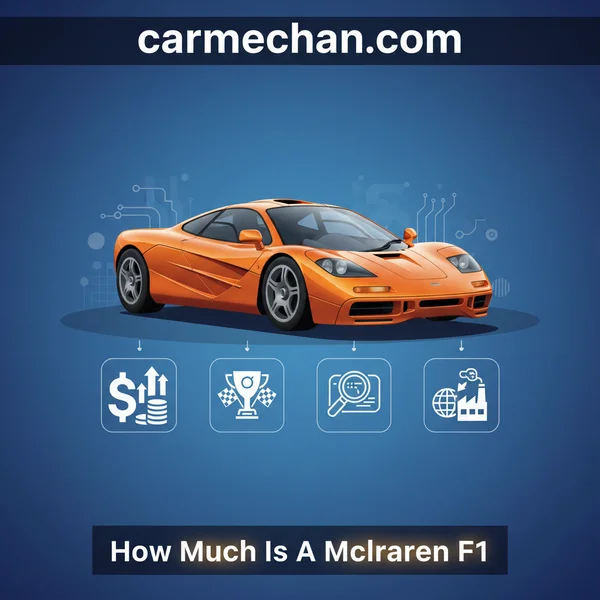
For serious collectors and automotive enthusiasts, understanding these figures provides crucial insight into the pinnacle of automotive engineering, design, and market demand. You’re not just buying a car; you’re acquiring a piece of automotive history that stands as a testament to unparalleled vision and execution, securing its place as perhaps the most desirable modern classic on the planet.
Current McLaren F1 Market Value and Recent Sales
The Current Market Landscape
The market for a McLaren F1 is highly specialized, characterized by extreme scarcity and intense demand among the world’s most discerning collectors. While a general price range of $18 million to $25 million-plus serves as a guideline, the specific value of any individual F1 is heavily influenced by several factors. These include:

- Chassis Number: Earlier production numbers or specific historically significant chassis can command premiums.
- Mileage: Ultra-low mileage examples, particularly those under 1,000 miles, fetch significantly higher prices.
- Originality: Cars retaining their original paint, interior, and components are highly prized.
- Service History: Comprehensive documentation of regular maintenance by McLaren-certified specialists adds considerable value.
- Specification: Rare variants like the five F1 LM models or two F1 GTs are in a league of their own, often exceeding the $25 million mark in private sales.
It’s important to note that many high-value transactions occur in private, off-market sales, with exact figures rarely disclosed. Auction results, however, provide tangible benchmarks for public valuation.
Landmark Auction Results
Recent public auctions clearly illustrate the McLaren F1’s immense value and consistent appreciation. These sales offer a transparent look into what buyers are willing to pay for these automotive legends.
- August 2021 – Gooding & Company, Pebble Beach:
- Car: Chassis #029, a pristine 1995 McLaren F1 finished in Creighton Brown.
- Mileage: An incredibly low 241 miles from new.
- Sale Price: A staggering $20,465,000 (including buyer’s premium).
- Details: This particular F1 was exceptional, retaining its original Goodyear Eagle F1 tires, original factory-delivered luggage, tool chest, and even a custom TAG Heuer watch. Its near-showroom condition and incredibly low mileage pushed it to a record-setting price for the model at the time.
- August 2023 – RM Sotheby’s, Monterey:
- Car: Chassis #018, a 1995 McLaren F1 in magnesium silver, fully compliant for U.S. road use.
- Mileage: Approximately 21,500 miles.
- Sale Price: $18,045,000 (including buyer’s premium).
- Details: Despite having significantly higher mileage than Chassis #029, this F1 demonstrates the model’s enduring appeal and robust market. It had been meticulously maintained and enjoyed, showing that even “used” examples retain incredible value due to their inherent rarity and desirability.
These recent results confirm that the McLaren F1 remains one of the most liquid and valuable assets in the collector car market, with little sign of its appreciation slowing down.
Everything You Need to Know About the McLaren F1’s Value
Understanding the value of a McLaren F1 is not a simple task of checking a price list; it’s a deep dive into the rarefied world of hyper-exclusive automotive masterpieces. This guide will walk you through the critical factors and methods used to ascertain the astronomical worth of this legendary supercar. Whether you’re a curious enthusiast, a serious collector, or simply dreaming, following these steps will provide unparalleled insight into one of the most significant vehicles ever built.
Step 1: Understand the Rarity and Historical Context
What you need: Basic internet access, a keen interest in automotive history.
Instructions: Begin by researching the McLaren F1’s production numbers and its place in automotive history. Only 106 examples were ever built between 1992 and 1998, with just 64 of those being standard road cars. The remaining vehicles were prototypes, GTR race cars, and the handful of specialized LM and GT variants. Grasping this extreme rarity, coupled with its status as the fastest naturally aspirated production car ever and a technological marvel of its era, sets the foundational understanding for its value. The F1 pushed boundaries in engineering, materials (carbon fibre chassis, gold foil in the engine bay), and performance, making it an undisputed legend.
Pro Tip: Pay close attention to the distinctions between the standard road car, the ultra-rare LM (5 built), and the longtail GT (3 built) versions, as their values can differ significantly, often by tens of millions of dollars.
Step 2: Identify Key Valuation Drivers
What you need: Knowledge of high-end collector car valuation principles.
Instructions: The value of any McLaren F1 is driven by several key factors. Paramount among these are mileage (lower is generally better, but “driver” cars still command high prices), overall condition (concours-level originality and pristine state are crucial), and the car’s provenance (ownership history, famous previous owners, significant events). Furthermore, the car’s originality – meaning it retains its factory specifications, matching numbers engine and gearbox, and original paint/interior – is incredibly important. Any factory-approved upgrades or specific historical quirks, such as being one of the few delivered with a High Downforce Kit, also play a role.
Pro Tip: A comprehensive service history, ideally from McLaren Special Operations (MSO) or authorized specialists, is not just a bonus but an absolute necessity, demonstrating meticulous care and authenticity.
Step 3: Research Recent Public Auction Results
What you need: Access to reputable automotive auction house archives (e.g., Sotheby’s, Gooding & Company, Bonhams, RM Auctions).
Instructions: The most transparent way to gauge current market value is by reviewing recent public auction sales. Search the archives of major auction houses for “McLaren F1” results from the past 5-10 years. Note the exact sale price, the date of sale, and critically, the specific details of the car sold (chassis number, mileage, condition, any unique features or history). You will observe a significant appreciation trend over the last decade, with sale prices regularly exceeding $15 million, and some reaching well over $20 million, depending on the specific example. For instance, a 1995 McLaren F1 sold for $20.465 million at Gooding & Company’s Pebble Beach auction in August 2021.
Pro Tip: When comparing results, factor in the exact date of sale. The classic car market, especially at this ultra-high end, can experience fluctuations, so the most recent comparable sales provide the best estimate.
Step 4: Consult Specialist Dealers and Brokers
What you need: An understanding that discretion is key in this market, and a willingness to engage with high-end automotive specialists.
Instructions: Many McLaren F1 sales occur privately, never reaching public auction. Specialist dealers and brokers, such as Tom Hartley Jnr, DK Engineering, or McLaren’s own MSO Heritage program, often facilitate these transactions. These experts have unparalleled market insight and direct access to potential buyers and sellers. While they may not disclose exact prices to casual inquiries, engaging with them (if you are a serious prospective buyer or seller) can provide the most accurate real-time valuation, reflecting current supply and demand. They often know of cars available “off-market” and their asking prices.
Pro Tip: Be prepared for a significant price delta between a private sale and an auction result, as private sales often offer more flexibility and confidentiality for both parties, potentially influencing the final figure.
Step 5: Account for Specific Variants and Special Features
What you need: Detailed knowledge of McLaren F1 chassis numbers and factory configurations.
Instructions: Not all McLaren F1s are created equal in terms of value. Chassis numbers ending in LM or GT are significantly rarer and thus command a higher premium, often reaching into the upper tens of millions. Even within the 64 standard road cars, specific factory options like the “High Downforce Kit,” custom interior specifications, or unique paint colors can subtly influence desirability and price. Furthermore, a car that has undergone a factory-approved restoration or modernization through McLaren Special Operations (MSO) can also enhance its perceived value, provided the originality is meticulously preserved.
Pro Tip: Original factory delivery items, such as the bespoke Facom tool kit, the custom luggage set, a specific TAG Heuer watch, and the signed owner’s manual, are highly sought after and can add significant collector value if they accompany the car.
Step 6: Factor in Taxes, Import Duties, and Transaction Costs
What you need: An understanding of international tax laws, import regulations, and typical transaction fees for high-value assets.
Instructions: The headline sale price is rarely the final amount. When considering the “how much,” you must factor in additional costs. These include import duties if the car is crossing international borders (which can be substantial, e.g., 2.5% into the USA, or varying VAT rates in Europe, up to 20%+), local sales taxes, and potential luxury taxes. Brokerage fees, legal costs for due diligence, and transportation fees for a highly specialized vehicle also add to the overall expense. These can cumulatively add millions of dollars to the acquisition cost, depending on the buyer’s location and the car’s origin.
Pro Tip: Engage a specialized customs broker and an international tax advisor who deals specifically with high-value classic cars to avoid costly surprises and ensure compliance with all regulations.
Step 7: Budget for Ownership and Maintenance
What you need: A realistic appreciation for the ongoing costs associated with owning a hyper-exclusive vehicle.
Instructions: The purchase price is merely the entry ticket. A McLaren F1 requires specialized and often incredibly expensive maintenance. Annual services can easily cost tens of thousands of dollars, with major services (every few years) potentially running into six figures. Tires, specifically designed for the F1 and produced in limited runs, can be thousands per set. Insurance for a car valued at over $20 million will also be substantial. Secure, climate-controlled storage and specialized transportation are additional necessities. These ownership costs are a significant part of “how much” a McLaren F1 truly is.
Pro Tip: Do not underestimate these running costs. Skipping essential maintenance can lead to far more expensive repairs down the line and significantly devalue the car.
✅ Final Checklist
- Verified the car’s chassis number and production variant against known records.
- Examined the car’s full service history, specifically noting McLaren/MSO provenance.
- Cross-referenced recent auction results with the specific car’s mileage, condition, and history.
- Obtained current market insights from at least two reputable specialist dealers or brokers.
- Calculated all applicable taxes, duties, and acquisition fees based on target location.
Important Notes:
- Safety considerations or warnings: Due to its extreme performance and analogue nature, driving a McLaren F1 requires significant skill and respect. Always prioritize safety and professional instruction if operating such a vehicle.
- When to seek professional help: For any aspect of valuation, purchase, import/export, or maintenance of a McLaren F1, always consult with specialist automotive lawyers, customs brokers, and McLaren-approved service centers. This is not an arena for DIY solutions.
- Estimated time and cost range: Ascertaining a definitive value can take weeks or months of diligent research and expert consultation. As of late 2023 / early 2024, a standard McLaren F1 road car typically ranges from approximately $20 million to over $25 million USD, with rarer variants like the LM or GT exceeding $30 million and even approaching $40 million for exceptional examples. These figures are highly subject to individual car specifics and market dynamics.
Key Factors Driving the McLaren F1’s Astronomical Price
Extreme Rarity and Exclusivity
The fundamental driver behind the McLaren F1’s stratospheric price is its unparalleled rarity. When you consider the numbers, its exclusivity becomes immediately clear:

- Total Production: Only 106 McLaren F1s were ever built.
- Road Cars: Out of that total, a mere 64 were standard road-going production cars. The remainder includes prototypes, five F1 LM models, two F1 GT models, and 28 GTR race cars.
- Limited Opportunities: Finding an F1 for sale is an extremely rare event. Most are held by long-term collectors and institutions, further tightening the available supply. This “fixed supply, high demand” equation is a powerful value driver.
Unparalleled Engineering and Iconic Status
Beyond scarcity, the F1’s price is a direct reflection of its groundbreaking design and engineering superiority. It wasn’t just fast; it redefined what a road car could be.
- Gordon Murray’s Vision: Conceived by design legend Gordon Murray, the F1 was a “no-compromise” project aimed at creating the ultimate driver’s car, eschewing electronic aids for pure mechanical feel.
- BMW V12 Engine: At its heart is a bespoke, naturally aspirated 6.1-liter V12 engine from BMW, producing 627 horsepower. This engine remains one of the greatest ever made, celebrated for its responsiveness and distinctive sound. It’s a testament to raw, unadulterated power without turbochargers or superchargers.
- Central Driving Position: The F1’s unique central driving position, flanked by two passenger seats, was a revolutionary, driver-focused layout that enhanced visibility and driving experience.
- Carbon Fiber Monocoque: It was the first production road car to feature a full carbon fiber monocoque chassis, a technology derived directly from Formula 1, making it incredibly light and rigid.
- Record-Breaking Performance: With a verified top speed of 240.1 mph, the F1 held the record for the world’s fastest production car for over a decade. Even today, its performance statistics are astonishing.
- "The Greatest Car Ever Made": Widely acclaimed by automotive experts and journalists as arguably the greatest car of all time, the F1 possesses a legendary status that transcends mere performance figures. This cultural cachet adds immeasurable value.
Investment Grade Asset
The McLaren F1 is not just an automotive marvel; it’s a blue-chip investment that has consistently outperformed many traditional asset classes. Its appreciation isn’t speculative; it’s a steady ascent driven by its undisputed position in automotive history and the relentless pursuit by elite collectors.
The Enduring Legacy and Rarity of the McLaren F1
More Than Just a Car: A Piece of Automotive History
The McLaren F1 transcended mere transportation; it fundamentally redefined what a supercar could be. Penned by the legendary Gordon Murray, it was a masterclass in engineering and design. Its iconic central driving position, the gold-lined engine bay for optimal heat reflection, and its pioneering use of a carbon fiber monocoque chassis were revolutionary for their time. It wasn’t just about raw speed; it was about an intelligent, harmonious blend of power, precision, and lightweight construction. As the last truly analog hypercar before digital interventions became standard, the F1 set a benchmark that few cars have come close to touching, cementing its place as a pivotal piece of automotive history and an engineering marvel that still inspires.
The Scarcity Factor: Why So Few?
Part of the F1’s astronomical value is its extreme rarity, a direct result of its limited production run. McLaren produced a mere 106 units in total between 1992 and 1998, meticulously hand-building each one. This exclusive total comprises:
- 64 standard road cars (F1): The most common, yet incredibly rare.
- 5 LM (Le Mans spec) versions: Even more potent and track-focused.
- 3 GT (longtail homologation) models: Developed for racing, with extended bodywork.
- The remainder were prototypes, highly successful race cars (F1 GTR), and test mules.
This incredibly low production number means each car is a unique artifact. Furthermore, a handful of these priceless machines have been involved in accidents over the decades, further reducing the already tiny pool of available road-going examples. Finding an F1 for sale is a momentous occasion, making its appearance at auction a highly anticipated event for the entire collector car world.
Is a McLaren F1 a Sound Investment? A Collector’s Perspective
Beyond Financial Returns: The Ownership Experience
For those fortunate enough to acquire a McLaren F1, the decision often extends far beyond mere financial returns. Owning an F1 is about becoming a custodian of a legend, preserving a significant piece of automotive heritage. It grants access to an exclusive world of elite collectors and enthusiasts, often leading to invitations to prestigious car shows, rallies, and private events. There’s an immense emotional and intellectual satisfaction in possessing and, for some, driving one of the greatest automobiles ever conceived. While the financial appreciation is undoubtedly attractive, the unparalleled ownership experience is often the true reward for these discerning individuals.
Market Dynamics and Future Value
The market for McLaren F1s has consistently demonstrated strong appreciation, making them one of the most reliable investments in the collector car world. Several key factors drive their value and predict future appreciation:
- Originality: Cars in factory-spec condition, with original paint, interior, and components, command the highest premiums.
- Provenance: A well-documented history, particularly with renowned previous owners or significant racing heritage, adds considerable value.
- Mileage & Condition: Lower mileage and pristine, concours-level condition are highly sought after.
- Service History: A comprehensive, documented service history from McLaren or accredited specialists is absolutely crucial for maintaining value and ensuring longevity.
Given the finite supply and the ever-increasing demand from ultra-high-net-worth individuals and museums, continued appreciation seems highly likely. However, like any high-value asset, market dynamics can fluctuate, making it a long-term hold for the serious, informed collector.
Conclusion
The McLaren F1 stands as an unparalleled automotive icon, a testament to revolutionary engineering and visionary design. Its stratospheric price, now routinely exceeding 20 million dollars, is a direct reflection of its extreme rarity, its historical significance as the fastest production car of its era, and its enduring legacy as arguably the greatest analog supercar ever built. It’s not merely a vehicle; it’s a moving piece of art, a technological marvel, and a highly sought-after collectible.
For aspiring collectors, understanding these market dynamics and rarity is crucial. Consulting expert brokers and specialized auction houses is essential for navigating this exclusive world. For enthusiasts, the F1 remains a pinnacle of automotive achievement, a source of endless fascination and inspiration. Whether you dream of owning one or simply admire its greatness, the McLaren F1 continues to inspire generations, embodying the very best of automotive excellence.
❓ Frequently Asked Questions
What specific factors contribute most to a McLaren F1’s valuation?
Beyond basic condition and mileage, the F1’s chassis number, original factory specifications, unique color schemes, and especially its service history and provenance (e.g., celebrity owners, exhibition history) significantly influence its final sale price. Cars with a well-documented history and unique features often command a premium.
Can you provide examples of recent record-breaking McLaren F1 sales?
One notable sale was Chassis #029, a pristine 1995 model, which fetched over $20.4 million at a Gooding & Company auction in 2021. Another example includes a 1998 McLaren F1 ‘LM-Specification’ that sold for $19.8 million at Sotheby’s in 2019, highlighting the premium for rare variants and exceptional provenance.
Do different McLaren F1 variants, like the GTR or LM, command higher prices?
Absolutely. The ultra-rare GTR race cars and especially the F1 LM (Le Mans) specification cars, built to commemorate the F1’s 1995 Le Mans victory, are even more exclusive than the standard road car. These variants typically command significantly higher prices, often exceeding $20 million to $30 million when they come to market.
How does the cost of maintenance and servicing affect the overall value of a McLaren F1?
Maintaining a McLaren F1 is exceptionally expensive, requiring specialist technicians and parts sourced globally. While costly, a complete and verifiable service history from authorized specialists like McLaren Special Operations (MSO) is crucial for preserving and enhancing its value, proving the car has been meticulously cared for.
How does the McLaren F1’s investment potential compare to other ultra-rare hypercars?
The McLaren F1 consistently outperforms many other hypercars as an investment due to its unparalleled rarity, groundbreaking engineering, and the enduring vision of Gordon Murray. Its status as a ‘holy grail’ for collectors positions it as a safer and more appreciating asset compared to many newer or less historically significant ultra-rare vehicles.
Where can one typically find a McLaren F1 for sale, given its rarity?
McLaren F1s are rarely listed publicly due to their exclusivity. They are most commonly traded through high-end classic car auctions like Gooding & Company, RM Sotheby’s, or Bonhams, or via exclusive private sales facilitated by specialist brokers and trusted advisors who cater to ultra-high-net-worth collectors. Networking within elite automotive circles is often key.