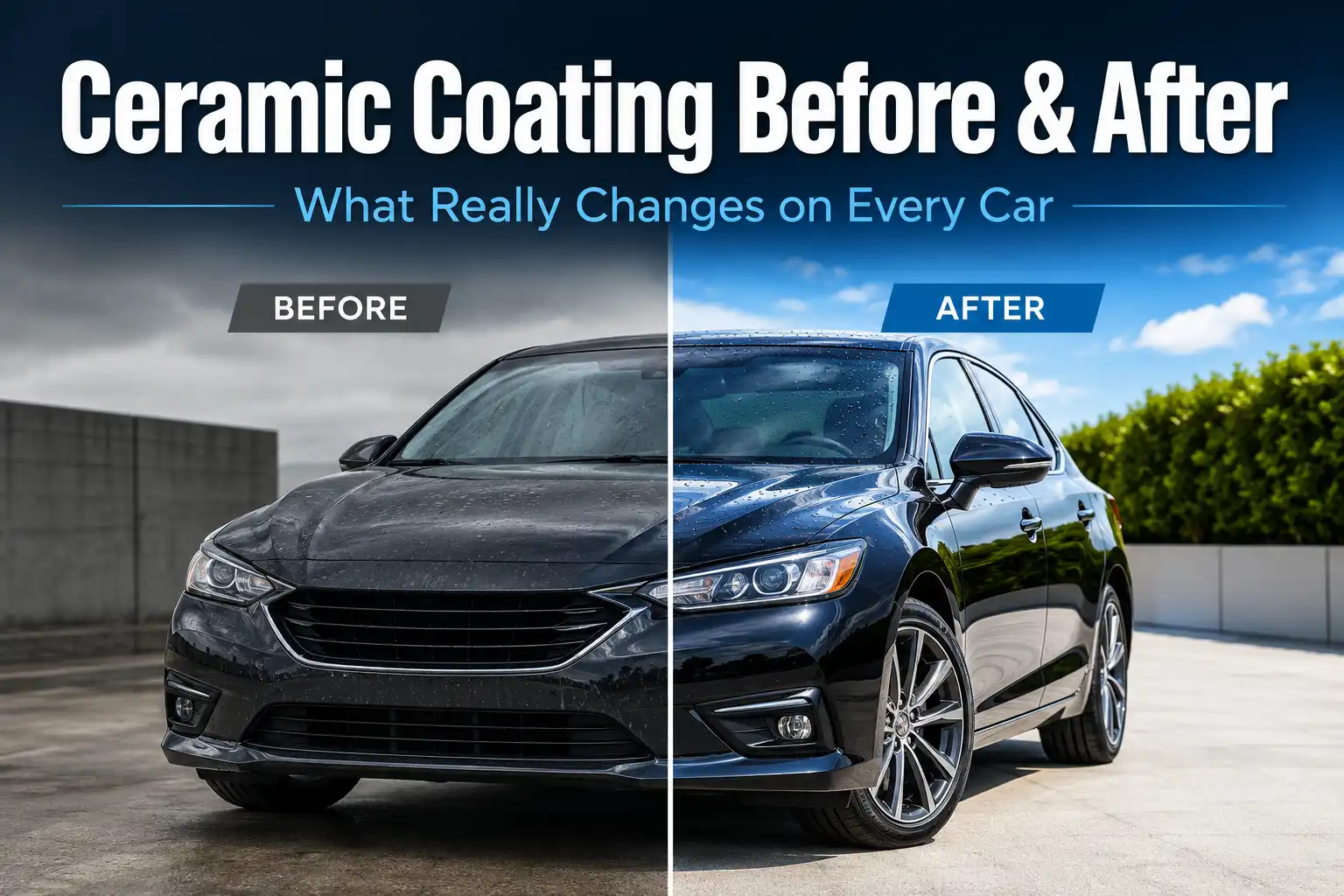
Ceramic Coating Before and After What Really Changes on Every Car
Last Updated on August 1, 2026 by Albert Duke
Ceramic coating before and after results depend on more than the product in the bottle. The paint color underneath, the prep work done beforehand, and how the coating is maintained all shape what you actually see. White cars fight yellowing and dullness, black cars fight swirl marks and water spots, and every car shares a baseline transformation once the coating cures.
This guide breaks down exactly what changes, color by color, what is really the coating versus the paint correction underneath it, and how long those results actually hold up before you spend real money on either option.
3 Changes Every Car Shows After Ceramic Coating
Recommended Best Deal Products


Before a coating goes on, most cars show some combination of light swirl marks, water spots, dulled clear coat, and paint that picks up dirt fast. Once ceramic coating cures, three changes show up consistently across every color and every vehicle, regardless of make or model.
Deeper gloss and reflection. The coating fills microscopic imperfections in the clear coat, so light reflects more evenly across the surface instead of scattering unevenly. This is why coated paint gets described as having a “wet look” even when it is bone dry, and why the color underneath tends to look richer and more three dimensional.
Hydrophobic water behavior. Water beads tightly and rolls off instead of sitting flat and drying into mineral spots on the paint. Dirt and grime have a harder time bonding to the surface, which is why washes take less time and effort, and why a quick rinse often looks close to a full wash on a coated car.
A locked-in paint condition. This is the part marketing photos leave out. A ceramic coating preserves whatever the paint looks like at the moment it goes on. It does not erase existing scratches, and it does not fix orange peel texture from the factory. Full curing takes 24 to 72 hours, during which the car should stay dry and out of direct rain, so plan the timing around a stretch of clear, dry weather.
How to Prepare Your Car for the Best Ceramic Coating Results
The prep stage decides more of the final before and after outcome than the coating product itself. Skipping steps here is the single biggest reason owners end up disappointed with results that looked amazing in a shop’s marketing photos.
The process typically starts with a full decontamination wash using an iron remover and clay bar to pull embedded contaminants out of the clear coat that a normal wash cannot touch. From there, a paint inspection under direct or raking light reveals swirl marks, water spot etching, and oxidation that need to be addressed before anything else happens.
If the paint shows meaningful damage, single stage or multi stage machine polishing removes those defects and restores clarity before the coating ever touches the surface. Only after this correction step is complete does the ceramic coating get applied, cured, and left to bond for 24 to 72 hours.
What Changes on White Cars After Ceramic Coating
Recommended Best Deal Products


White paint has one dominant before and after story: yellowing. Constant UV exposure breaks down the clear coat over time, and that oxidation shows up as a cream or yellow tint that makes the paint look dirty even right after a wash.
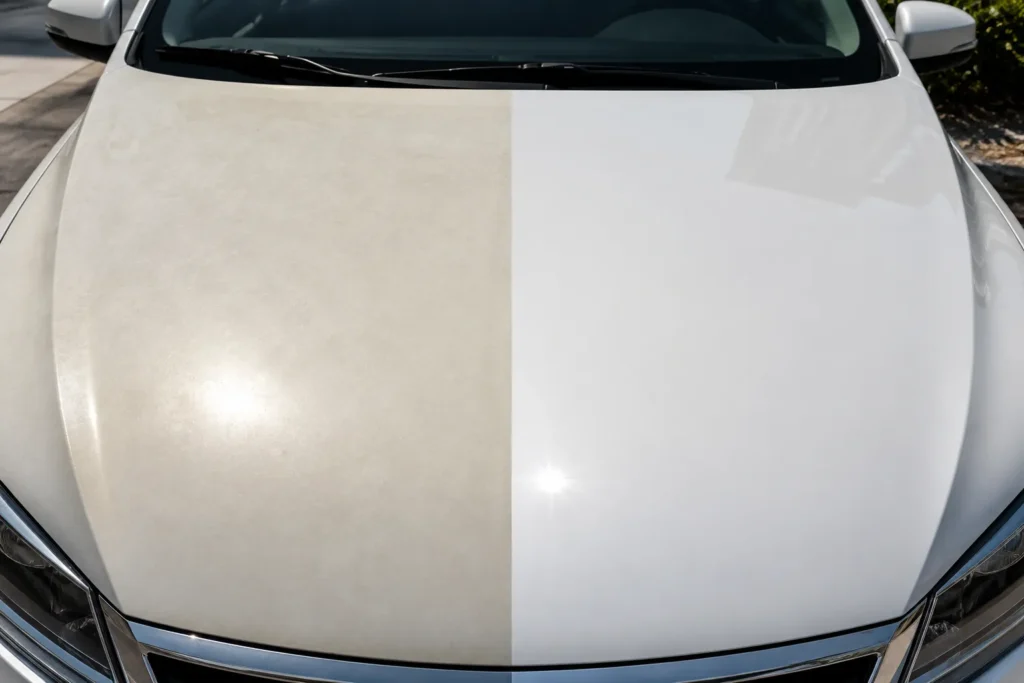
Before coating, a white car often looks chalky, flat, or slightly gray under direct sunlight, especially around horizontal panels like the hood and roof that take the most sun exposure. After coating, the surface reflects more brightly and the color reads as cleaner and more uniform, since the hydrophobic layer keeps grime from building up in the first place.
White paint also shows road grime, tar, and tree sap more obviously than darker colors, which makes the “after” cleanliness gap feel larger even before accounting for gloss. Owners often report that the car simply looks newer within the first few washes, since dirt no longer streaks or clings the way it did on bare paint.
There is an important limit here. Ceramic coating blocks future UV damage and slows down the oxidation that causes yellowing, but it does not reverse yellowing that has already happened. A white car with existing oxidation needs paint correction first, or the coating will just seal in the yellow tint underneath a glossy top layer.
Black Car Ceramic Coating Before and After Results
Black paint tells the opposite story. The color itself rarely fades the way white does, but every flaw shows up in sharp contrast under direct light. Swirl marks, fine scratches, and water spot etching are almost impossible to miss on a black hood in the sun.
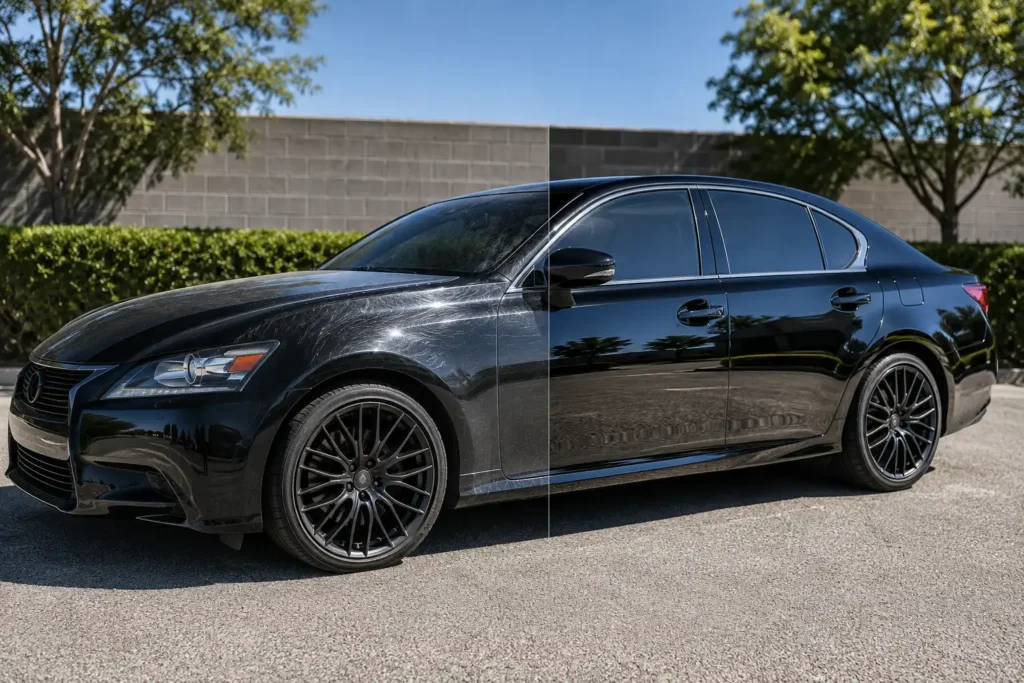
Before coating, black cars typically show a spider web pattern of light swirls from improper washing, plus visible water spots from hard water or sprinklers. Even careful owners who never take their car through an automatic wash often find swirl marks from towel drying or a single dirty wash mitt.
After coating, the color deepens and the reflection gets noticeably sharper, but any swirl marks that were there before stay exactly where they were. This surprises a lot of first time buyers, since coating marketing photos rarely explain that the glossy top layer can actually make existing swirls slightly more visible under direct light, not less.
Because flaws are so visible on dark paint, paint correction matters more for black cars than for almost any other color. Anyone comparing ceramic coating options built for black cars should treat correction as a required step, not an optional upgrade, before the coating goes on. Fingerprints, dust, and light water spotting also show up faster between washes on black paint, even with a coating in place, simply because of how much contrast the dark surface creates.
Before and After Comparison by Paint Color
Recommended Best Deal Products

Seeing the differences side by side makes the pattern clear. Each paint color has its own dominant “before” complaint and a different reason the “after” result feels dramatic, even though the underlying coating product is often identical.
Red, silver, and other mid tone colors tend to sit between the two extremes. They show moderate swirl visibility, some fading over time from UV exposure, and a solid but less dramatic gloss boost compared to black, since there is less contrast for the eye to notice.
| Paint Color | Main Before Issue | Main After Result | Maintenance Difference |
|---|---|---|---|
| White | Yellowing and oxidation from UV exposure | Brighter, more uniform finish, slower future yellowing | Dirt shows fast but rinses off easily |
| Black | Visible swirl marks and water spots | Deeper color and sharper reflection, swirls remain if not corrected first | Fingerprints and dust show fast between washes |
| Red, Silver, and Other Colors | Fading, minor dullness, moderate swirl visibility | Richer color depth and stronger gloss | Flaws less visible than black, easier upkeep than white |
Why Most Before and After Photos Show Paint Correction
Most dramatic ceramic coating before and after photos are not actually showing what the coating did. They are showing what paint correction did, since that step happens right before the coating goes on in almost every professional job.
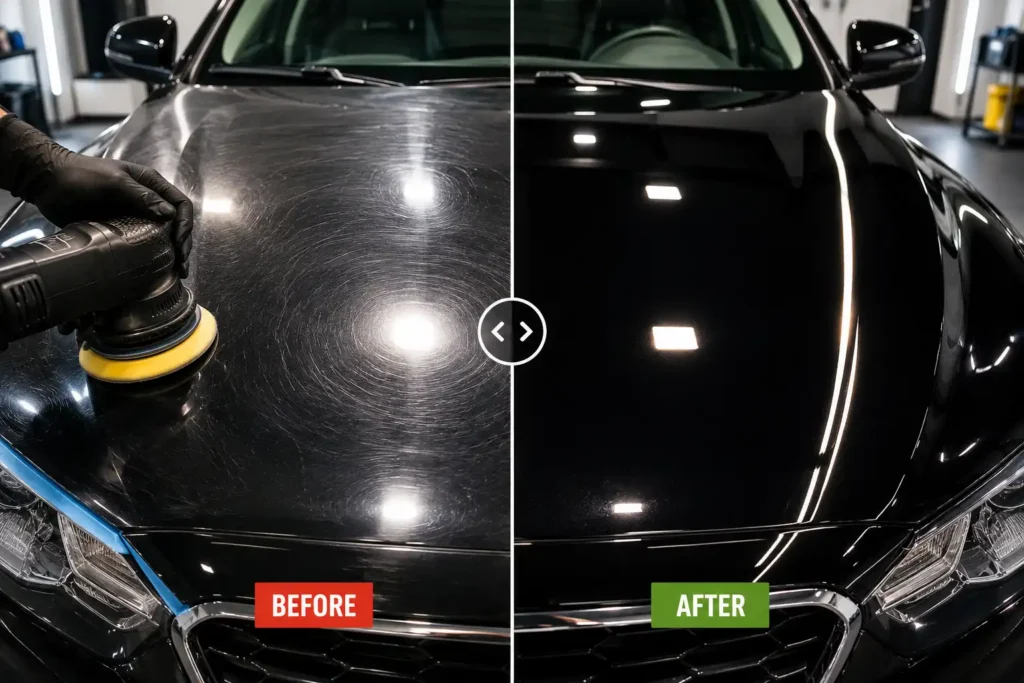
Paint correction uses machine polishing to physically remove swirl marks, light scratches, water spot etching, and oxidation from the clear coat. On a car with heavy imperfections, correction alone can make five year old paint look new again, before any coating is even applied.
The coating itself adds gloss, depth, and hydrophobic protection on top of that corrected surface. Understanding this distinction matters, because a coating applied straight over unfixed swirls and oxidation will lock those flaws in rather than remove them.
This is also why two cars can get the identical coating product and end up with very different before and after photos. The car that received thorough correction first will look dramatically better, while the car that skipped straight to coating will show a glossier version of the same flaws it started with.
How Ceramic Coating Before and After Compares to Wax
Traditional carnauba wax produces a visible before and after shine as well, which is why the two get compared often. The difference shows up in how long that shine actually lasts and how the surface behaves in between applications.
Wax typically breaks down within four to eight weeks, especially with regular washing or exposure to heat and rain. A cured ceramic coating holds its gloss and hydrophobic behavior for one to several years depending on the product tier, without needing reapplication every month to maintain the look.
Wax also sits on top of the paint rather than bonding chemically with it, so it offers less resistance to chemical stains, bird droppings, and UV exposure over time. The before and after gap with ceramic coating tends to stay more consistent over months, while a waxed car gradually drifts back toward its original “before” appearance as the wax wears off.
Some owners choose to layer a spray wax or sealant on top of an existing ceramic coating for a short term gloss boost before an event or sale. This does not replace the coating underneath, but it can add a temporary shine on top of results that are already well established.
How Long Ceramic Coating Results Actually Last
How long the before and after difference holds up depends heavily on whether the coating was DIY or professionally applied. Product quality and prep work matter just as much as the initial price tag.
Professional ceramic coating typically costs between 700 and 1,850 dollars for most passenger vehicles, with larger SUVs and trucks running higher. DIY kits cost far less but use lower silica concentrations, which is part of why consumer DIY coatings typically run 20 to 50 percent SiO2 compared to 70 to 90 percent or higher in professional-grade products.
| Application Type | Typical Cost | Typical Durability |
|---|---|---|
| DIY Kit | 35 to 300 dollars, premium kits up to 760 dollars | 1 to 2 years |
| Professional Application | 700 to 2,500 dollars for most vehicles | 2 to 5 years, top tier products up to 9 years |
Paint correction adds another 300 to 1,000 dollars or more on top of a professional install, and it is often the biggest single line item in the total price rather than the coating product itself. Anyone comparing a DIY ceramic coating kit against a professional job should weigh that durability gap against the upfront savings.
Vehicle size also shifts the numbers. A compact sedan with paint in decent condition sits toward the lower end of the professional range, while a full size truck or SUV needing multi stage correction can push well past 2,500 dollars once labor and coating layers are factored in.
4 Mistakes That Undo Ceramic Coating Results
A few common mistakes shorten the life of a fresh ceramic coating fast, no matter how good the product was.
- Washing too soon. Getting the car wet before the 24 to 72 hour cure window ends can prevent the coating from bonding fully to the paint. Wait for the full cure time before the first wash, and avoid parking under trees or sprinklers during that window.
- Using automatic brush washes. Brush car washes use abrasive materials that create new swirl marks on a coated surface just as easily as an uncoated one. Hand washing with a two bucket method or a touchless wash protects the coating far better over its lifespan.
- Skipping a pH neutral shampoo. Harsh degreasing soaps strip the hydrophobic layer over time, which is why water stops beading the way it did right after application. A pH neutral car shampoo keeps the coating intact between details and preserves the water behavior longer.
- Coating over unfixed paint. Applying coating directly over swirls, oxidation, or contamination locks those flaws in permanently, since the coating cannot be removed and redone without special polishing. Paint correction before coating is not optional if the goal is a clean before and after result.
Getting Ceramic Coating Before and After Results That Last
Ceramic coating before and after results come down to three factors working together: the paint color underneath, whether correction happened first, and how the coating gets maintained afterward. White cars gain protection against yellowing, black cars gain depth and reflection, and every car gains gloss and easier washing.
Before booking a coating, get an honest look at your paint’s current condition under direct sunlight, not just inside a garage. If it shows swirl marks, water spots, or yellowing, budget for correction first so the coating locks in a clean surface instead of a flawed one, and set realistic expectations for what the finished result will actually look like.
Ceramic Coating Before and After Questions Car Owners Ask
How Long Does It Take to See Ceramic Coating Results
The visual change is visible almost immediately after application, but the coating needs 24 to 72 hours to fully cure and bond to the paint. Full hydrophobic performance and long term durability only kick in once curing finishes, so early washes should be avoided.
Does Ceramic Coating Remove Scratches and Swirl Marks
No, ceramic coating does not remove existing scratches or swirl marks, and it is not designed to. Those flaws need to be addressed with paint correction before the coating is applied, since the coating locks in whatever condition the paint is already in at the time.
Is the Before and After More Noticeable on Black or White Cars
Black cars show a more dramatic contrast improvement since gloss and depth are easier to see against dark paint under direct light. White cars show a different kind of improvement, mainly in brightness and resistance to future yellowing rather than the dramatic color depth seen on black paint.
Can I Get Real Before and After Results With a DIY Kit
Yes, DIY kits can produce visible gloss and hydrophobic results when the paint is properly prepped first. They typically use lower silica concentrations than professional products, so expect results to last 1 to 2 years compared to 2 to 5 years or more for professional application.
How Long Do Ceramic Coating Before and After Results Last
Professional ceramic coatings typically hold their look for 2 to 5 years, with premium products lasting up to 9 years under good maintenance and proper washing habits. DIY coatings usually hold up for 1 to 2 years before the gloss and water beading noticeably fade.
Does Ceramic Coating Stop White Paint From Turning Yellow
Ceramic coating slows future yellowing by blocking UV rays from breaking down the clear coat further over time. It does not reverse yellowing that already exists, so a white car with visible oxidation needs correction before coating for the best possible result.
Is Professional Ceramic Coating Worth the Extra Cost Over DIY
It depends on how long you plan to keep the car and how much correction the paint needs beforehand. Professional application makes more sense for cars with significant swirl marks or oxidation, while DIY kits work well for newer cars with minimal defects and owners comfortable doing their own prep work.