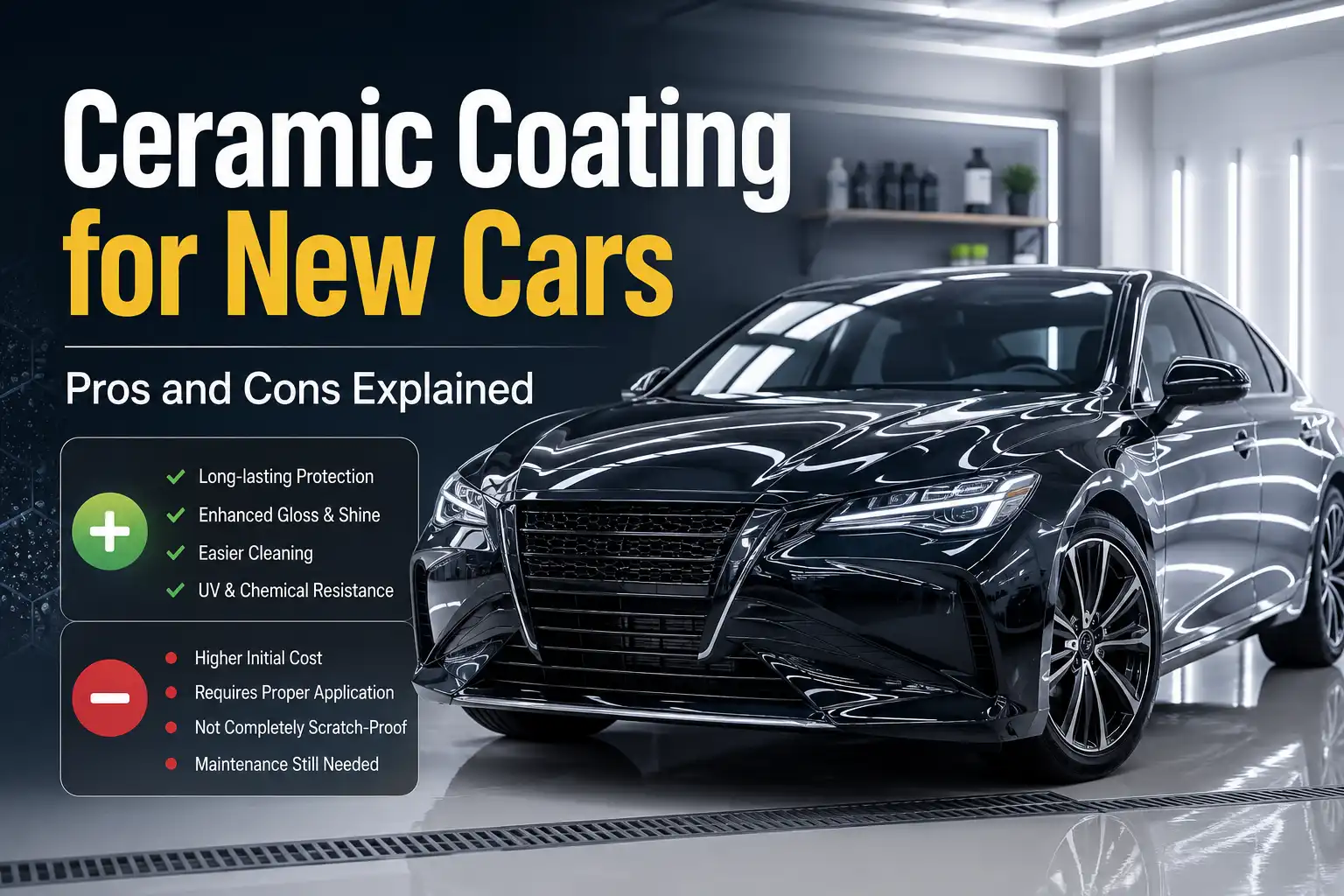
Ceramic Coating for New Cars Pros and Cons Explained
Last Updated on August 1, 2026 by Albert Duke
Ceramic coating for new cars comes with real pros and real cons, and the right call depends on your paint color, your budget, and where you actually get it done. Black car owners tend to see the strongest case for it, while dealership offers often turn out to be something else entirely once you look closely at what is actually being applied.
This guide breaks down the honest benefits, the real downsides, why black paint changes the math, and how to avoid the most common new car ceramic coating trap before you sign anything at the dealership or a detail shop.
4 Real Pros of Ceramic Coating for New Cars
Recommended Best Deal Products


A new car has factory-fresh paint with no swirl marks, no oxidation, and no accumulated grime. Coating it early locks in that clean starting point before daily driving, parking lots, and weather have a chance to damage it.
- Protects factory-fresh paint from day one. Applying a ceramic coating before swirl marks and contamination build up means there is nothing to correct later, which keeps the total cost noticeably lower than coating an older car that already needs paint correction first.
- Hydrophobic protection against contaminants. Bird droppings, tree sap, and road salt are acidic and can etch into unprotected paint within hours of contact. A cured coating creates a slick barrier that gives you more time to safely rinse these off before they cause lasting damage.
- UV protection that slows fading. Continuous sun exposure breaks down the clear coat over time, and coated paint resists that UV-driven oxidation and corrosion far better than bare paint, helping a new car keep its showroom look for years instead of months.
- Less time and money spent on maintenance. Traditional wax needs reapplication every few months and offers minimal chemical protection, while a properly cured ceramic coating can last two to five years or more, cutting down on repeat detailing costs across the life of the car.
These four benefits compound over time. A car that stays cleaner longer also gets washed less aggressively, which means fewer opportunities for new swirl marks to form in the first place, creating a positive cycle that keeps the paint looking newer for longer.
4 Real Cons of Ceramic Coating for New Cars
Every pro on the list above comes with a trade-off that most sales pitches leave out. A fair decision only works if both sides get equal weight and honest numbers, so here is the complete downside list before you commit any money to a coating job.
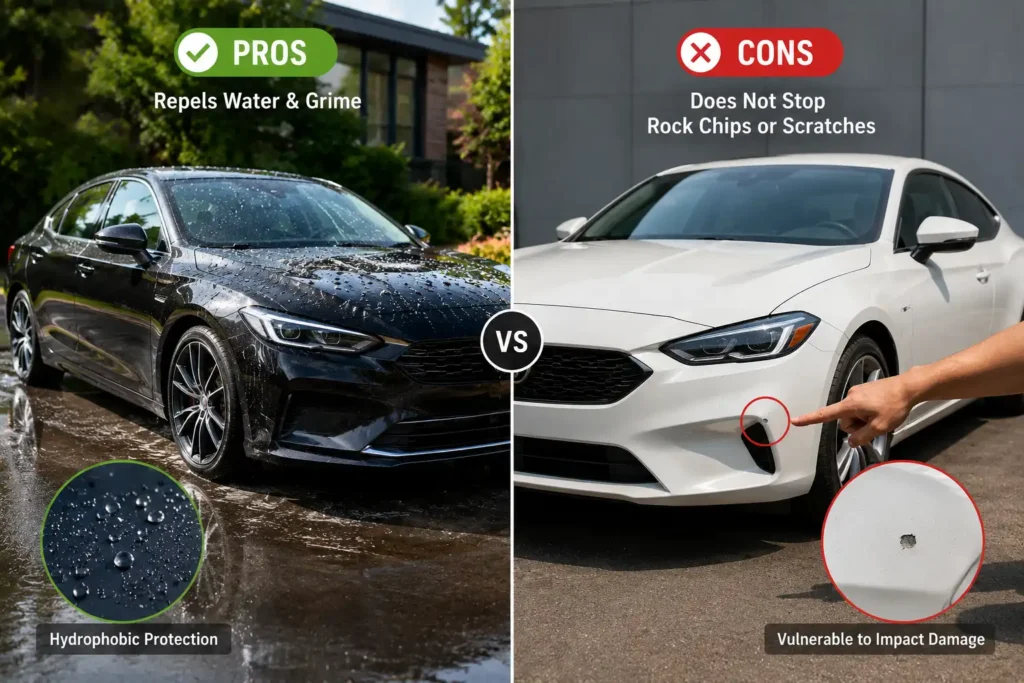
- Higher upfront cost. Professional ceramic coating for a new car typically runs 800 to 2,500 dollars depending on vehicle size and coating tier, while DIY kits run 50 to 150 dollars but demand real time and skill to apply correctly.
- No protection against physical damage. Ceramic coating is a chemical protectant, not a physical shield. It will not stop rock chips, deep scratches, or dents from gravel and road debris, and new buyers sometimes assume otherwise until the first highway trip proves them wrong.
- DIY application carries real risk. Improper technique, wrong ambient temperature, or rushing the flash time between coats can leave high spots, streaking, or an uneven finish that is difficult to correct without professional polishing afterward.
- Durability claims are often inflated. Real owner discussions frequently question “10 year coating” marketing, since actual performance depends heavily on maintenance habits, climate, and how the car is parked, not just the number printed on the product label.
None of these cons make ceramic coating a bad choice on their own. They just mean the decision should be based on real numbers and realistic expectations, not a sales pitch, especially once paint color and where you plan to have the work done enter the picture.
Why Black Cars Get More Benefit From Ceramic Coating
Recommended Best Deal Products


Black paint makes every imperfection obvious. Swirl marks, water spots, and fine scratches that would barely register on a silver or gray car show up clearly on black under direct sunlight, which is exactly where ceramic coating earns its value.
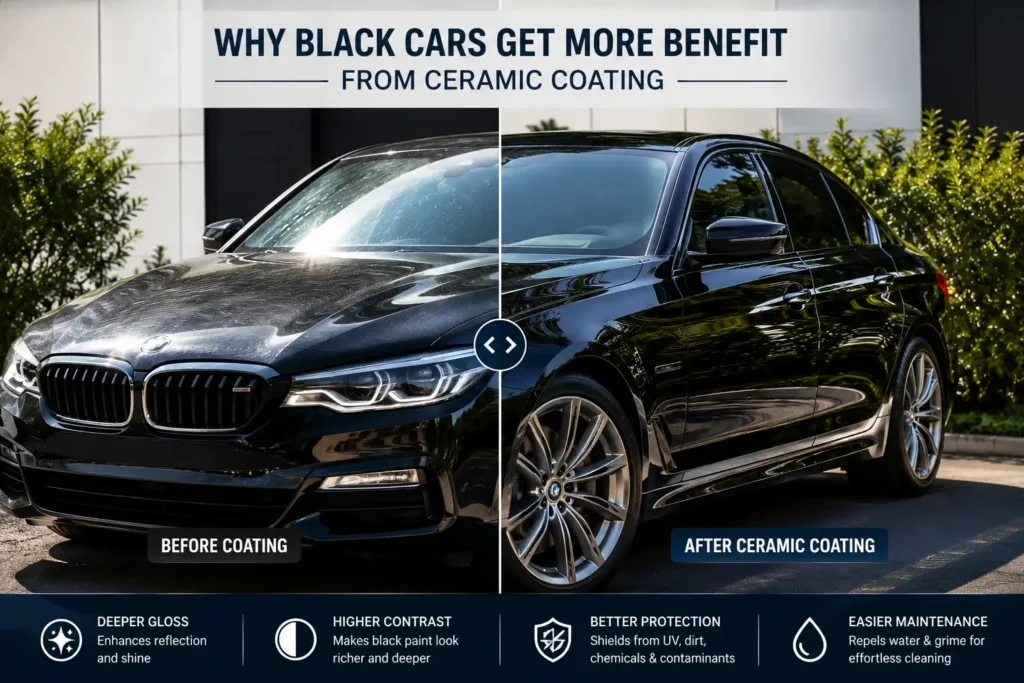
The hydrophobic layer reduces how much dirt and grit drag across the surface during washing, which is the single biggest cause of new swirl marks on a black car. Fewer contaminants bonding to the paint means fewer opportunities for those marks to form in the first place, and the smoother surface also reduces friction during the wash itself.
Gloss and depth enhancement also reads more dramatically on dark paint because of how light contrasts against the color. A ceramic coating built for black cars amplifies that reflection, giving black paint the mirror-like finish that lighter colors simply cannot replicate to the same degree, even with an identical product applied to both.
Beyond the visual case, black cars also tend to hold resale value better when the paint stays flawless, since buyers are especially sensitive to visible swirl marks and fading on dark colored vehicles.
Reduced washing frequency and fewer detailing visits add up to real time and money saved over several years of ownership, which is part of why black car owners consistently report the highest satisfaction with coating investments among all paint colors surveyed by detailing shops.
How to Spot a Dealer Ceramic Coating Scam
Most dealership ceramic coating offers are not real ceramic coating. Multiple independent detailers who have inspected these dealer-applied products describe them as a basic spray sealant marketed under the ceramic coating name, lasting weeks or a couple of months instead of years.
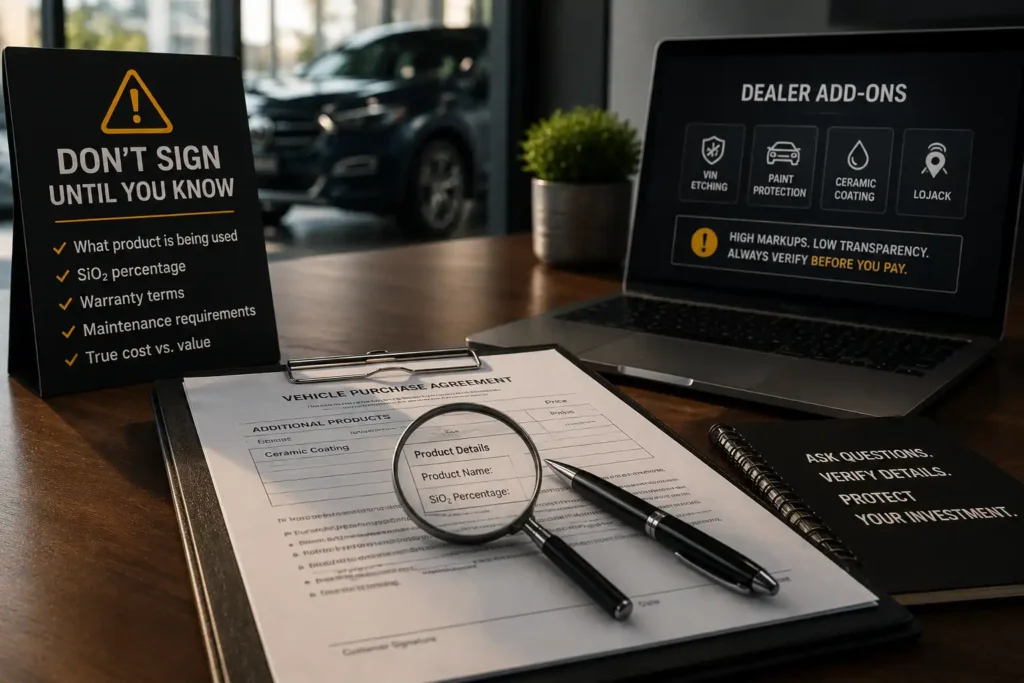
A true professional ceramic coating requires a full decontamination wash, paint inspection under direct light, correction if needed, and days of labor to apply and cure correctly. A dealership processing dozens of vehicles per week cannot realistically deliver that level of prep on every car sold, which is the core reason these upsells rarely match what they claim on the invoice.
This does not mean every dealer add-on is dishonest. Some dealerships genuinely partner with a real detailing brand and apply a legitimate product, and a handful of buyers online report solid experiences with named, reputable coating lines sold through their dealer. The problem is that from the buyer’s side, it is nearly impossible to tell the difference without asking specific questions first.
Watch for these warning signs before agreeing to a dealership coating package.
- No decontamination or inspection performed first. A real coating job always starts with a wash and inspection, not a same-day quick application straight over factory grime.
- Applied the same day as delivery. Genuine professional coatings need proper cure time and careful prep, which cannot realistically happen in the few hours between paperwork and pickup.
- No specific product name or SiO2 percentage listed. A legitimate coating quote names the actual product used and its silica concentration. Vague terms like “protection package” or “paint sealant system” are a red flag.
- Price feels bundled into financing with no itemized breakdown. If the coating cost is buried inside the loan rather than listed separately, it is harder to negotiate, question, or decline it outright.
If a dealership offers this as an add-on, it is reasonable to decline politely and schedule a coating with an independent detailer afterward instead. Most dealerships will remove the charge without much pushback once a buyer asks pointed questions about the product name and application process.
When Should You Ceramic Coat a Brand New Car
Recommended Best Deal Products


Timing depends on the condition of the paint at delivery, not just how new the car is. A car fresh off the truck is not automatically free of swirl marks, and assuming otherwise is one of the most common mistakes new owners make.
If the paint has zero visible defects and the dealer has not run it through an automatic wash, a light decontamination wash and inspection is usually enough prep before coating. This is the ideal, lowest-cost scenario, since it skips the correction step entirely and moves straight to application.
If the dealer already washed the car with a brush wash as part of pre-delivery inspection, check the paint under direct sunlight before assuming it is flawless. Brush washes are a common source of light swirl marks even on cars with zero mileage, and those marks need addressing before a professional ceramic coating locks them in permanently.
In either case, the best window is within the first few weeks of ownership, before daily driving, parking lot exposure, and routine washing add up. Waiting six months or a year still allows for coating, but by then the paint has usually picked up enough light defects that a correction step becomes necessary first, adding both time and cost to the final job.
Decision Matrix by Owner Scenario
Different owners land in different places on this decision depending on their car, budget, and how they plan to keep it. Rather than a single yes or no answer, the table below breaks down the general recommendation for the most common situations new car buyers actually face, based on the pros, cons, and warnings covered above.
| Owner Scenario | Recommended Path | Why |
|---|---|---|
| New Black Car Owner | Professional coating within first few weeks | Swirl marks and water spots are most visible on black, so protection value is highest |
| New Light-Colored Car Owner | Professional coating or high-quality DIY kit | Still benefits from UV protection and easier washing, though flaws are less visible |
| Budget-Conscious Owner | DIY kit with careful prep | Lower cost option that still delivers gloss and hydrophobic benefits for 1 to 2 years |
| Dealer Offering Included Coating | Decline and book independently | Dealer coatings are frequently spray sealant, not true ceramic coating |
Who Should Skip Ceramic Coating
Ceramic coating is not the right call for every new car owner, even with all the benefits above. A few situations make it harder to justify the cost, and being honest about them is part of making a good decision.
Owners planning to sell or trade in within a year rarely recoup the investment, since the paint protection benefit needs time to pay off in reduced detailing costs and maintained resale value. A quick wax and standard care are usually enough for a short ownership window, and the money saved can go toward the next vehicle instead.
Owners who already park in a covered garage and wax consistently with no complaints about their current routine may not see enough of a difference to justify the upfront cost. Garage-kept cars face far less UV exposure and contamination than daily-parked vehicles, which naturally narrows the gap between waxed and coated results over time.
In that case, a quality DIY ceramic coating kit can still add some benefit without the full professional price tag, if the itch to upgrade protection remains. It is a reasonable middle ground for owners who are curious but not ready to commit to a full professional install, and it can always be upgraded to a professional job later if the results fall short of expectations.
5 Questions to Ask Before Booking Ceramic Coating
Whether you are talking to a dealership, an independent detailer, or comparing DIY kits, a few direct questions separate a real coating job from an overpriced sealant.
- What is the exact product name and brand? A real answer names a specific coating line, not a vague “protection package.”
- What is the SiO2 percentage? Professional-grade coatings typically run 70 to 90 percent silica dioxide or higher, while lower-tier products sit closer to 20 to 50 percent.
- Does the price include paint correction or inspection? A thorough job starts with a decontamination wash and paint check, not a rushed application straight over existing grime.
- How long is the cure time, and can I pick up the car after? Legitimate coatings need real cure time, often 24 to 72 hours, which rules out same-day dealer applications.
- What is the written warranty, and what does it actually cover? Ask what voids the warranty and whether it covers gloss loss, water beading, or just chemical staining, since coverage terms vary widely between providers.
Getting straight answers to these five questions takes only a few minutes and makes the difference between paying for real protection and paying extra for a wax with a fancy name. Keep a copy of the written answers or the quote itself, since it becomes useful documentation if a warranty claim ever comes up down the road.
Making the Right Call on Ceramic Coating for Your New Car
Ceramic coating for new cars comes down to a real trade-off, not a universal yes or no answer. Black car owners generally see the strongest case, budget-conscious owners have a legitimate DIY path, and anyone offered a coating package at the dealership should slow down and ask specific questions before agreeing to anything.
Before your next oil change or delivery date, get an independent quote from a local detailer and compare it against whatever the dealership is offering, including the exact product name and SiO2 percentage. That single step protects both your paint and your wallet, and it turns a vague upsell into an informed decision.
Ceramic Coating for New Cars Questions Owners Ask
Is Ceramic Coating Worth It for a Brand New Car
Yes for most owners, since coating protects factory-fresh paint before any swirl marks or contamination build up. The value is strongest for black cars and for owners planning to keep the vehicle several years, since the cost spreads out over a longer ownership window.
What Are the Main Cons of Ceramic Coating
The main cons are higher upfront cost, no protection against rock chips or deep scratches, and the risk of an uneven finish with DIY application. Marketing claims about durability are also often overstated compared to real-world results reported by actual owners.
Do Black Cars Benefit More From Ceramic Coating
Yes, black paint shows swirl marks, water spots, and fading far more visibly than lighter colors, which makes the hydrophobic and gloss-enhancing benefits more noticeable. The protection also helps preserve resale value on dark colored vehicles where flawless paint carries more weight with buyers.
Is Dealership Ceramic Coating a Scam
Often, yes. Many dealership coating offers are actually a basic spray sealant rather than a true ceramic coating, since a real coating requires paint correction and days of labor that dealerships cannot realistically provide on every vehicle they sell.
How Soon After Buying a New Car Should You Get Ceramic Coating
Within the first few weeks of ownership is ideal, before daily driving and washing introduce swirl marks. Inspect the paint first, since a dealer pre-delivery wash can already leave light defects even on a brand new car with zero miles on the odometer.
Can You Ceramic Coat a New Car Yourself
Yes, DIY kits are available and can produce real results when the paint is properly prepped and decontaminated first. Expect the results to last 1 to 2 years compared to 2 to 5 years or more with professional application, since consumer kits generally use lower silica concentrations.