Car Generator vs Alternator: Which Is Better? 2026 Guide
Last Updated on August 7, 2026 by Albert Duke

Prime for Young Adults — 6 Months Free
Students and 18–24s get six months of Prime free, then half price.
Start 6 Months FreeFor keeping your vehicle’s electrical system running, two key components often come up in conversation: the car generator and the alternator. While many people use these terms interchangeably, they are fundamentally different technologies that serve the same basic purpose — generating electricity to power your car’s systems and recharge the battery. Understanding the differences between a car generator and an alternator is essential for anyone looking to maintain, restore, or upgrade their vehicle. In this comprehensive comparison, we’ll break down how each technology works, their strengths and weaknesses, and which one might be the better choice for your specific needs.
Quick Verdict: The Alternator wins overall for modern vehicles, delivering up to 250 amps at idle compared to the Car Generator's 5-amp idle limit. While generators offer simplicity for classic restorations, alternators provide superior efficiency, lighter weight, and reliable power for today's demanding electronics.
Classic car restorers needing period-correct DC simplicity
Modern vehicle owners needing high-output, efficient charging
- Alternators produce up to 250 amps, while Car Generators max out at just 35 amps.
- At idle, an Alternator outputs 120 amps, whereas a Car Generator barely produces 5 amps.
- Alternators weigh around 12 lbs, making them 6 lbs lighter than the 18 lb Car Generator.
- Car Generators require brush replacements every 20,000 miles; Alternators last 150,000 miles.
- Alternators operate at 70% efficiency, a massive jump over the 50% efficiency of Car Generators.
How Car Generators Work
Recommended Best Deal Products


Car generators, also known as DC generators, were the standard charging system in automobiles from the 1920s through the 1960s. These devices operate on the principle of electromagnetic induction, where a conductor moving through a magnetic field generates an electrical current. In a car generator, the armature — a coil of wire — rotates inside a stationary magnetic field created by field coils. As the armature spins, it cuts through the magnetic flux lines, producing an alternating current. This AC current is then converted to direct current (DC) through a commutator and brush assembly, which acts as a mechanical rectifier.

The output of a car generator is directly proportional to its rotational speed. At idle, a generator produces very little current, often not enough to meet the electrical demands of the vehicle. This means that generators are most effective at higher engine RPMs, typically above 1,500 to 2,000 RPM. The typical car generator from the 1950s and 1960s produced between 25 and 40 amps of current, which was sufficient for the relatively simple electrical systems of that era. Vehicles from that period had minimal electrical accessories — perhaps a radio, headlights, and a heater fan — so the generator’s limited output was adequate.
One of the defining characteristics of a car generator is its self-excitation process. When the engine starts, residual magnetism in the field coils produces a small amount of current, which feeds back into the field coils, strengthening the magnetic field and increasing output in a feedback loop until the generator reaches its rated output. A voltage regulator controls this process, ensuring that the output voltage stays within a safe range, typically between 13.5 and 14.5 volts for a 12-volt system. Without this regulation, the generator could produce excessive voltage that would damage the battery and electrical components.
Car generators are relatively simple in construction, consisting of a housing, armature, field coils, commutator, brushes, and a pulley. The commutator is a segmented copper cylinder mounted on the armature shaft, and the brushes — typically made of carbon — press against the commutator to conduct the generated current out of the generator. Over time, the commutator wears down and the brushes need replacement, making generators more maintenance-intensive than their alternator counterparts. The average lifespan of a car generator before a rebuild is typically between 50,000 and 80,000 miles, depending on operating conditions and maintenance.
✓ = better value in that row. Sourced from manufacturer specifications.

Audible — Listen Free for 30 Days
One free credit a month and thousands of titles included.
Listen Free for 30 DaysHow Alternators Work
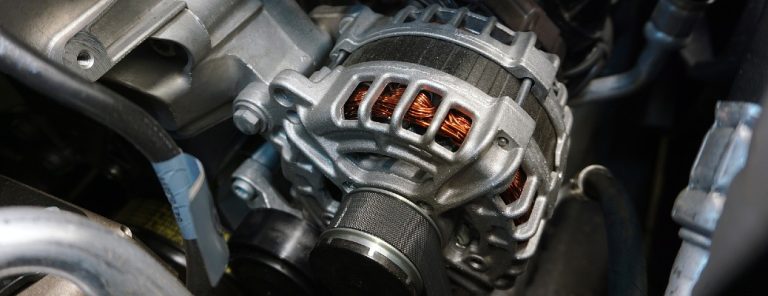
Alternators represent a significant technological leap over DC generators and have been the standard charging system in automobiles since the 1970s. Unlike generators, alternators produce alternating current (AC) as their primary output, which is then converted to direct current (DC) using a set of diodes called a rectifier bridge. The fundamental difference in design is that in an alternator, the magnetic field rotates (the rotor), while the stationary windings (the stator) produce the electrical current. This inversion of the generator’s design allows alternators to be more efficient, lighter, and capable of producing useful output at lower engine speeds.

The rotor in an alternator consists of a coil of wire wound around an iron core, with claw-shaped pole pieces that create alternating north and south magnetic poles. Current flows through the rotor via slip rings and brushes, creating a rotating magnetic field. As this field rotates past the three-phase windings in the stator, it induces an alternating current. The three-phase design means that the alternator produces three separate AC waveforms, each offset by 120 degrees, resulting in a smoother and more consistent output than a single-phase generator. The rectifier bridge, consisting of six diodes, converts this three-phase AC into DC suitable for the vehicle’s electrical system.
One of the most significant advantages of alternators is their ability to produce substantial current even at idle speed. A modern alternator can deliver 50 to 70 percent of its rated output at idle, compared to perhaps 10 to 20 percent for a DC generator. This is because the alternator’s stator windings can be designed with more turns of wire, and the rotating magnetic field design is inherently more efficient at lower speeds. Modern alternators typically produce between 60 and 150 amps, with high-output versions capable of 200 to 300 amps or more for vehicles with extensive electrical accessories. The voltage regulation in alternators is handled by an electronic regulator, which can be internal or external to the alternator, and maintains a precise output voltage of approximately 13.8 to 14.4 volts.
Alternators are also more durable than generators in many respects. The slip rings in an alternator experience less wear than the commutator in a generator because they carry only the field current, not the full output current. This means that alternator brushes can last 100,000 miles or more, compared to 30,000 to 50,000 miles for generator brushes. The absence of a commutator also eliminates the sparking and electromagnetic interference that generators are known for, making alternators more compatible with modern electronic systems including engine control units, infotainment systems, and advanced driver-assistance systems.
DC Generator
AC Alternator
Key Differences Between Car Generators and Alternators
Recommended Best Deal Products

The most fundamental difference between a car generator and an alternator lies in their electrical output. A generator produces DC current directly, while an alternator produces AC current that is rectified to DC. This difference in output type has cascading effects on the design, efficiency, and performance of each system. The generator’s direct DC output was advantageous in the early days of automotive electrical systems when batteries and components were designed for DC power, but the alternator’s ability to produce more current at lower speeds and its lighter weight made it the superior choice as electrical demands increased.

Efficiency is another area where the two technologies diverge significantly. A typical car generator operates at around 60 to 70 percent efficiency, meaning that 30 to 40 percent of the mechanical energy from the engine is lost as heat. Alternators, on the other hand, can achieve efficiencies of 80 to 90 percent, particularly at higher output levels. This improved efficiency translates to less parasitic drag on the engine, which can contribute to better fuel economy. Over the life of a vehicle, the fuel savings from an alternator’s improved efficiency can be substantial, especially in stop-and-go driving where the alternator’s ability to charge at idle is most beneficial.
Size and weight are also important differentiators. For a given output level, an alternator is significantly smaller and lighter than a generator. A 60-amp alternator might weigh 10 to 15 pounds, while a generator of similar output would weigh 20 to 30 pounds. This weight reduction is beneficial for fuel economy, handling, and overall vehicle design. The compact size of alternators also gives engineers more flexibility in engine bay layout, which has become increasingly important as vehicles have become more complex with turbochargers, emissions equipment, and other components competing for space.
Maintenance requirements differ considerably between the two technologies. Generators require more frequent attention, including periodic brush replacement, commutator cleaning and resurfacing, and bearing lubrication. Alternators are largely maintenance-free for the life of the vehicle, with the brushes and bearings typically lasting well over 100,000 miles. The diodes in an alternator’s rectifier bridge can fail, but this is relatively uncommon and usually indicates another underlying issue such as a failing battery or excessive electrical load. When an alternator does fail, it is typically replaced rather than rebuilt, whereas generators were commonly rebuilt as a cost-effective repair.
DC Generator
AC Alternator
Hover any bar for exact values. Each metric scaled independently.
Audible Premium Plus — Annual Membership
12 audiobook credits up front, plus the full Audible catalogue.
See Annual PlansCar Generator: Ideal Use Cases
Car generators are primarily of interest today to classic car enthusiasts and restorers who want to maintain the originality of their vehicles. If you own a vehicle manufactured before the early 1970s, it likely came equipped with a DC generator from the factory. For concours-level restorations and vehicles where originality is paramount, keeping the generator is the correct choice. Many classic car judges and authenticity guidelines require that vehicles retain their original charging system, and swapping to an alternator can result in point deductions at shows.
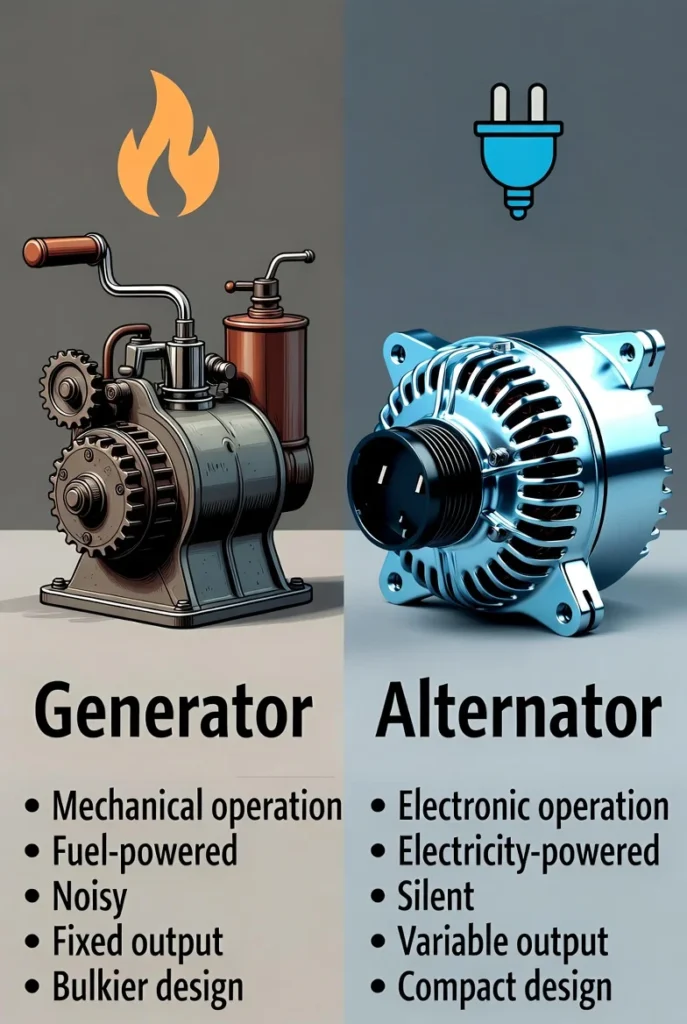
There are also some niche applications where a generator’s characteristics are advantageous. The gradual ramp-up of output as engine speed increases can be beneficial in certain industrial and marine applications where a sudden high current draw could cause issues. Additionally, generators are less sensitive to the type of battery being charged, which can be important in vintage vehicles that may use older battery technologies. Some off-grid and experimental vehicle builders also appreciate the simplicity of generators, as they can be more easily understood and repaired in the field without specialized diagnostic equipment.
However, many classic car owners do choose to convert to alternators for practical reasons. The improved charging performance, reduced maintenance, and better compatibility with modern electrical accessories make alternators a popular upgrade. Conversion kits are widely available for most classic vehicles and typically include a modern alternator, mounting brackets, and wiring harness. The conversion is generally straightforward and can be completed in an afternoon with basic tools. For daily-driven classic cars, the alternator conversion is often considered one of the most worthwhile upgrades available.
Price & availability subject to change. As an Amazon Associate we earn from qualifying purchases.
Alternator: The Modern Standard
Alternators have been the universal standard in automotive charging systems for over five decades, and for good reason. Their superior efficiency, higher output, lower maintenance, and better performance at idle make them the clear choice for virtually all modern vehicles. From compact cars to heavy-duty trucks, alternators provide the reliable electrical power that today’s vehicles demand. The average modern vehicle has between 30 and 50 individual electronic control units, along with numerous electric motors, sensors, and entertainment systems, all of which depend on a robust charging system.
The evolution of alternator technology has kept pace with the increasing electrical demands of modern vehicles. Early alternators from the 1970s typically produced 35 to 55 amps, which was a significant improvement over the generators they replaced. By the 1990s, 80 to 100 amp alternators were common, and today’s vehicles often come equipped with 120 to 150 amp units as standard. High-performance and luxury vehicles may have alternators rated at 200 amps or more, and some trucks and SUVs with extensive electrical accessories use dual alternator systems. The trend toward higher output is expected to continue as vehicles incorporate more electric features, including mild-hybrid systems that use the alternator-starter combination to improve fuel economy.
Modern alternators also incorporate advanced features that were unimaginable in the generator era. Many alternators now have multiple output windings that can produce different voltage levels for different systems. Some use smart charging systems that communicate with the engine control unit to adjust output based on driving conditions, battery state of charge, and electrical load. These systems can reduce alternator output during acceleration to free up engine power, then increase output during deceleration to take advantage of the vehicle’s kinetic energy. This intelligent management of the charging system contributes to improved fuel economy and reduced emissions, making alternators an integral part of the vehicle’s overall efficiency strategy.
For vehicle owners, the practical benefits of alternators are clear. The typical alternator will last the life of the vehicle without requiring any maintenance beyond a periodic visual inspection. When an alternator does fail, replacement units are widely available and relatively affordable, with prices ranging from $100 to $500 depending on the vehicle and output rating. The installation is typically straightforward, with most alternators held in place by two or three bolts and connected by a single wiring harness. For the average vehicle owner, the alternator is a set-it-and-forget-it component that provides reliable service for years.

Price & availability subject to change. As an Amazon Associate we earn from qualifying purchases.
- ✅ Lower upfront cost for restoration projects
- ✅ Simple DC output requires no rectifier
- ✅ Easier to rebuild with basic tools
- ✅ Period-correct for vintage automotive authenticity
- ❌ Very low output at idle speeds
- ❌ Frequent brush and commutator maintenance
- ❌ Heavy and bulky design
- ❌ Cannot support modern high-draw electronics
- ✅ Delivers high amperage even at engine idle
- ✅ Lightweight and compact footprint
- ✅ Internal voltage regulator simplifies wiring
- ✅ Supports modern electronics and audio systems
- ✅ Longer lifespan with minimal maintenance
- ❌ Higher initial purchase price
- ❌ Requires a rectifier to convert AC to DC
- ❌ Can produce radio frequency interference (RFI)
- ❌ Overworking can fry the diode trio
Classic car restorers needing period-correct DC simplicity
Modern vehicle owners needing high-output, efficient charging
As an Amazon Associate we earn from qualifying purchases.
Car Generator vs Alternator: Frequently Asked Questions
Is Car Generator better than Alternator?
No, the Alternator is significantly better for modern vehicles. While a Car Generator produces 35 amps max, a modern Alternator produces up to 250 amps and delivers 120 amps at idle, making it vastly superior for powering today's demanding automotive electronics.
What is the biggest difference between a Car Generator and an Alternator?
The biggest difference is how they generate electricity at low RPMs. A Car Generator relies on a spinning armature and produces very little power at idle (around 5 amps), whereas an Alternator uses a spinning rotor and produces over 120 amps at idle speeds.
Are Car Generators more reliable than Alternators?
Actually, Alternators are more reliable. Car Generators have commutators and brushes that wear down quickly, requiring maintenance every 20,000 miles. Alternators use internal regulators and sealed bearings, typically lasting over 150,000 miles without service.
Which is cheaper, a Car Generator or an Alternator?
A Car Generator is cheaper upfront, typically costing between $80 and $150, while an Alternator ranges from $150 to $400. However, the Alternator's longer lifespan and zero maintenance make it cheaper over the life of the vehicle.
Can I replace my Car Generator with an Alternator?
Yes, most classic car owners swap their Car Generator for an Alternator. You will need to convert from a positive ground to a negative ground system and update the wiring, but the upgrade provides reliable power for modern accessories like fuel injection and AC.
Frequently Asked Questions
Can I Replace My Car Generator with an Alternator?
Yes, in most cases you can convert from a generator to an alternator. Conversion kits are available for most classic vehicles and include the necessary mounting brackets, wiring, and hardware. The conversion typically takes a few hours and requires basic mechanical skills. The main considerations are ensuring proper belt alignment and updating the wiring to accommodate the alternator’s different electrical connections.
How Long Does an Alternator Last?
A typical alternator will last between 100,000 and 150,000 miles, though many last significantly longer. Factors that can shorten alternator life include excessive heat, high electrical loads, contamination from oil or coolant, and poor-quality replacement parts. Regular inspection of the drive belt and electrical connections can help maximize alternator lifespan.
What Are the Signs of a Failing Alternator?
Common symptoms of alternator failure include dimming or flickering headlights, a battery warning light on the dashboard, electrical accessories that work intermittently, a whining or grinding noise from the alternator, and difficulty starting the vehicle. If you experience any of these symptoms, have your charging system tested as soon as possible to avoid being stranded with a dead battery.
Are High-Output Alternators Worth It?
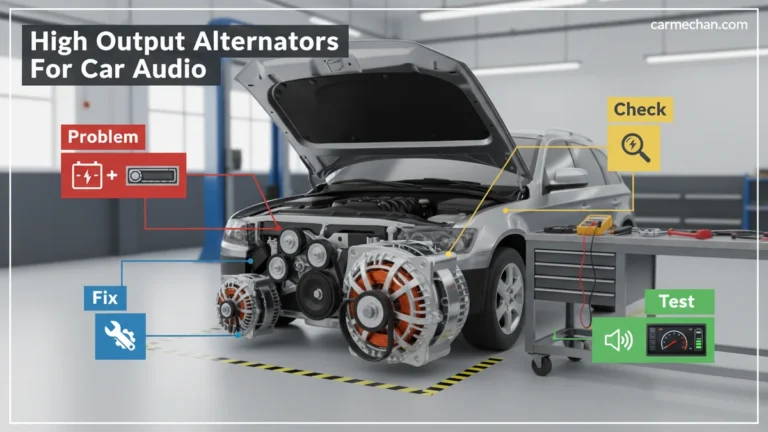
High-output alternators are worth considering if you have added significant electrical accessories to your vehicle, such as a powerful audio system, off-road lighting, winches, or other aftermarket equipment. A standard alternator may not be able to keep up with the increased electrical demand, leading to a chronically undercharged battery and potential electrical system issues. For most stock vehicles, the factory alternator provides adequate output.
Why Did Car Manufacturers Switch from Generators to Alternators?
The switch from generators to alternators was driven by several factors. The increasing electrical demands of modern vehicles, including air conditioning, power windows, and electronic ignition systems, required a charging system that could produce more current at lower engine speeds. Alternators are also more efficient, lighter, and require less maintenance than generators, making them the clear choice for modern automotive applications. The transition began in the late 1960s and was largely complete by the mid-1970s.
Can a Bad Alternator Damage My Battery?
Yes, a failing alternator can damage your battery. If the alternator undercharges, the battery will be chronically undercharged, leading to sulfation and reduced capacity. If the alternator overcharges due to a faulty voltage regulator, the battery can be overcharged, causing electrolyte loss, overheating, and potentially catastrophic failure. Either scenario can significantly shorten battery life, so it’s important to address alternator issues promptly.