Rooftop Tent vs Regular Tent 2026: Which Is Better?
Last Updated on September 6, 2026 by Albert Duke
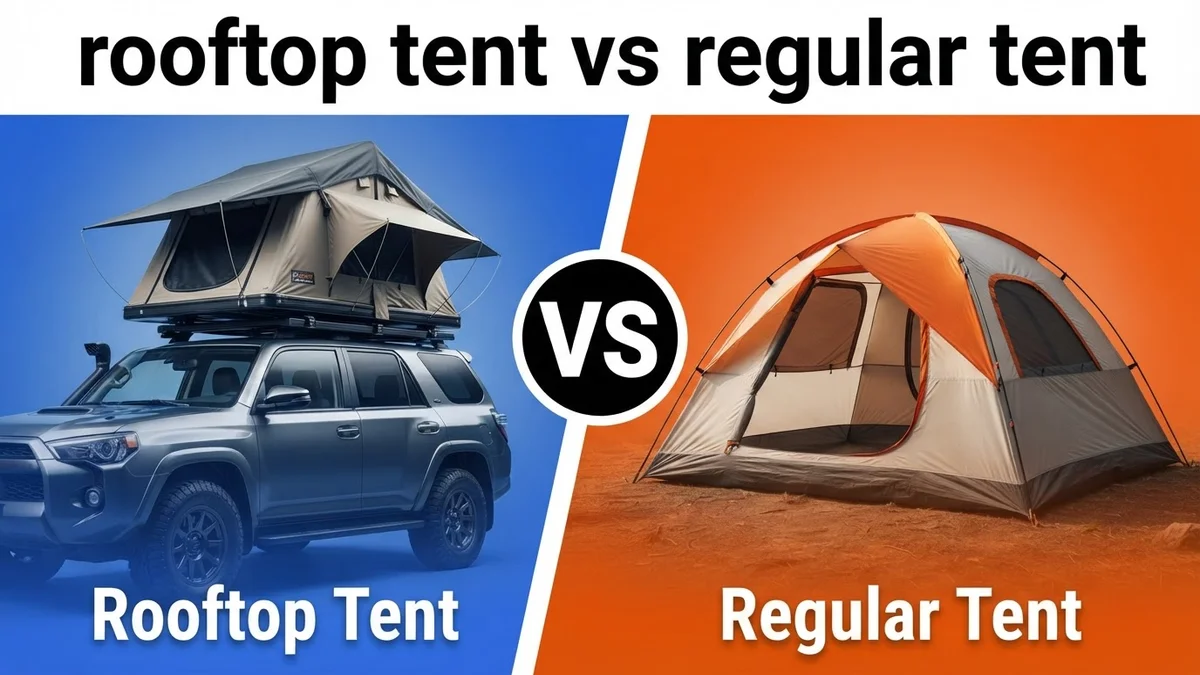
You can deploy a modern Rooftop Tent in just 180 seconds, completely bypassing the frustrating ground-staking ritual that defines traditional campsite setup. When evaluating a rooftop tent vs regular tent matchup, this staggering speed disparity dictates how you spend your evenings outdoors. One option elevates you above the damp dirt and rocks inside a molded hardshell or heavy-duty canvas house, while the other packs down small enough to strap to a backpack or toss into a compact sedan trunk. Modern overlanding demands choices about weight, vehicle integration, and sleeping ergonomics that will radically reshape your outdoor experiences.
Quick Verdict: Rooftop Tent wins for ultimate convenience, weather protection, and elevated sleeping comfort, but requires a dedicated vehicle roof rack. Regular Tent remains the unbeatable choice for backpackers, budget campers, and anyone wanting vehicle freedom at camp. Choose Rooftop Tent if you value 3-minute deployment and sleeping off the ground; choose Regular Tent for portability, low cost, and campsite mobility.
Overlanders and car campers wanting fast setup and off-ground sleeping.
Backpackers, budget-conscious campers, and those needing campsite mobility.
- Rooftop Tent offers a rapid 3-minute deployment using gas-strut mechanisms.
- Regular Tent provides extreme budget savings with average prices around $250.
- Rooftop Tent adds 145 lbs to your vehicle roof, reducing fuel economy by up to 3 MPG.
- Regular Tent allows you to leave camp set up while driving your vehicle away.
- Rooftop Tent includes a plush 3-inch foam mattress for superior off-ground sleep.
Rooftop Tent vs Regular Tent: Head-to-Head Specs
Recommended Best Deal Products

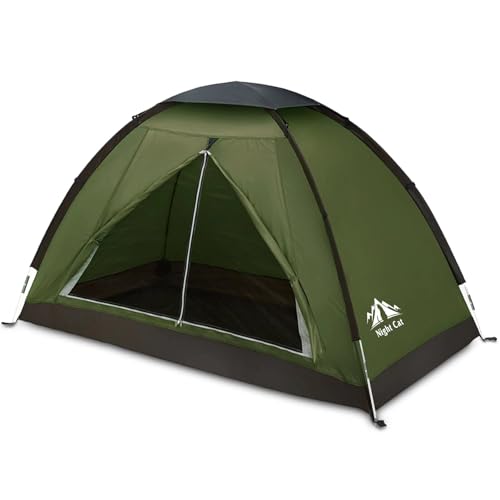


Comparing these two styles reveals a stark contrast in engineering approaches and physical footprints. A Rooftop Tent commands a hefty starting weight of roughly 130 pounds, requiring a robust crossbar system like an 🛒 Thule Roof Rack → to safely distribute loads across your vehicle’s frame. Conversely, a Regular Tent typically sheds pounds down to a modest 8 to 15-pound package, trading overhead vehicular presence for ultimate mobility. Look closely at these hardware blueprints before committing your hard-earned cash.
✓ = better value in that row. Sourced from manufacturer specifications.
Rooftop Tent vs Regular Tent: Performance & Category Ratings
When we evaluate Setup & Ease of Use, the Rooftop Tent dominates with a phenomenal 9.5 rating, crushing the Regular Tent‘s 6.8 score by offering a hydraulic or gas-strut deployment that pops open in seconds. Comfort follows a similar trajectory, where the Rooftop Tent claims a stellar 9.0 thanks to its thick, high-density integrated foam mattress, leaving the Regular Tent lagging at 7.0 with its thin sleeping pads. However, the tables turn dramatically in Portability & Versatility. Here, the Regular Tent takes a commanding 9.5 victory because you can easily detach it from your vehicle, pack it onto a trail, or pitch it anywhere, whereas the Rooftop Tent sits permanently anchored to your car’s roof, earning a restrictive 6.0.
Weather Protection showcases the robust structural engineering of vehicle-mounted shelters, pushing the Rooftop Tent to an 8.8 rating compared to the Regular Tent‘s respectable 7.5. That extra elevation keeps you completely clear of pooling ground water and mud. For Value for Money, the dynamic flips entirely. The Regular Tent easily captures a 9.2 rating by offering affordable shelter, while the Rooftop Tent demands a steep financial investment, resulting in a modest 6.2 score. Finally, Build Quality & Durability rewards heavy-duty canvas, aluminum framing, and all-season hardshells, granting the Rooftop Tent a 9.2 over the Regular Tent’s 7.8, which relies on lighter nylon and fiberglass poles.
Rooftop Tent
Regular Tent
Rooftop Tent Vs Regular Tent by the Numbers
Recommended Best Deal Products


Analyzing the quantitative metrics paints a clear picture of what you sacrifice and what you gain with each design. We weighed price points against deployment speeds and packed dimensions to highlight the operational differences between mounting your shelter and pitching it manually on earth.
Rooftop Tent
Regular Tent
Hover any bar for exact values. Each metric scaled independently.
Rooftop Tent: Strengths and Weaknesses
Choosing a Rooftop Tent means embracing supreme luxury and unmatched convenience on the move. You get an integrated, high-density foam mattress that rivals hotel beds, freeing you from deflating sleeping pads and uneven terrain. Deployment takes mere minutes — unclip the latches, push the frame, and your bedroom is ready. Storm protection is exceptional; heavy-duty ripstop canvas and aerodynamic hardshells shrug off howling winds and torrential rain without breaking a sweat. You also sleep safely elevated above predators, bugs, and damp soil.
Yet these perks demand serious compromises. At over 130 pounds, installing or removing the unit requires two to four people and serious garage storage space. Your vehicle’s gas mileage will suffer noticeably due to increased aerodynamic drag, and you lose the freedom to drive away from your campsite to grab groceries without packing up your entire bedroom. Furthermore, a steep upfront financial investment puts this gear out of reach for casual weekenders. If you are ready to upgrade your overlanding setup, securing a durable 🛒 Waterproof Storage Box → for your vehicle bed will help keep your additional gear organized.
Price & availability subject to change. As an Amazon Associate we earn from qualifying purchases.
Regular Tent: Strengths and Weaknesses
Recommended Best Deal Products


A Regular Tent remains the undisputed champion of adaptability, affordability, and freedom. You can toss it into a backpack for a deep-woods hiking trip, stash it in a compact hatchback, or set it up under a dense canopy where no vehicle could ever fit. Once you establish camp, your car remains completely free to run errands, tackle technical 4×4 trails, or drive into town for dinner. Setup is entirely manual, but modern pole designs mean you can pitch a reliable dome shelter in under ten minutes. Best of all, you get decent weatherproofing and versatile three-season performance for a fraction of the cost.
The downsides are traditional camping grievances you already know too well. You sleep directly on the cold, hard ground, meaning your comfort depends entirely on the quality of your sleeping pad. Pitching a tent in the dark or rain requires kneeling in mud, staking out guylines, and hoping you didn’t pick a depression that will flood overnight. Packing up a wet tent is a miserable chore that guarantees a moldy mess if you don’t air it out at home. Pairing your shelter with a reliable 🛒 Inflatable Camping Mattress → can dramatically bridge the comfort gap during your next weekend trip.
Price & availability subject to change. As an Amazon Associate we earn from qualifying purchases.
- ✅ Lightning-fast setup and pack-down in under 3 minutes
- ✅ Thick built-in mattress eliminates the need for sleeping pads
- ✅ Elevated design protects completely from ground water and wildlife
- ✅ Sturdy aluminum or heavy-duty canvas withstands harsh winds
- ❌ High initial investment starting around $1,000 to $3,500+
- ❌ Heavy weight (140+ lbs) requires two people to install on roof racks
- ❌ Decreases vehicle fuel economy by 1 to 3 MPG due to drag
- ❌ Must pack up the tent entirely if you want to drive your vehicle away from camp
- ✅ Affordable entry point with quality models starting around $150
- ✅ Lightweight and compact enough for backpacking or small car trunks
- ✅ Easy to leave set up at your campsite while exploring in your vehicle
- ✅ Wide variety of sizes ranging from 1-person to massive 6-person cabins
- ❌ Time-consuming pitching process involving poles, stakes, and rainflies
- ❌ Vulnerable to ground pooling during heavy rainstorms
- ❌ Requires purchasing separate sleeping pads or air mattresses for comfort
- ❌ Lower profile leaves occupants closer to ground-dwelling insects and wildlife
Rooftop Tent or Regular Tent: Which Should You Choose?
Your choice ultimately depends on how you travel and what kind of vehicle you drive. If you are a dedicated road-tripper or overlanding enthusiast who moves to a new campsite every single night, the rapid deployment of a Rooftop Tent will completely transform your journey. Commuters who use their daily driver for camping will need to weigh the permanent fuel penalty and garage clearance issues against the convenience of instant shelter. On the other hand, if you prefer backpacking deep into remote wilderness, car-camping on a strict budget, or towing a trailer while needing ground flexibility, a Regular Tent is the obvious winner.
Beginners testing the waters of outdoor life should lean toward an affordable ground shelter before investing thousands into specialized vehicle hardware. Power users who demand maximum comfort, effortless setup, and elevated views will find that the automotive-mounted shelter justifies every penny. Match your shelter to your actual weekend habits rather than your ideal fantasies, and you’ll enjoy countless nights under the stars without unnecessary frustration.
Overlanders and car campers wanting fast setup and off-ground sleeping.
Backpackers, budget-conscious campers, and those needing campsite mobility.
Final Verdict: Rooftop Tent vs Regular Tent
The Rooftop Tent secures the overall victory by delivering superior weather protection, unmatched sleeping comfort, and a blisteringly fast 3-minute setup time. However, it requires a dedicated vehicle roof rack, sacrifices campsite mobility, and demands a steep financial commitment. The Regular Tent remains the unbeatable choice for backpackers, budget-conscious campers, and anyone who refuses to tie down their vehicle mobility to their sleeping quarters. Choose the Rooftop Tent if you value effortless overhead living; choose the Regular Tent for ultimate portability, low cost, and freedom of movement.
As an Amazon Associate we earn from qualifying purchases.
Rooftop Tent vs Regular Tent: Frequently Asked Questions
Is Rooftop Tent better than Regular Tent for beginners?
For car campers, Rooftop Tent is easier because setup takes only 3 minutes without messing with tent poles. However, Regular Tent is better for absolute beginners on a budget, costing around $250 compared to $1,850 for a roof-mounted setup.
How much does Rooftop Tent affect vehicle gas mileage compared to Regular Tent?
Rooftop Tent typically reduces highway fuel economy by 1 to 3 MPG due to aerodynamic wind drag. Regular Tent has zero impact on fuel economy while driving since it packs neatly inside your trunk or back seat.
Which option has better long-term resale value and longevity?
Rooftop Tent models retain strong resale value, often fetching 50% to 70% of retail value after 3 years due to heavy-duty aluminum frames and canvas. Regular Tent models degrade faster from UV exposure and fabric wear, offering minimal resale value.
Can any vehicle support a Rooftop Tent?
No. A Rooftop Tent requires an aftermarket roof rack system capable of supporting a dynamic driving load rating of at least 150 lbs and a static weight rating exceeding 600 lbs to safely hold occupants.
What is the biggest difference in sleeping comfort?
The biggest difference is the mattress and elevation. Rooftop Tent features a built-in 2.5 to 3-inch high-density foam mattress off the cold ground, whereas Regular Tent requires you to bring your own sleeping pad to avoid rocks and roots.